
Please Choose Your Language
Views: 0 Author: Site Editor Publish Time: 2026-07-08 Origin: Site


Veterinary surgery takes a severe physical toll on clinical staff. Veterinarians spend long, grueling hours inside the operating room. Proper patient positioning also plays a critical role in surgical outcomes. Upgrading your clinical setup is far more than a functional necessity. It represents a long-term investment in your daily clinic workflow. It improves staff retention through vastly better ergonomics. It fundamentally ensures overall patient safety.
A high-quality surgical platform prevents chronic back pain for veterinarians. It keeps animals perfectly secure during delicate incisions. This guide evaluates key equipment based strictly on clinical realities. We prioritize material durability over superficial aesthetic features. You will discover exactly which features matter most for different practices. We will explore structural mechanics in extensive detail. We will analyze medical-grade material qualities thoroughly. We will also cover essential spatial planning requirements. Choosing the correct platform changes how your surgical team operates. It brings confidence to every single procedure.
Material Matters: Choosing the right grade of stainless steel dictates the lifespan and infection control capabilities of the table.
Ergonomics & Lift: Hydraulic and electric lift mechanisms drastically reduce veterinarian fatigue and injury during heavy-patient transfers.
Positioning Dynamics: V-top tables offer superior fluid management and spinal support compared to traditional flat tops.
Thermal Support: Integrated heating systems mitigate anesthesia-induced hypothermia, directly improving recovery rates.
First, we must address staff ergonomics and retention directly. Back and neck strain are rampant in modern veterinary medicine. Veterinarians often bend over static tables for consecutive hours. This unnatural posture causes severe occupational hazards. Persistent pain leads to clinical burnout and early retirement.
Height-adjustable tables directly mitigate these serious physical risks. They allow you to bring the patient to a comfortable working height. This reduces daily physical stress on the surgical team. Veterinarians performing multiple spays or neuters daily understand this physical burden. A static table forces the surgeon to hunch awkwardly. This posture compresses the spine and strains cervical muscles. An adjustable platform eliminates this specific occupational hazard entirely. You can lower the table for giant breeds. You can raise it high for delicate feline surgeries. This flexibility protects the physical health of your doctors. When veterinarians feel physically supported, staff retention rates improve drastically.
We also must examine overall surgical efficiency. When you integrate modern animal surgery equipment, you speed up procedures. Proper fluid drainage systems prevent messy operating fields. Blood and lavage fluids move away from the patient seamlessly. Quick-adjust mechanisms reduce procedural downtime significantly. You can transition between consecutive surgeries much faster. Staff spend less time cleaning and more time treating patients. Every saved minute increases your daily clinical throughput.
Patient outcomes improve drastically when using better equipment. Stable platforms prevent unexpected patient shifting during delicate procedures. This prevents accidental internal injuries during tissue manipulation. Thermal support features keep patients warm during prolonged anesthesia. General anesthesia naturally lowers a patient's core body temperature. Active heating directly leads to fewer perioperative complications. Better recovery rates reinforce your clinic's reputation in the community. Clients deeply trust clinics capable of handling complex surgeries safely.
Choosing the right surface design dictates your surgical capabilities. Practice owners primarily choose between flat-top and V-top designs. Each design serves distinct clinical purposes within the hospital.
Flat-top tables remain a traditional staple in many clinics. They are best suited for routine procedures and minor surgeries. You will often see them placed in multi-use prep areas. They handle basic laceration repairs and standard dental cleanings well. However, they carry distinct structural limitations. Flat tops are less optimal for complex orthopedics. They struggle during procedures requiring deep abdominal access. Their inferior fluid runoff can complicate messy, fluid-heavy surgeries. Fluids tend to pool directly around the patient's body.
V-Top tables feature a specialized longitudinal axis adjustment. These excel during advanced surgeries and deep abdominal procedures. They handle heavy fluid-loss cases perfectly. Adjustable side panels cradle the patient securely on both sides. They prevent the animal from shifting mid-surgery. You can angle the panels to expose specific anatomical regions. A central trough funnels fluids directly to a collection bucket. This intelligent design keeps the surgical field sterile and dry. It provides unparalleled access to the thoracic and abdominal cavities.
Feature | Flat-Top Design | V-Top Design |
|---|---|---|
Primary Use Case | Routine exams, minor surgeries | Orthopedics, abdominal surgeries |
Fluid Management | Basic runoff, prone to pooling | Central trough, superior drainage |
Patient Stability | Requires sandbags or ties | Adjustable panels cradle the body |
Accessibility | Standard access | Deep surgical field access |
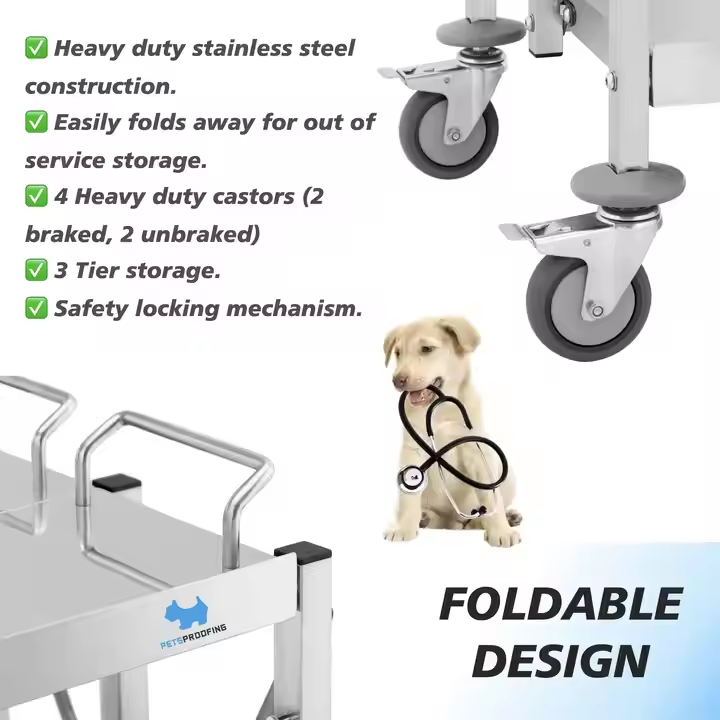
You must evaluate specific mechanical and structural traits carefully. Not all tables perform equally under clinical pressure.
Material durability defines the exact lifespan of your investment. The standard stainless steel operation table features either Type 304 or Type 316 steel. Type 304 offers excellent general durability for daily use. Type 316 contains molybdenum for enhanced chemical protection. This highlights resistance to corrosion from harsh veterinary disinfectants. Accelerated hydrogen peroxide and strong bleach solutions degrade lesser metals quickly. Cheaper alloys will pit and rust within a few short years.
Lift mechanisms completely change how your team interacts with the pet operation table.
Stationary: These offer a very low initial cost. They carry zero mechanical failure risk. However, they remain highly restrictive ergonomically. You cannot adjust them for different surgeons.
Hydraulic: These mechanical systems are extremely reliable and smooth. They require no power outlet to function. This makes them great for center-room placement. They do require occasional fluid maintenance over time.
Electric: These provide incredible precision control. They are often convenient and pedal-operated. They are ideal for micro-adjustments during surgery. They require safe cable management in a wet environment.
Weight capacity and base stability are absolutely non-negotiable elements. Define your minimum safe working loads before purchasing anything. Aim for 250 to 300+ lbs capacity. You must accommodate large and giant breeds safely. Emphasize base stability in your selection process. Consider the exact mechanics of your chosen base design carefully. A poorly balanced table creates massive liabilities during surgery. An energetic dog waking from anesthesia might thrash unexpectedly. A heavy, solid X-base or Z-base absorbs this kinetic energy safely. It keeps the entire platform planted firmly on the floor. Lighter bases might shift or tilt under sudden uneven loads. Always prioritize heavy-duty construction over lightweight portability.
Integrated heating systems dramatically improve patient survival rates. Evaluate active thermal management carefully before committing. It prevents dangerous hypothermia during prolonged anesthesia.
Best Practice Warning: Note the necessity of precise thermostat controls. Always look for built-in mechanical fail-safes. These specific features prevent accidental thermal burns on anesthetized patients.
Purchasing the equipment is only the first functional step. You must plan for spatial integration and diligent upkeep.
Footprint and spatial planning matter immensely in small rooms. Factor in the swing radius of V-top adjustments. Consider the physical footprint of the heavy metal base. Ensure 360-degree access for the entire surgical team. Cramped operating rooms lead to compromised sterile fields. Surgeons need space to maneuver without bumping critical equipment.
Many modern tables feature built-in accessory rails along the sides. These rails allow you to attach IV poles directly. You can mount anesthetic monitoring screens right next to the patient. This integration keeps crucial equipment within arm's reach. It significantly reduces clutter around the main surgical field. Clear pathways prevent accidental contamination of sterile instrument trays.
Power and cable management present unique environmental challenges. Address the tripping hazards of electric tables early. We highly recommend installing ceiling-dropped power lines. Floor-recessed outlets also maintain a sterile, safe environment. Loose cords on wet floors create massive liability issues. They also complicate the post-surgery mopping process.
Routine maintenance keeps your equipment functioning perfectly. Outline realistic maintenance expectations for your clinical staff. Neglect leads to costly premature equipment failure.
Lubricate hydraulic pumps strictly according to manufacturer schedules.
Calibrate heating elements annually for accurate temperature control.
Inspect moving joints monthly for rust or fluid buildup.
Check electrical cords for fraying or chemical damage.
Sanitize the central drainage trough daily to prevent clogs.
Verify the tightness of all base mounting bolts quarterly.
Component | Action Required | Frequency |
|---|---|---|
Hydraulic Lift | Check fluid levels, lubricate seals | Bi-annually |
Heating System | Test thermostat accuracy, inspect wires | Annually |
Hinges & Joints | Clean debris, apply medical-grade lubricant | Monthly |
Stainless Steel Surface | Wipe down, inspect for micro-pitting | Daily |
Selecting the best model depends entirely on your specific caseload. Different clinics demand entirely different hardware solutions.
For new or low-volume clinics, simplicity works best. Prioritize a versatile, durable, hydraulic flat-top table. This choice balances a tight budget against baseline ergonomic needs. It requires minimal maintenance while providing solid reliability. It serves as an excellent foundational piece of equipment.
High-volume spay and neuter clinics face different challenges. Focus strictly on fast fluid drainage capabilities. Ease of sanitization is absolutely crucial for rapid turnover. Rapid height adjustment allows quick transitions between consecutive procedures. A well-designed veterinary surgical table maximizes daily throughput here. Efficiency dictates financial success in high-volume settings.
Specialty and orthopedic practices need highly advanced features. Invest in a premium electric V-top model. An advanced stainless steel operation table featuring integrated heating is essential. Maximum positional versatility supports complex, multi-hour operations perfectly. Surgeons can manipulate the patient angle using precise foot controls.
Take definitive next steps to finalize your decision. Calculate the expected lifespan and required maintenance protocols. Avoid looking purely at the initial sticker price. Look at the long-term clinical value instead. Request a hands-on physical demo from your supplier. Always ask for a detailed warranty breakdown before signing any purchase agreements.
The right surgical table aligns clinical precision perfectly alongside staff well-being. Modern veterinary practices cannot afford outdated, static equipment. Upgrading your surgical suite fundamentally enhances your treatment capabilities. It empowers your medical team to perform at their absolute best.
We strongly advise against compromising on base stability and material grade. These foundational elements dictate the long-term viability of your investment. Cheaper alternatives often fail when subjected to daily use and harsh chemicals. They ultimately cost more in constant repairs and replacements.
Take time to audit your current surgical caseload today. Identify exactly where your current equipment slows down your medical team. Do not let poor ergonomics dictate your clinical success. Reach out to a trusted supplier for specific specification sheets. Request custom quotes tailored exactly to your clinical environment. Elevate your standard of care by choosing the right platform.
A: Type 316 contains molybdenum. This addition makes it highly resistant to harsh chemicals and pitting over time. Type 304 remains the industry standard. It provides excellent durability and is perfectly sufficient for most veterinary clinics facing normal disinfection routines.
A: A minimum of 250 lbs is highly recommended. This capacity safely handles large and giant dog breeds. It ensures no mechanical strain damages the lift motor or hydraulic pump during complex procedures.
A: Yes, they are very safe when equipped properly. They must feature precise thermostatic controls. They also require built-in auto-shutoff features. These safeguards strictly prevent localized tissue damage and thermal burns while combatting anesthesia-induced hypothermia.
A: Both mechanisms can easily last 10 to 15 years assuming proper routine maintenance. Electric tables may require actuator replacements sooner. A well-maintained hydraulic pump generally offers a slightly longer lifespan before requiring major functional overhauls.


