
Please Choose Your Language
Views: 0 Author: Site Editor Publish Time: 2026-05-14 Origin: Site


Cleaning and sanitation easily consume a massive percentage of a professional groomer’s daily operational hours. You likely entered this industry to style pets, not to endlessly scrub equipment. Unfortunately, inefficient drainage systems, highly porous materials, and overall poor tub design create major roadblocks in busy salons. They invite serious cross-contamination risks between client animals. They also accelerate wear on your most essential tools, forcing early replacements.
This guide provides a definitive framework to evaluate your setup. We focus deeply on sanitation efficiency, core material durability, and strict daily maintenance requirements. Understanding these elements empowers you to make a secure, informed purchasing decision. You will learn exactly how material choices dictate chemical resistance. You will also discover which specific design features dramatically reduce your cleaning times between appointments, helping your business run smoothly.
Material choice (e.g., 304-grade stainless steel) directly dictates the chemical resistance and long-term cleanability of the tub.
High-yield drainage systems and seamlessly welded corners reduce cleaning time between appointments by up to 30%.
Standardizing daily and weekly disinfection protocols protects both the tub’s integrity and facility health compliance.
Partnering with a proven Pet Grooming Tub manufacturer ensures access to replacement parts (like grates and hair traps) and reliable warranty support.
Sanitation practices directly influence a grooming salon's profitability and reputation. Many facility owners underestimate the hidden burden of inefficient cleaning processes. Every minute your staff spends scrubbing equipment directly cuts into active appointment scheduling.
In the grooming industry, time dictates revenue. Every minute spent detailing a tub is a minute diverted from revenue-generating grooming services. Consider a busy salon handling ten dogs a day. If your current setup requires fifteen minutes of scrubbing between each client, you lose two and a half hours of potential styling time daily. Optimizing sanitation protocols reclaims these lost hours. Faster turnaround times allow you to book an additional client each day, naturally boosting your bottom line without increasing your working hours.
Inadequate sanitation creates severe liabilities. Grooming facilities see numerous animals daily, creating high potential for zoonotic diseases and parasites to spread. Ringworm, giardia, and flea infestations easily transfer between pets if surfaces remain improperly sanitized. Porous surfaces trap biological matter. When a dog steps into a poorly sanitized basin, they risk exposure to the previous dog's pathogens. Evaluating your liability requires acknowledging these health threats. Choosing equipment designed for rapid, thorough disinfection protects the animals in your care and shields your business from damaging health-related claims.
Customer perception relies heavily on their first impression of your facility. Persistent dampness and trapped biological matter in poorly designed tubs create immediate issues. Over time, hair, dander, and shampoo residue accumulate in hidden crevices. This buildup generates a distinct, unpleasant odor. Clients smell your salon before they see your styling results. Foul odors erode customer trust quickly. A sanitary, odor-free environment communicates professionalism. It reassures pet owners you maintain high hygienic standards, encouraging repeat bookings and positive referrals.
The foundation of any efficient sanitation protocol begins with material selection. Different materials react uniquely to water exposure, biological waste, and harsh cleaning chemicals. When you evaluate your next Pet Grooming Tub, you must understand how its composition affects daily upkeep.
Material Type | Cleanability Level | Chemical Resistance | Primary Risk Factor |
|---|---|---|---|
304 / 316 Stainless Steel | Excellent (Non-porous) | High (Compatible with hospital-grade disinfectants) | Vulnerable to bleach/chlorides over time |
HDPE / Plastic | Moderate | High (Resists harsh chemicals well) | Micro-scratches harbor dangerous bacteria |
Fiberglass | Good (When intact) | Low (Requires gentle, non-abrasive cleaners) | Chipping compromises the hygienic barrier |
Stainless steel remains the industry standard for commercial environments. Most professional setups utilize 304-grade stainless steel. It offers excellent durability and resists rust effectively under normal moisture conditions. For facilities dealing with extreme chemical exposure, 316-grade provides even higher corrosion resistance due to added molybdenum. Both grades feature a completely non-porous surface. This characteristic prevents bacteria from penetrating the material. You can confidently apply hospital-grade disinfectants to these surfaces without worrying about lingering pathogens.
Many startup salons gravitate toward High-Density Polyethylene (HDPE) or molded plastic options due to their lower initial cost. Plastic naturally resists a wide variety of harsh cleaning chemicals. However, you must carefully monitor its long-term performance. Plastic is prone to micro-scratches over time. Dog nails and stiff-bristled scrubbing brushes create tiny grooves in the surface. These invisible crevices trap dirt, oils, and bacteria. Once the surface becomes compromised, you must apply much more aggressive scrubbing routines to achieve proper sanitation.
Fiberglass options provide a warm, aesthetically pleasing look. They often feature vibrant colors and smooth finishes. While beautiful, fiberglass requires strict adherence to specific cleaning protocols. You must use non-abrasive cleaners to maintain the protective gel coat. Harsh chemicals or abrasive scouring pads strip this finish quickly. The major risk factor involves physical damage. Chipping or cracking compromises the hygienic barrier instantly. Once the internal fiberglass layers become exposed to water, the unit harbors bacteria rapidly and becomes nearly impossible to sanitize fully.
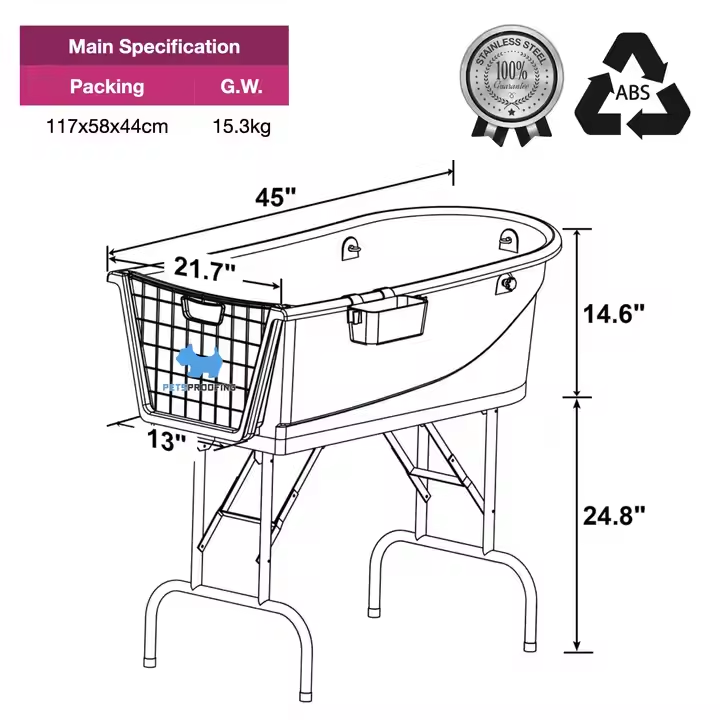
Material choice only solves half the sanitation puzzle. The physical design and engineering of the unit heavily dictate your daily cleaning speed. Specific structural features prevent debris accumulation and streamline the waste removal process.
Seamless Welding and Rounded Corners: Commercial-grade units utilize seamless TIG welding. Traditional bolted joints or sharp 90-degree angles create dead zones. These crevices capture hair, grime, and sticky shampoo residue. Seamless construction and rounded interior corners prevent this accumulation. You can effortlessly wipe down the entire basin in one continuous motion, ensuring no biological matter remains trapped.
Advanced Drainage and Multi-Stage Hair Traps: Efficient water evacuation prevents dirty water from pooling around the animal. You must evaluate the necessity of easily accessible, high-capacity strainers. Multi-stage traps capture large hair clumps first, then filter out finer sand and dander. These systems prevent devastating plumbing blockages deep inside your facility walls. Quick-access traps allow groomers to empty debris in seconds.
Removable Floor Grates and Anti-Slip Mats: Keeping the pet elevated above the wastewater is crucial. Removable floor grates allow groomers to instantly flush away waste, urine, and heavy dirt. You can sanitize the underlying basin without removing the pet from the enclosure. This separation ensures the dog remains clean while you manage heavy soil underneath them.
High-Backsplashes and Side Panels: Bathing anxious dogs generates significant water spray. High-backsplashes and extended side panels contain water and organic matter effectively. This containment reduces the secondary cleaning requirements for your surrounding facility walls and floors. Containing the mess to one specific zone drastically cuts down your end-of-day mopping routines.
Even the most advanced equipment degrades if subjected to improper maintenance routines. Establishing standard operating procedures for your staff ensures consistent sanitation while protecting your investment from chemical damage.
Speed is essential during business hours. Establish best practices for quick-rinsing immediately after a dog exits the bathing area. Staff should use high-pressure hot water to flush all remaining suds and loose dirt toward the drain. Crucially, they must clear the primary hair trap after every single bath. Allowing hair to sit in the trap slows water flow for the next client and promotes bacterial growth.
Once the final dog leaves, you must reset the environment completely. Application of veterinary-grade quaternary ammonium or accelerated hydrogen peroxide provides excellent results. These solutions require specific contact times to kill pathogens effectively. Staff should spray all interior surfaces, grates, and walls, allowing the chemical to sit for the manufacturer-recommended duration before rinsing thoroughly. This daily reset prevents the transmission of stubborn viruses like parvovirus.
Many facilities mistakenly rely on heavy household chemicals for commercial sanitation. This approach causes massive damage. Bleach and chloride-based cleaners degrade stainless steel over time. They strip the protective chromium oxide layer, leading directly to pitting and irreversible rust. We emphasize the need for pH-neutral or specifically formulated enzymatic cleaners. Sticking to approved chemicals helps maintain manufacturer warranties and extends the functional life of your equipment.
Dedicate one day a week to deep maintenance tasks. Descaling water spots removes mineral buildup, which can trap minor bacteria. Inspect all silicone seals around the drainage ports and backsplashes for signs of peeling or mold. You should also utilize an enzymatic drain cleaner to clear secondary plumbing lines. This prevents slow organic buildups from choking your main facility pipes.
Your purchasing process must involve vetting the supplier as thoroughly as the product itself. The right supplier acts as a long-term operational partner. Partnering with a dedicated Pet Grooming Tub manufacturer ensures you receive a product built to strict commercial standards.
Never accept vague material descriptions. Ensure the supplier provides clear specifications on metal gauge and grade. For high-volume commercial salons, you should look for 16-gauge, 304 stainless steel. A lower gauge number indicates thicker, more durable metal. Thicker metal prevents the basin from bowing or flexing under the weight of large breeds. It also resists denting if heavy tools are accidentally dropped.
Commercial equipment experiences heavy daily wear. Components like rubber seals, spray hoses, and floor grates eventually degrade. Assess the long-term availability of these wear-and-tear components before purchasing. A reputable supplier maintains a steady inventory of proprietary replacement parts. Relying on generic, ill-fitting third-party parts often leads to leaks and operational downtime.
Every grooming facility features a unique layout and existing plumbing infrastructure. Look for manufacturers offering custom drainage placements. Choosing between left, right, or center drain configurations helps minimize complex plumbing modifications. Forcing a mismatched unit into your space leads to clog-prone pipe extensions and costly contractor fees.
Review the fine print of the warranty documentation. You need to evaluate the terms of the structural warranty specifically against rust and weld failures. Surface scratches generally fall outside warranty coverage, but structural splitting or deep pitting usually indicates manufacturing defects. A strong warranty demonstrates the supplier's confidence in their fabrication processes.
Selecting the right equipment fundamentally shifts how your salon operates on a daily basis. Reiterate that evaluating a grooming tub must factor in the daily labor required to keep it sanitary. Equipment that takes too long to clean drains your operational capacity and limits your daily bookings.
We highly recommend prioritizing non-porous materials like 304-grade stainless steel. Pair this material with seamless construction and robust, multi-stage drainage to maximize your operational efficiency. Avoid porous plastics or delicate fiberglass if your volume demands rapid, aggressive sanitation turnarounds.
Your next steps should focus on immediate facility assessment. Assess your current plumbing layout to determine the best drain placement. Calculate your current daily cleaning labor hours to understand exactly how much time you are losing. Finally, request detailed specification sheets from shortlisted manufacturers to verify their metal gauge and warranty terms before committing.
A: You must perform basic sanitization after every dog and apply commercial disinfectants at the end of each workday. However, a comprehensive deep clean should occur weekly. This weekly routine includes descaling mineral buildup, scrubbing the underlying drain pipes with enzymatic cleaners, and inspecting all structural seals.
A: You must strictly avoid bleach, high-chloride solutions, and abrasive steel wool. Bleach destroys the protective chromium oxide layer on stainless steel, leading to rapid pitting and rust. Always opt for pH-neutral, veterinary-grade disinfectants like quaternary ammonium compounds.
A: No, they do not completely eliminate the risk. Built-in traps are highly effective, mitigating over 90% of large debris and hair. However, fine dander, sand, and heavy shampoo oils still pass through. You still need routine secondary drain maintenance using enzymatic drain treatments.
A: A high-gauge, 304-grade stainless steel commercial unit typically lasts 10 to 15 years, or even longer. Achieving this lifespan requires strict adherence to proper chemical usage, regular seal inspections, and avoiding harsh abrasives that compromise the metal's surface integrity.


