
Please Choose Your Language
Views: 0 Author: Site Editor Publish Time: 2026-06-30 Origin: Site


Professional dog grooming exacts a heavy physical toll on the human body. Daily grooming tasks frequently cause severe back fatigue and chronic wrist strain. Handling large, anxious dogs also introduces distinct physical risks into your workspace. A standard Grooming Table acts as the central operational hub of your salon. You cannot treat it as merely a static piece of furniture. Your equipment choice directly influences daily output and long-term joint health.
A core dilemma often centers around balancing upfront equipment costs against long-term ergonomic benefits. You want to optimize workflow efficiency while protecting your physical well-being. Two industry standards dominate the current market: electrical systems and hydraulic systems. They each serve specific needs depending on your operational scale. The right choice ultimately depends on your salon volume, available floor space, and typical client demographics. You will discover exactly how these systems function. We will guide you through matching the right technology to your specific grooming business needs.
Ergonomic Impact: Both table types mitigate groomer fatigue, but electric models offer smoother, hands-free adjustments critical for heavy-lifting.
Operational Reliability: Hydraulic tables function independently of power sources, making them ideal for mobile groomers or salons with limited floor outlets.
Cost vs. ROI: Hydraulic units generally require a lower initial investment, but electrical grooming tables often yield higher long-term ROI in high-volume environments by reducing appointment times.
Maintenance Realities: Hydraulic pumps require seal checks and fluid maintenance, whereas electric motors require dust-free environments and cord management.
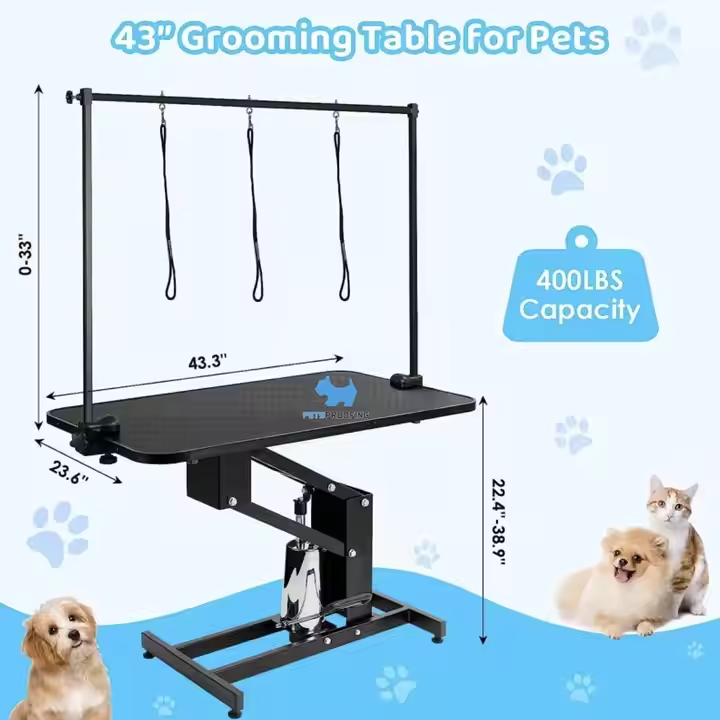
Hydraulic systems utilize basic fluid dynamics to generate lifting power. They feature a robust foot-pump mechanism positioned at the base. Pressurized fluid sits inside a sealed cylindrical chamber. Pressing the foot pedal forces this fluid through a narrow valve. The resulting pressure pushes a piston upward. This action gradually elevates the tabletop. Releasing a separate valve allows the fluid to return. The table then lowers back down smoothly.
You gain several core advantages using this mechanical design. A Hydraulic Grooming Table requires absolutely zero electricity. You completely eliminate dangerous tripping hazards from power cords across your floor. These units also carry a significantly lower baseline price point. Startups and budget-conscious groomers often find them highly accessible. Furthermore, hydraulic frames remain exceptionally durable in wet environments. You can place them safely near bathing or drying stations. Moisture cannot short-circuit non-existent electrical components.
However, you must consider their inherent limitations before purchasing. The pumping action sometimes creates a slightly jerky upward motion. This uneven movement can quickly unsettle anxious or senior dogs. You also must exert physical effort to operate the pump. A few pumps feel negligible initially. Pumping a heavy table thirty times compounds into noticeable fatigue over an 8-hour shift. Finally, hydraulic seals experience friction daily. They eventually wear out and lose pressure. You will need to perform manual seal replacements eventually.
Electrical models operate using a motorized linear actuator system. An electric motor turns a lead screw inside the central column. This turning motion converts rotational force into precise vertical movement. You operate the mechanism via responsive foot pedals or convenient hand remotes. The motor handles the entire lifting burden instantly.
These systems deliver impressive core advantages for high-volume salons. The lift mechanism provides a fluid, whisper-quiet motion. This smooth operation keeps nervous pets exceptionally calm during height adjustments. You exert zero physical exertion to lift giant breeds weighing over 100 pounds. A high-quality Electrical Grooming Table often features a drastically lower minimum drop height. Large dogs can simply walk directly onto the table surface. You never have to lift them manually.
You must also plan around their inherent limitations. These advanced units require a higher upfront capital investment. They keep you tethered to specific wall outlets. This power reliance restricts your salon layout flexibility. You cannot easily move them around the room mid-groom. Additionally, the electric motors remain susceptible to damage. Ambient hair can clog unprotected motor housings. Water damage poses a real threat if you fail to shield the electrical components properly.
Feature Category | Hydraulic Systems | Electrical Systems |
|---|---|---|
Lifting Mechanism | Manual foot-pump (pressurized fluid) | Motorized linear actuator |
Power Requirement | None | Standard 110V/220V wall outlet |
Motion Smoothness | Variable (can be slightly jerky) | Exceptionally smooth and fluid |
Physical Exertion | Moderate (leg/foot pumping) | Zero (button or pedal tap) |
Layout Flexibility | High (360-degree mobility) | Low (must remain near outlets) |
You must carefully assess maximum load ratings before selecting a frame. Grooming salons cater to vastly different canine demographics. Heavy breeds demand specialized structural support. Businesses catering to Mastiffs, Newfoundlands, or St. Bernards face immense lifting challenges. The reinforced chassis of an electrical model becomes non-negotiable here. Their heavy-duty actuators push massive weight effortlessly. They prevent catastrophic frame buckling under intense pressure. Conversely, small-to-medium breed specialists rarely approach these weight limits. Hydraulic units easily support Cocker Spaniels, Terriers, and Poodles. They provide more than enough structural rigidity for typical daily loads.
Floor plan dynamics dictate your equipment choices heavily. Salon layouts require careful spatial planning to maximize efficiency. Hydraulic tables offer excellent 360-degree mobility. You can position them directly in the center of an open room. You can also drag them outside for deep cleaning without unplugging anything. Electric tables demand strict proximity to grounded outlets. You must route power safely to avoid creating trip hazards. Many salons implement ceiling drop cords to solve this issue. Others use heavy-duty floor covers. You must maintain strict OSHA safety compliance regarding electrical routing.
You should frame your table selection primarily as a health investment. Groomers suffer disproportionately from repetitive strain injuries. Consider the raw physical math over a standard working year. Pumping a hydraulic pedal 20 to 30 times daily stresses your knee and ankle joints. This repeated motion adds up to thousands of forceful leg extensions annually. An electric pedal requires only a single, weightless tap. Saving your joints prevents costly medical leaves. Preventing just one major work-related injury completely justifies the premium cost of an electric table. Career longevity relies entirely on minimizing daily physical friction.
Equipment lifespan relies on proactive, scheduled maintenance routines. We must compare a standard 5-year lifecycle for both technologies. Hydraulic cylinders endure constant internal friction. They may eventually leak minor amounts of oil. You will likely need a routine pump replacement during this timeframe. These replacement pumps typically cost between $50 and $100. Electric systems involve more complex internals. Actuators and control boxes generally run flawlessly for years. However, a motor replacement might cost $200 or more if it fails out of warranty. Despite this risk, premium electric frames often come with longer structural guarantees from manufacturers.
Purchasing professional salon equipment involves navigating several hidden pitfalls. You must verify specific dimensional and material metrics. Ignoring these details leads to daily operational frustrations.
Minimum Drop Height:
Many novice buyers ignore the lowest height setting entirely. We strongly warn against tables lacking a deep drop. A table stopping at 24 inches remains practically useless for giant breeds. This height still requires you to physically lift a heavy dog upward. This action defeats the primary purpose of an adjustable frame. Look strictly for models featuring 10-inch to 12-inch minimum drops. Dogs can comfortably step onto a 12-inch platform unassisted.
Tabletop Texture & Cleaning:
Surface grip determines canine safety during the groom. Evaluate the slip-resistance of the rubber or polyurethane matting. Wet paws slip easily on cheap PVC surfaces. You also must examine the exterior trim. Hair splinters easily wedge under loose metal edging. Check how easily you can sanitize the outer perimeter. Seamless edges prevent bacterial buildup and cross-contamination between clients.
Stability at Maximum Height:
You must directly address the dreaded "wobble factor." Cheaper tables lose essential structural integrity when fully extended. Both electric and hydraulic models suffer from this if engineered poorly. A shaking surface terrifies anxious dogs instantly. They will struggle and fight the grooming process. Avoid basic single-post piston tables for heavy dogs. Look exclusively for X-style or Z-style lifting frames. These geometric designs distribute weight evenly across a wider base. They ensure maximum stability even at the highest elevations.
Your equipment choices shape your daily professional experience entirely. We can summarize this core decision matrix simply. Choose a hydraulic unit for mobile grooming operations or highly budget-conscious setups. They also excel in wet environments lacking safe electrical routing options. They deliver rugged reliability without complex electronics.
We strongly recommend electric models for high-volume commercial salons. Heavy-breed specialists absolutely need motorized lifting capabilities. Groomers prioritizing career longevity and physical health should invest in electric frames immediately. The ergonomic relief pays massive dividends over a decade of grooming.
Take direct action before finalizing your equipment purchase. Measure your exact salon floor space today. Check your existing wall outlet placements carefully. Review the manufacturer's specific warranty terms regarding motors and hydraulic seals. Making an informed decision now guarantees a safer, more profitable grooming business tomorrow.
A: No. The electric motor only draws significant power during the few seconds of active lifting or lowering. It remains entirely dormant while you actually groom the dog. This brief activation period results in a virtually negligible impact on your monthly commercial utility bills.
A: A high-quality hydraulic pump typically lasts between 3 to 7 years. This lifespan depends heavily on your daily client volume and average dog weight. If a seal eventually fails, replacement pumps remain inexpensive. You can generally source and install a new pump easily.
A: Yes, but it requires careful electrical planning. You must install a robust power inverter and a dedicated battery bank setup. Most mobile groomers prefer hydraulic units to preserve van battery life. Alternatively, some choose specialized 12V DC electric tables designed specifically for mobile units.
A: Z-lift and X-lift frame structures offer the best stability. These wide-stance geometries distribute canine weight evenly across the entire base. They prevent dangerous swaying at maximum heights far better than traditional single-post piston tables. This rule applies regardless of the specific lifting mechanism utilized.


