
Please Choose Your Language
Views: 0 Author: Site Editor Publish Time: 2026-06-11 Origin: Site


Constructing or upgrading a commercial pet grooming room represents a high-stakes capital investment. Poor spatial planning directly impacts daily revenue. Under-specced equipment damages groomer physical health and jeopardizes animal safety. You cannot simply convert a standard room and expect it to handle heavy water usage, intense heat, and flying fur. Success requires meticulous zoning and professional-grade installations.
Facility managers, salon owners, and vet clinics expanding their services must treat this as a strict operational challenge. We must move past basic aesthetics. You need to focus deeply on operational mechanics, infrastructure compliance, and ROI-driven purchasing. A beautiful salon means nothing if the plumbing repeatedly fails.
This guide breaks down essential facility requirements and standardizes equipment evaluation. It identifies common implementation risks to ensure a highly scalable operation. You will learn how to design a flawless linear workflow, evaluate commercial hardware, and navigate complex plumbing realities.
Workflow Dictates Layout: A profitable grooming room physically separates wet and dry zones to manage noise, humidity, and animal anxiety.
Infrastructure Before Aesthetics: Hair-trap plumbing, dedicated electrical circuits for high-velocity dryers, and heavy-duty ventilation are non-negotiable prerequisites.
Ergonomics Equal Retention: Investing in electric/hydraulic grooming equipment reduces groomer fatigue and workplace injury, directly impacting operational consistency.
Commercial vs. Residential: Sourcing professional-grade salon setup materials upfront prevents costly mid-year replacements and downtime.
A well-planned Pet Grooming Room relies heavily on spatial logic. Every extra step a groomer takes reduces daily efficiency. We use a linear workflow framework to design the floor plan. This structure prevents cross-traffic between clean and dirty dogs.
You must map out the sequence of services accurately. A standard sequential progression involves five distinct stages:
Intake and Staging: Staff receive pets and place them in secure, calm holding areas.
Prep Work: Groomers perform initial brushing, nail clipping, and ear cleaning.
Bathing: Pets move to the wet zone for thorough washing and conditioning.
Drying: High-velocity blowouts remove excess water and undercoat.
Finishing: Groomers execute precision haircuts in a clean, dry, well-lit space.
Your room layout must mirror this physical progression. Intake should sit near the entrance. The finishing tables should occupy the furthest, quietest area. You must also physically separate the wet and dry zones. They serve entirely different operational needs.
The wet zone handles bathing and drying. It produces high humidity and intense noise. This area requires waterproof wall panels, specialized floor drains, and powerful localized ventilation. Moisture control prevents mold growth. Noise isolation keeps anxious pets calmer.
The dry zone handles clipping and finishing. It requires low moisture and precision lighting. Hair falls constantly here, so you need seamless, easy-sweep flooring. Keeping these zones distinct prevents freshly dried dogs from absorbing ambient humidity.
Space allocation heavily influences daily safety. Do not cram tables closely together. Reactive animals need buffer zones. We recommend providing at least 50 to 80 square feet per active workstation. You must maintain a minimum operating radius of three feet around all tubs and tables. This ensures groomers can move safely while handling large or fearful dogs.
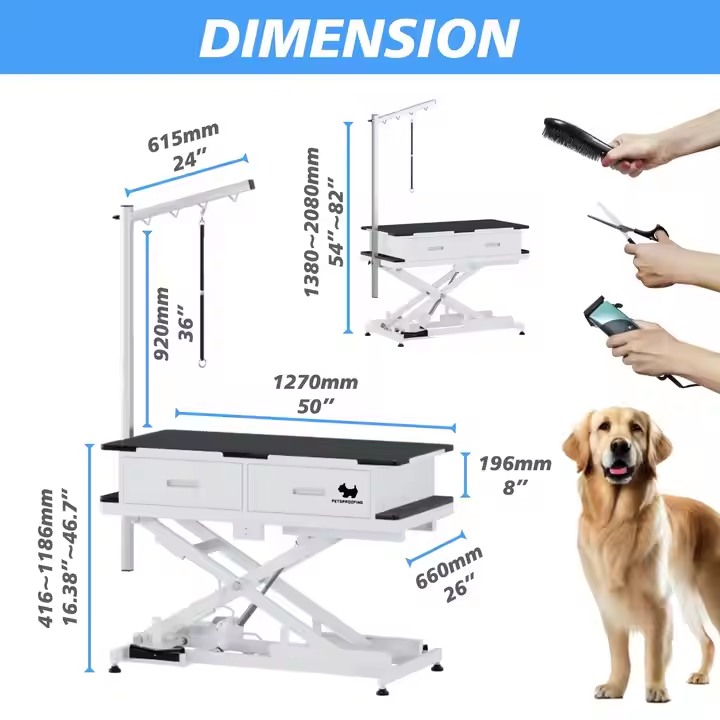
Choosing the right hardware determines your operational capacity. Investing in professional Grooming Equipment reduces liability. It also prevents groomer burnout. Manual lifting causes severe back injuries over time. Electric and hydraulic tables solve this problem immediately.
When evaluating electric or hydraulic tables, examine the weight capacity. The motor must handle large breeds weighing over 150 pounds without straining. Check the stability at maximum height. A wobbly table terrifies dogs and ruins precision scissor work. The surface must feature extreme non-slip durability. Avoiding static tables makes a strong business case. They drastically reduce workplace injuries. They improve employee retention.
Professional bathing tubs also require careful selection. You must decide between stainless steel and heavy-duty polycarbonate. Stainless steel offers unmatched durability and sanitation. It resists scratches where bacteria often hide. Polycarbonate options cost less and reduce water noise, but they may wear faster under heavy commercial use.
Access features remain critical for any tub. You must include walk-in ramps or electric lift systems. Lifting a wet, 80-pound senior dog safely is nearly impossible without mechanical help. Ramps mitigate lifting injuries. They also provide older dogs with a sense of security.
Drying systems represent another major equipment category. You will typically choose between high-velocity dryers and stand dryers. High-velocity units blast water out of the coat quickly. Stand dryers offer hands-free fluffing for curly coats.
Dryer Type | Primary Use Case | Key Capabilities to Check | Common Pitfalls |
|---|---|---|---|
High-Velocity | Water removal, de-shedding thick coats. | Variable speed control, high CFM (Cubic Feet/Minute). | Extreme noise levels; lacking verifiable decibel ratings. |
Stand Dryer | Hands-free finishing, straightening curly coats. | Heating elements, adjustable nozzle height. | Weak airflow; unstable base easily tipped by large dogs. |
Cage Dryer | Passive drying for anxious or senior pets. | Low heat settings, timer safety switches. | Overheating risks if not strictly monitored. |
Always view drying systems through a skeptic's lens. Manufacturers frequently make exaggerated "quiet motor" claims. Do not trust marketing terms alone. Check the actual CFM (Cubic Feet per Minute) ratings. Request verifiable decibel outputs. High-velocity air makes noise against the dog's coat, regardless of the motor housing. Prioritize variable speed control so you can lower the force around sensitive areas like ears and faces.
A beautiful design fails without proper utilities underneath. Infrastructure dictates your daily success. Achieving a functional Salon Setup requires strict adherence to commercial building standards. Electrical and plumbing systems demand immediate priority.
Electrical load planning stops fires and prevents blown breakers. High-velocity dryers draw massive amounts of power. A standard wall outlet cannot support them. You absolutely need dedicated 20-amp circuits for each high-velocity dryer station. Plugging multiple dryers into a shared circuit guarantees overloaded wires.
Water and electricity create lethal hazards. You must install GFCI (Ground Fault Circuit Interrupter) outlets in all wet zones. These outlets instantly cut power if they detect moisture interference. Do not overlook this life-saving code requirement.
Plumbing management separates professional salons from amateur setups. Dog hair destroys standard plumbing pipes. It acts like a net, catching grease and soap until a solid blockage forms. You must install professional-grade inline hair traps. These traps catch fur before it enters the main sewer line. Pair them with specialized, oversized floor drains. This prevents catastrophic plumbing blockages.
Water pressure requires careful calibration. Too much pressure scares small dogs. Too little pressure fails to rinse out thick shampoos. Install anti-scald mixing valves on every tub. These valves regulate temperature automatically. They prevent sudden blasts of hot water if someone flushes a toilet elsewhere in the building.
Climate control dictates the comfort and safety of the room. Bathing multiple dogs creates massive humidity. Damp air breeds mold and damages expensive clippers. High-volume exhaust fans remain strictly necessary. Pair them with commercial dehumidifiers. Controlling dampness creates a safe environment for brachycephalic breeds. Flat-faced dogs like Pugs and Bulldogs struggle to breathe in hot, humid spaces. Proper ventilation literally saves canine lives.
Clutter causes accidents. An organized space improves speed and reduces stress. You must utilize vertical storage aggressively. Wall-mounted organization systems keep tools secure. Clippers, shears, and blades cost thousands of dollars. Dropping them ruins their alignment instantly. Wall racks protect these expensive tools. They also keep dangerous electrical cords off the floor. Loose cords present a massive trip hazard for humans and dogs.
Shampoo and chemical management requires strategic planning. You use gallons of product weekly. Consider your dilution methods carefully.
Central Bathing Systems: These systems mix shampoo and water automatically. They deliver the perfect dilution through a spray nozzle. They save massive amounts of product and reduce bathing time.
Manual Dilution Bottles: These cost less upfront. However, staff often mix them incorrectly. They waste product and clutter the tub area.
Gallon Storage: Keep bulk liquids under counters or on heavy-duty lower shelves. Maintain a clutter-free footprint near the active walking paths.
Sanitation protocols demand equal attention. Standard household cleaners do not kill veterinary-specific pathogens like Parvovirus or Ringworm. You must select veterinary-grade, pet-safe disinfectants. Place cleaning stations directly within the room's workflow. If groomers have to walk to another room to grab sanitizing spray, they might skip the step. Keep spray bottles and paper towels mounted near every table and tub.
Many new owners rush the physical build. They ignore local regulations and choose cheap materials. These decisions always force expensive corrections later. You must proactively avoid common setup pitfalls.
Permitting and zoning oversights destroy business timelines. Commercial plumbing codes differ vastly from residential ones. You cannot ignore local noise ordinances. High-velocity dryers scream loudly. If you share walls with quiet businesses, you must install acoustic dampening panels. Failing to pull the right permits leads to delayed openings. City inspectors will force you to rip out unapproved plumbing. Always consult local authorities before signing a lease or starting demolition.
Under-speccing flooring represents another frequent mistake. Standard tile features grout lines. Grout absorbs dirty water, traps bacteria, and smells terrible over time. Residential linoleum tears easily under heavy dog nails. We highly recommend poured epoxy or polyaspartic coatings. These materials provide a seamless, waterproof barrier. Heavy-duty rubberized flooring also works well. Prioritize slip resistance and high chemical durability above all else. Groomers spill slippery conditioner daily; the floor must grip their shoes safely.
Lighting blind spots compromise haircut quality and safety. Standard overhead lighting casts heavy shadows. Shadows make it difficult to see dark nails or hidden skin matting. Cutting a dog accidentally is a groomer's worst fear. You must install daylight-balanced LED task lighting. Aim for a color temperature between 5000K and 6000K. This spectrum mimics natural sunlight. It allows accurate coat color evaluation and ensures perfectly safe scissoring angles.
Building a highly functional pet grooming room requires strict attention to infrastructure. You must prioritize workflow linearity, heavy-duty safety features, and commercial-grade utility. A beautiful paint job cannot mask failing plumbing or inadequate electrical panels. Focus your investment on what happens behind the walls and under the floors first.
Your next steps involve solidifying your foundation. Finalize your specific floor plan based on the linear workflow model. Consult immediately with a licensed commercial contractor and plumber regarding your building's utility constraints. Finally, begin shortlisting equipment vendors. Look for suppliers offering robust commercial warranties and easily accessible replacement parts. Smart planning today guarantees profitable operations tomorrow.
A: A single-operator room needs at least 150 to 200 square feet. This accommodates one tub, one table, and basic storage. A multi-table salon requires significantly more space. Plan for 50 to 80 square feet per additional workstation to maintain safe operating radii and reduce dog reactivity.
A: Yes. Standard residential plumbing will fail rapidly. You absolutely must install professional-grade inline hair traps to catch fur. Oversized floor drains and anti-scald mixing valves are also necessary to handle high water volume and prevent temperature spikes.
A: Professional grooming equipment draws massive power. Each high-velocity dryer typically requires its own dedicated 20-amp circuit. Shared circuits will constantly trip breakers. Always use GFCI-protected outlets in wet zones to prevent electrocution hazards.
A: Seamless, waterproof surfaces work best. Poured epoxy and polyaspartic coatings are ideal. They offer excellent slip resistance, block moisture, and resist harsh cleaning chemicals. Avoid standard tile, as grout lines absorb dirty water and harbor foul odors over time.


