
Please Choose Your Language
Views: 0 Author: Site Editor Publish Time: 2026-06-15 Origin: Site


Consumer demand for DIY pet care is rapidly expanding across the market. Pet shops and grooming salons recognize the strong strategic value of offering these services. Adding a DIY wash area to your retail footprint attracts new visitors. However, many business owners treat this purchase strictly as a basic equipment transaction. They fail to view it as a comprehensive facility upgrade. This major misstep frequently leads to massive plumbing failures. It causes bottlenecked foot traffic and ultimately yields a negative return on investment.
Our goal is to solve this problem before it starts. We provide business owners an objective, technical, and operational framework for evaluating, shortlisting, and implementing commercial Pet Grooming Equipment. You will learn exactly how to assess hardware quality and plan your facility space. We also cover how to design a seamless user experience. By following these guidelines, you can ensure your new setup drives foot traffic and boosts cross-sales without causing daily operational headaches.
Revenue vs. Cost: A self-service dog wash acts primarily as a foot-traffic driver and cross-selling mechanism; direct ROI depends heavily on local utility rates and pricing models.
Facility Prerequisites: Commercial installation requires significant infrastructure, including dedicated high-amp electrical circuits and industrial hair-trap drainage.
Hardware Standards: Avoid residential-grade conversions; long-term durability requires fully welded 304-grade stainless steel and integrated anti-scald safety valves.
User Experience (UX): Customer retention relies on mitigating common pain points: water temperature consistency, dryer noise, and tub accessibility for large breeds.
You must evaluate the primary value drivers of your new setup carefully. Business owners often misjudge how these stations generate money. You need to assess whether the station will function as a standalone profit center or a loss-leader. A standalone profit center charges customers by the minute or per wash to generate direct revenue. Conversely, a loss-leader brings pet owners into your store. You make money through cross-selling high-margin items. Customers buying treats, premium shampoos, and toys quickly offset the operational costs.
Cost considerations play a massive role in your business case. You must outline the initial hardware investments and contractor installation fees clearly. You then weigh these upfront expenses against your ongoing utility overhead. Water heating and high-amperage electricity consume a large portion of your monthly budget. Consumable restocking also impacts your margins. You will regularly buy bulk shampoos, conditioners, and cleaning supplies. You must forecast these recurring expenses accurately to avoid financial surprises.
Establishing target utilization rates is the final step in your ROI reality check. You need realistic assumptions for the daily washes required to break even. Most locations experience heavy weekend peaks. Saturday and Sunday might bring steady lines of muddy dogs. However, weekday lulls are inevitable. You might only see one or two customers on a Tuesday morning. Calculate your break-even point based on a full week's average. This balanced approach protects your cash flow projections.
Business Strategy | Primary Revenue Source | Pricing Model Strategy | Best Fit For |
|---|---|---|---|
Profit Center | Direct payments for tub usage | Premium flat-rate or pay-per-minute | High-traffic urban locations or laundromats |
Loss-Leader | Retail cross-sells and impulse buys | Low-cost or token-based promotions | Existing pet boutiques and grooming salons |
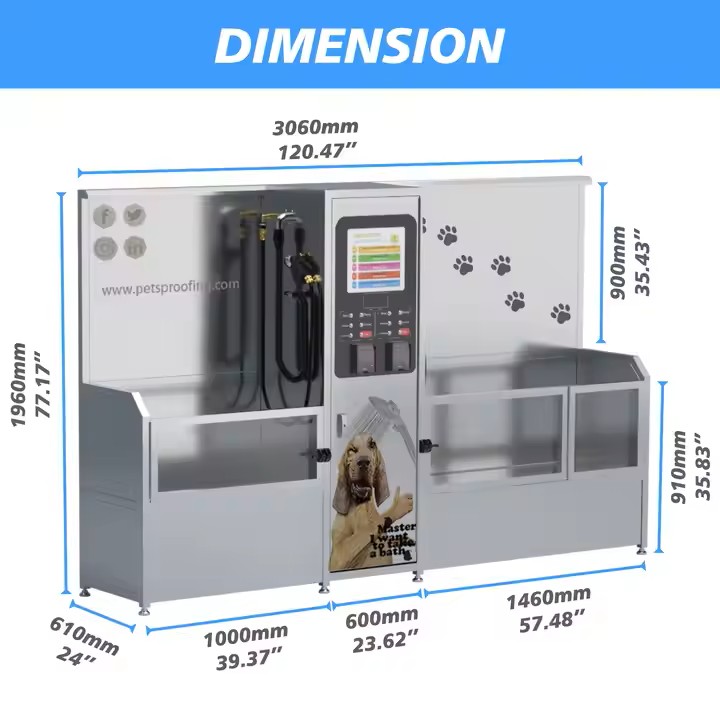
Material integrity serves as the foundation of any commercial setup. You must insist on fully welded 304-grade stainless steel. This material represents the non-negotiable industry standard. It offers unmatched rust prevention and superior sanitation. You must avoid fiberglass enclosures in high-volume settings. Fiberglass scratches easily under the weight of large dogs. Bacteria rapidly multiply inside those microscopic scratches. A high-quality Dog Wash Station uses heavy-duty steel to withstand daily abuse.
Ergonomics and animal safety require your immediate attention. Accessibility dictates whether pet owners will return. You must provide sturdy, non-slip ramps or heavy-duty steps. Large breeds often refuse to jump into elevated tubs. Ramps prevent severe pet injuries. They also save your customers from painful back strain. Built-in restraint systems are equally crucial. You must include reliable tethering points inside the tub. These secure anchors help customers manage anxious or squirming dogs safely.
Plumbing and filtration standards separate professional shops from amateur setups. Commercial-grade hair interceptors and strainers play a critical role here. A Golden Retriever sheds massive amounts of fur during a single bath. This fur easily slips down standard drains. Undersized drains lead to immediate facility flooding. They cause severe plumbing blockages deep within your building. Fixing these clogs requires expensive emergency plumbers. You must install industrial strainers to catch fur before it enters your pipes.
Best Practice: Always install a secondary inline hair trap beneath the tub drain. Check and empty this trap after every five washes.
Common Mistake: Relying on standard residential bathtubs. They warp under the weight of heavy dogs and lack proper restraint anchors.
Selecting the right payment and activation systems defines your customer's first impression. You must compare coin-operated machines, credit card tap-to-pay readers, and app-based token systems. Coin machines offer rugged reliability. However, fewer customers carry cash today. Tap-to-pay card readers provide incredible convenience. They encourage impulse upgrades. App-based token systems build loyalty but require customers to download software. You must highlight the reliability and evaluate the transaction fees associated with each method.
Payment System | Initial Cost | Transaction Fees | User Convenience |
|---|---|---|---|
Coin-Operated | Low | None | Low (Requires cash/change) |
Tap-to-Pay (Card) | Medium | High (Per transaction) | High (Fast and universal) |
App-Based Tokens | High | Medium (Platform fees) | Medium (Requires app download) |
Integrated dispensing systems dramatically alter your daily maintenance routines. Built-in shampoo and conditioner injection systems dilute concentrates automatically. They push product directly through the spray nozzle. This saves customers time and creates a premium feel. However, these pumps require regular line flushing. Manual dispensers are much cheaper to install. Unfortunately, customers often pump too much manual product. This wastes expensive concentrates and extends rinsing times significantly.
Climate and noise control directly impact animal behavior. You must regulate water temperature strictly. Thermostatic mixing valves are an absolute necessity. They prevent sudden temperature spikes if someone flushes a nearby toilet. Scalding a customer's dog creates an immediate liability nightmare. Noise mitigation is just as important. High-velocity dryers stand out as a primary source of user complaints. They emit high-pitched whines that terrify nervous pets. You should evaluate insulated blower boxes to dampen sound. Variable speed dials also allow owners to lower the airflow and calm their anxious pets.
Electrical infrastructure demands careful planning before any equipment arrives. Industrial blow dryers and commercial water heaters draw massive amounts of power. You must detail the need for dedicated GFI (Ground Fault Interrupter) circuits. Standard wall outlets will trip immediately under this load. Tripped breakers during a busy Saturday will ruin your customer experience. You must hire a licensed electrician to run independent lines directly from your main breaker box.
Water supply lines and drainage sizing dictate your installation location. Standard retail spaces usually feature small residential drains. These pipes completely lack the capacity for rapid water clearance. You typically need 2-inch or 3-inch floor drains. Retrofitting these large pipes often requires concrete trenching. Plumbers must cut into your concrete slab to lay new lines. Note the potential cost of concrete trenching early in your budget. It often represents the most expensive part of your build-out.
Spatial zoning requires you to design a dedicated "wet zone" strategically. You must address the required physical clearance around the tub. Multi-person families often crowd around the station to wash a single dog. They need ample room to maneuver safely. You also need waterproof wall surrounds. Standard drywall rots quickly in humid environments. FRP (Fiberglass Reinforced Plastic) panels block moisture effectively. Finally, anti-slip commercial flooring is mandatory. Wet floors create severe slipping hazards for both humans and pets.
Map the Footprint: Leave at least 36 inches of clearance on the working side of the tub for family access.
Waterproof the Shell: Install FRP panels at least four feet high on all surrounding walls.
Secure the Floor: Apply a commercial-grade epoxy coating with anti-slip grit additives to the surrounding floor space.
Ventilate the Area: Add an industrial exhaust fan to pull humid air out of the building.
The daily sanitation burden represents a hidden labor cost. You must acknowledge the effort required to clean the station constantly. Every Self-service Dog Wash requires strict protocols between unmonitored uses. Customers will leave muddy paw prints, stray fur, and soap scum behind. You must sanitize the area to prevent cross-contamination. Parvovirus, ringworm, and fleas spread rapidly in dirty environments. A filthy tub will destroy your brand reputation faster than any other factor.
Component lifespan directly affects your long-term profitability. Commercial tubs feature high-wear parts that degrade over time. Spray nozzles drop on the floor repeatedly. Dryer hoses crack from constant bending. Payment card readers suffer from water exposure. You must identify these vulnerable components early. More importantly, choose a manufacturer with domestic or easily accessible replacement parts. Waiting four weeks for an imported spray nozzle means your machine sits broken. Quick parts availability keeps your revenue flowing.
Liability and compliance issues require proactive management. You need a brief overview of posting clear user guidelines. Mount durable, waterproof signs detailing exact operational steps. You must define who assumes liability for unmonitored pets. Include a clear disclaimer stating owners bathe their pets at their own risk. Finally, ensure ADA compliance where applicable. You may need to provide specific clearance spaces or accessible controls to meet local disability regulations. Failing to meet these codes invites heavy municipal fines.
Best Practice: Keep spare dryer hoses and spray nozzles in your back room. Replace them the moment you notice fraying or leaking.
Common Mistake: Leaving the station entirely unattended. Staff should perform a quick visual inspection every 30 minutes.
Adding a DIY washing service transforms your retail environment and drives massive foot traffic. However, you must navigate the hardware and facility requirements carefully. Base your final vendor selection on concrete shortlisting logic. Prioritize warranty terms, rapid parts availability, and compatibility with your building's existing plumbing constraints. Do not let flashy features distract you from core material integrity and safety valves.
Take proactive steps to secure your investment. You must evaluate your space realistically. Next steps include consulting with a licensed commercial plumber and electrician immediately. Do this before placing any equipment deposits. Review your electrical panel capacity and map out your concrete trenching needs. By following this operational framework, you will build a durable, profitable station that delights pet owners and grows your bottom line.
A: Basic modular stainless-steel tubs cost between $1,500 and $3,000. Fully automated, coin-operated vending units range from $8,000 to $25,000. These figures only cover the hardware. Contractor installation, concrete trenching, and electrical upgrades often add another $3,000 to $10,000 depending on your building.
A: Businesses typically use two models. Flat-rate token pricing charges a set fee (e.g., $15-$25) for a defined block of time. Pay-by-the-minute models charge a base swipe fee plus a per-minute rate. Flat rates are simpler for retail shops, while pay-per-minute suits standalone laundromat models.
A: No. Manufacturers immediately void residential warranties if equipment is used commercially. Residential tubs lack 304-grade stainless steel and commercial hair traps. Their build quality quickly fails under the high volume and heavy weight of daily retail use, leading to costly leaks.
A: You must locate stations away from quiet retail zones or grooming tables. Use sound-dampening acoustic panels on the surrounding walls. Additionally, purchase dryers with insulated blower boxes and variable speed dials. This allows users to lower the airflow, significantly reducing the high-pitched noise.


