
Please Choose Your Language
Views: 0 Author: Site Editor Publish Time: 2026-09-10 Origin: Site


Most pets need professional grooming every six to eight weeks to maintain healthy skin and coats. While this baseline works well for general maintenance, enforcing this schedule across a busy client roster requires strict booking policies and heavy-duty physical infrastructure. Pet owners often deal with severe matting and coat damage when appointments slip past the recommended window. At the same time, professionals face severe ergonomic strain and workflow bottlenecks when handling high-frequency, heavy-breed appointments without the right structural support. We need to shift focus from basic preventative health benefits to the technical evaluation of salon equipment. Supporting a strict recurring schedule safely requires specific hardware. Evaluating advanced lifting mechanisms ensures facilities can handle the physical demands of continuous, high-volume pet grooming without compromising safety or efficiency. The right equipment turns a physically exhausting schedule into a sustainable, high-throughput operation.
Baseline Frequency: As a general rule, most pets thrive on a 6-to-8-week grooming schedule, though fast-growing canine coats and long-haired cats require intervention every 4 to 6 weeks to prevent matting and manage shedding.
Operational Strain: High-frequency scheduling directly correlates with groomer fatigue; ergonomic intervention is a requirement, not a luxury, for sustainable operations.
Equipment Dictates Throughput: Upgrading to an electric grooming table or an air lifting pet grooming table significantly reduces transition time between pets, increasing daily appointment capacity.
Equipment Lifecycle: Selecting between hydraulic, electric, and pneumatic systems requires evaluating upfront costs against long-term maintenance, lifespan, and daily operational efficiency.
Maintaining a healthy coat requires matching the appointment frequency to the specific biological growth cycle of the animal's hair. High-maintenance coats demand a strict four-to-six-week intervention. Breeds such as Poodles, Goldendoodles, Labradoodles, and Bichon Frises possess continuously growing hair that traps shed dander and environmental debris. When these coats are neglected beyond six weeks, friction areas around the armpits, collar lines, and behind the ears quickly develop tight mats. If left unaddressed, these mats merge into a solid pelt close to the skin. Once a coat reaches the pelting stage, brushing becomes inhumane. Professionals have no safe option other than a complete shave-down using a surgical blade, which often upsets clients and damages the coat's natural texture.
For the majority of standard clients, the six-to-eight-week window represents the operational sweet spot. This timeframe applies to terriers requiring regular clipping, spaniels needing furnishings trimmed, and mixed breeds with moderate hair growth. At eight weeks, the coat has grown enough to lose its shape but remains manageable enough to brush out without causing the animal undue stress or pain. Staying within this window allows the groomer to use standard guard combs and shears without fighting through compacted undergrowth.
Short-haired or double-coated breeds operate on a slightly different timeline. Breeds like Labrador Retrievers, Huskies, and German Shepherds generally require an eight-to-twelve-week schedule. These visits focus heavily on deshedding treatments, undercoat extraction, and deep conditioning rather than full-body haircuts. Removing impacted undercoat prevents hot spots and allows the skin to breathe during seasonal temperature shifts. High-velocity dryers and specialized rakes are used to blow out dead hair, which significantly reduces shedding in the owner's home.
Feline clients present unique scheduling demands. Long-haired cats, such as Persians and Maine Coons, often require four-to-six-week intervals. Feline skin is exceptionally thin and highly susceptible to tearing if mats are allowed to form and tighten. Regular degreasing baths and comb-outs prevent this dangerous pelting. Conversely, short-haired domestic cats may only require seasonal visits to manage shedding, trim sharp claws, and clean ears.
Adhering to a strict recurring schedule extends far beyond aesthetic maintenance. Consistent handling allows professionals to establish a baseline for the animal's physical condition, facilitating the early detection of dermatological issues. Regular baths with specialized shampoos manage seborrhea, yeast overgrowth, and allergy-induced dermatitis. When appointments stretch too far apart, minor skin irritations escalate into severe secondary infections requiring veterinary intervention.
Nail growth rates also dictate frequency. Dogs walking primarily on soft surfaces do not naturally wear down their nails. Waiting longer than eight weeks causes the quick—the blood vessel inside the nail—to elongate. Once the quick extends, nails cannot be trimmed short without causing bleeding and pain, leading to altered gaits and eventual joint stress. Regular ear maintenance is equally critical. Plucking excess hair and flushing the ear canal every six weeks prevents the buildup of wax and moisture that breeds bacterial and fungal infections.
Setting realistic rebooking expectations requires clear communication during the initial consultation. Professionals must establish authority and guide the client toward the correct schedule. You can implement the following steps to ensure compliance:
Evaluate the dog's coat condition in front of the owner during drop-off, physically pointing out any starting mats or impacted undercoat.
Explain the biological hair growth cycle of their specific breed and why waiting longer than the recommended weeks causes pain for the animal.
Show before-and-after portfolio pictures of severely matted dogs that required shave-downs due to delayed maintenance.
Offer a recurring appointment slot before they leave the shop, locking them into the calendar for the entire year.
Servicing a fully booked schedule of six-to-eight-week recurring clients imposes a severe physical toll on the human body. The daily routine involves continuous lifting, bending, and maneuvering of uncooperative animals. Lifting a struggling 80-pound Golden Retriever into a tub or onto a static workstation places immense sheer force on the lumbar spine. Over a standard eight-hour shift, this repetitive stress accumulates rapidly, breaking down cartilage and straining muscle groups.
Industry data consistently highlights musculoskeletal injuries as the primary cause of early career termination in this field. Rotator cuff tears, carpal tunnel syndrome, and chronic lower back pain are direct results of operating in compromised postures. When a workstation cannot adjust to the height of the operator or the size of the animal, the professional must contort their body to reach underbellies and lower legs. Bending over a static table for hours to scissor a small dog forces the spine into an unnatural curve. Ergonomic intervention through adjustable equipment is the only sustainable method to mitigate this physical degradation.
Time is the most strictly constrained resource in a high-volume salon. The minutes spent manually adjusting table heights, team-lifting heavy dogs, and wrestling with anxious pets directly consume billable hours. If a professional spends an extra ten minutes per dog managing equipment limitations, a six-dog schedule loses a full hour of production time. This lost hour represents the inability to book an additional client, directly capping daily revenue.
Upgrading the physical infrastructure acts as a direct solution to throughput bottlenecks. When transition times are minimized by automated lifting mechanisms, the workflow remains uninterrupted. Smooth, rapid adjustments keep the animal calmer, reducing the time spent managing behavioral resistance. This efficiency allows facilities to increase their daily appointment volume safely, directly improving overall profitability without compromising the quality of the finish.
Task | Static Table Time | Assisted Lifting Table Time | Time Saved Per Dog |
|---|---|---|---|
Loading a 70lb Dog | 3 - 5 minutes (requires 2 staff) | 30 seconds (dog steps on) | ~4 minutes |
Adjusting Height for Underbelly | 2 minutes (manual pin adjustment) | 10 seconds (foot pedal) | ~2 minutes |
Managing Anxious Behavior | 5 - 10 minutes (wrestling) | 1 - 2 minutes (smooth ride calms pet) | ~6 minutes |
Total Daily Impact (6 Dogs) | ~60 - 102 minutes lost | ~4 - 15 minutes spent | Over 1 hour saved daily |
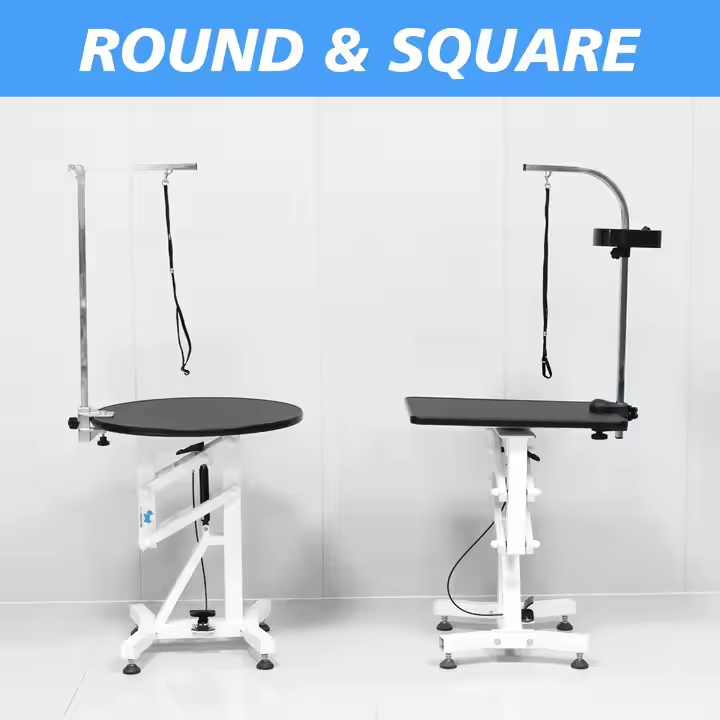
The hydraulic grooming table utilizes a fluid-filled cylinder and a manual foot pump to raise the working surface. By repeatedly stepping on the lever, the operator forces hydraulic fluid into the cylinder, extending the piston and lifting the load. Depressing the lever fully releases the pressure, allowing the surface to lower smoothly under its own weight.
The primary advantage of a hydraulic system is its complete independence from electrical power. This makes it an ideal choice for mobile units, wet rooms, or older buildings with limited outlet availability. They are historically durable, relying on simple mechanical principles that withstand heavy daily use. The initial capital requirement is generally lower than motorized alternatives, making them accessible for newer operations or shops looking to outfit multiple stations quickly.
However, the manual nature of the pump requires physical effort. Lifting a heavy breed still demands repetitive leg motion, which becomes fatiguing over a long shift. The adjustment speed is inherently slower, and the pumping action creates a slight jerking motion that may startle highly anxious animals. Over a long lifespan, the seals within the cylinder eventually wear out. When this happens, the table may slowly sink under heavy loads, requiring fluid top-offs or complete seal replacements to restore full functionality.
Driven by a motorized linear actuator, the electric grooming table provides seamless, hands-free height adjustment. The operator simply presses a foot pedal or hand remote, and the electric motor smoothly extends or retracts the lifting column. These systems are engineered for substantial weight capacities, often exceeding 250 pounds, making them the definitive choice for handling giant breeds like Mastiffs, Great Danes, and Saint Bernards.
The elimination of manual pumping drastically reduces operator fatigue. The smooth, consistent motion keeps large dogs stable and secure during elevation. Many models feature extreme height ranges, lowering almost to the floor so giant breeds can step on without any lifting required, and raising high enough to bring toy breeds to eye level. This completely eliminates the need for the operator to bend over, protecting their lower back during intricate scissor work.
The drawbacks center on environmental requirements. These units must be tethered to a power source, necessitating careful cord management to prevent tripping hazards and electrical risks in a wet environment. The internal motors and actuators represent a higher initial investment. While highly reliable, a motor failure stops operations immediately, requiring specialized parts for repair rather than a simple fluid fix. Shops must ensure they have backup stations available if a motor goes down during a busy holiday rush.
The air lifting pet grooming table operates on pneumatic technology. Instead of fluid or electric motors, these units use compressed air to drive the lifting cylinder. When the pedal is engaged, air from an external or integrated compressor floods the chamber, elevating the surface with exceptional speed and fluidity.
Pneumatic systems offer the fastest height adjustments available on the market. The ride is extraordinarily smooth and virtually silent at the point of lifting, which is highly advantageous when working with easily spooked cats or noise-phobic dogs. Because the lifting column itself contains no electrical components, it is incredibly resilient in wet, humid environments. The lack of complex internal gearing means fewer moving parts that can wear out, strip, or jam over time.
The primary limitation is the reliance on an air compressor. If the compressor is external, the facility must route air hoses safely across the floor or through the ceiling. You also have to manage the noise generated when the compressor tank refills, which can be loud if not housed in a separate utility room. If the compressor is integrated into the table base, the unit sits at a premium pricing tier. Facilities must weigh the exceptional speed and smooth operation against the logistical requirements of managing compressed air infrastructure.
Selecting the appropriate lifting mechanism requires a direct analysis of the facility's primary demographic. A salon specializing in toy breeds has vastly different structural needs than a facility servicing large working dogs. You cannot force a lightweight table to handle a heavy caseload without risking equipment failure and staff injury. The table below outlines how different systems align with specific caseloads.
Equipment Type | Average Weight Capacity | Optimal Client Profile | Operation Smoothness |
|---|---|---|---|
Hydraulic System | 150 - 200 lbs | Mixed breeds, medium dogs, standard daily caseloads. | Moderate (slight stepping motion during lift). |
Electric Actuator | 250 - 300+ lbs | Giant breeds, heavy double-coated dogs, senior pets. | High (consistent, steady elevation). |
Pneumatic Air Lift | 100 - 150 lbs | Felines, toy breeds, highly anxious or noise-phobic pets. | Exceptional (rapid, fluid, and silent at the table). |
Evaluating long-term value requires understanding the distinct maintenance schedules of each system. Neglecting maintenance leads to premature failure and dangerous working conditions. Implement the following routines based on your equipment choice:
Hydraulic Maintenance: Require periodic visual inspections of the cylinder seals. If a leak develops, wipe the cylinder clean, replace the fluid, and bleed the system of air to restore lifting power. Lubricate the foot pedal hinge monthly.
Electric Maintenance: Require minimal daily maintenance, though operators must keep the tracks and scissor mechanisms free of compacted hair to prevent motor strain. Inspect the power cord weekly for any signs of chewing or fraying.
Pneumatic Maintenance: Require regular draining of the air compressor tank to prevent internal rust from condensation. Check the air hoses routinely for punctures or loose fittings that could cause pressure drops.
The return on investment for premium lifting tables is calculated through risk mitigation and volume increases. Preventing a single severe back injury eliminates massive workers' compensation claims and extended staff absences. Furthermore, saving five to ten minutes of physical wrestling per dog allows a facility to comfortably add one additional appointment per operator per day, rapidly offsetting the initial equipment expenditure.
Regardless of the lifting mechanism, all professional tables must adhere to strict safety standards. The tabletop surface must feature a deeply textured, non-slip rubber or silicone matting to provide traction for wet paws. A slick surface causes dogs to panic and scramble, increasing the risk of scissor cuts. Stability at maximum height extension is critical. A table that wobbles when raised fully creates an unsafe environment for both the animal and the operator.
Electrical compliance is non-negotiable. Any motorized unit operating in a facility utilizing water must be plugged into a Ground Fault Circuit Interrupter (GFCI) outlet. Cords must be heavily insulated and routed through protective conduits or overhead drops to prevent animals from chewing them and to keep connections entirely off wet floors. Failure to secure cords properly violates building codes and puts the entire shop at risk.
Replacing core infrastructure in an active salon presents logistical challenges. Because high-maintenance clients are strictly locked into four-to-six-week recurring schedules, canceling appointments to install equipment results in immediate coat damage for the pets and lost revenue for the business. Installations must be scheduled during off-hours or weekend closures to maintain workflow.
Measure all doorways, hallways, and tight corners prior to delivery to ensure fully assembled heavy-duty tables can navigate the building without damaging walls.
Pre-install necessary electrical drops, GFCI outlets, or air compressor lines before the new tables arrive to prevent installation delays.
Schedule a waste management service to remove the heavy wooden crates and pallets immediately after unboxing to keep the shop floor clear.
Retain the old equipment in a storage area for at least two weeks as a contingency backup in case of early mechanical failure with the new units.
Introducing motorized or pneumatic equipment requires immediate staff training to prevent accidents. Operators must be trained to identify pinch points within the scissor-lift mechanisms and ensure their feet, tools, and the animal's tail are clear before lowering the table. A crushed foot or pinched tail will shut down operations and damage your reputation.
Foot pedal management is a critical skill. Staff must learn to step away from the pedals when actively scissoring to prevent accidental elevation changes that could result in a severe cut. Finally, teams must be taught how to acclimate anxious pets to the new sounds. While electric motors are quiet, the initial hum can startle a nervous dog. Engaging the motor in short bursts before placing the animal on the table helps desensitize them to the vibration and noise. For pneumatic tables, ensure the compressor is housed far enough away that the sudden kick-on noise does not cause dogs on the table to jump.
Sustaining a rigorous six-to-eight-week grooming schedule is the biological standard for maintaining optimal pet health, but executing this model at high volumes demands professional-grade ergonomic infrastructure. The physical toll of manual lifting and static workstations directly limits a facility's throughput and threatens the longevity of its operators. Upgrading to advanced lifting mechanisms is a necessary operational evolution.
Selecting the right equipment depends entirely on the facility's specific constraints and client demographics. Hydraulic systems offer reliable, power-independent lifting for mobile setups. Electric models provide the heavy-duty capacity required for giant breeds and high-volume salons. Air lifting systems deliver the rapid, ultra-smooth operation necessary for premium feline handling and highly anxious pets.
Audit your current daily appointment volume to identify bottlenecks caused by manual lifting or slow transitions.
Assess your team's physical fatigue levels and track any recurring complaints of back or shoulder pain.
Measure your available floor space and evaluate your current electrical or pneumatic infrastructure.
Request technical specifications and weight capacity limits from equipment manufacturers to match your primary breed demographic.
A: Most pets should be professionally groomed every six to eight weeks. This baseline schedule maintains healthy skin, prevents the undercoat from impacting, keeps nails at a safe length, and ensures ears remain clean and free of infection.
A: Breeds with fast-growing, curly, or drop coats—such as Poodles, Doodles, and Bichons—require grooming every four to six weeks. Waiting longer allows friction mats to form near the skin, which can quickly turn into a solid pelt requiring a surgical shave.
A: Yes. Long-haired cats prone to pelting and severe greasiness need professional attention every four to six weeks to prevent painful skin tearing. Short-haired cats generally only require seasonal visits for deshedding and nail trimming.
A: With proper daily maintenance, a high-quality electric table can last 10 to 15 years. The linear actuator motors are highly durable, though the non-slip tabletop surface may require resurfacing or replacement every few years due to scratch wear.
A: Most standard hydraulic tables max out around 150 to 200 pounds. While they can physically lift heavy dogs, pumping a 180-pound Mastiff requires significant leg strength and effort, making electric tables a better choice for giant breeds.
A: Air lifting tables use pneumatic cylinders powered by compressed air, offering exceptionally fast and smooth height adjustments. Electric tables use motorized linear actuators, which are slower but can typically handle heavier weight capacities without needing an external compressor.


