
Please Choose Your Language
Views: 0 Author: Site Editor Publish Time: 2026-08-19 Origin: Site


Hidden operational costs in veterinary sanitation quietly drain clinical resources every single day. Labor hours spent scrubbing poorly designed enclosures reduce the time your staff dedicates to direct patient care. Healthcare-Associated Infections (HAIs) like Parvovirus and Bordetella pose severe risks to vulnerable animals in clinical settings. Inadequate enclosure designs create microscopic reservoirs for these pathogens, allowing them to survive standard wipe-downs. Evaluating a pet cage for your facility requires looking far beyond basic dimensions and wire spacing. You must analyze material porosity, structural seams, facility integration, and modular adaptability. Strict infection control demands enclosures built specifically to withstand aggressive chemical disinfection while streamlining daily workflow. The right design features eliminate hidden bacterial breeding grounds and allow veterinary technicians to sanitize spaces rapidly and effectively.
Material Integrity: Medical-grade stainless steel remains the industry standard due to its non-porous nature and resistance to highly corrosive veterinary disinfectants, far outperforming plastics that harbor bacteria.
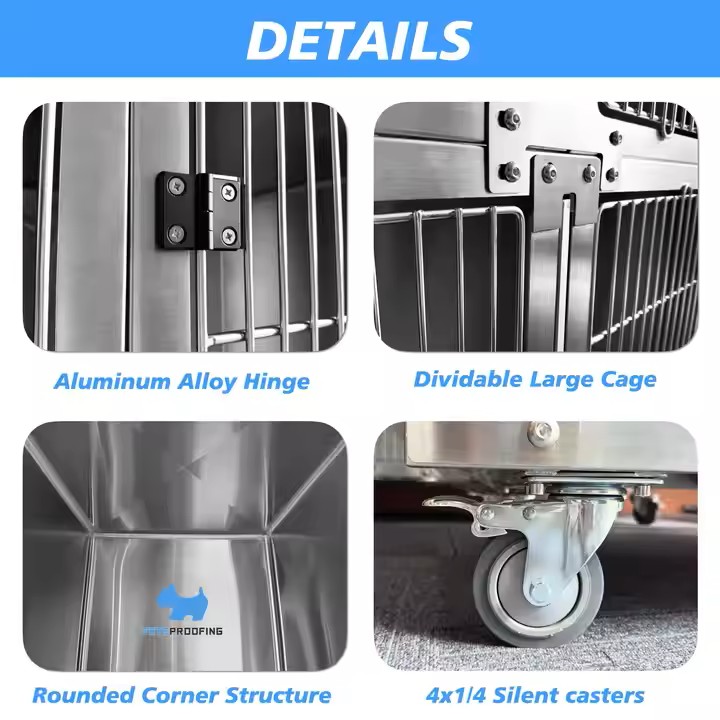
Seamless Construction: Coved corners and continuous welds are non-negotiable features that prevent organic matter from accumulating in unreachable crevices and ensure proper disinfectant contact time.
Component Accessibility: A removable pet cage design (grates, pans, and doors) drastically reduces turnaround time between patients by allowing components to be sanitized in dedicated wash stations.
Workflow Integration: Proper drainage routing, ergonomic latches, and facility-aligned mounting directly translate to reduced labor costs and higher compliance with standard operating procedures (SOPs) for cleaning.
Defining a sanitary environment in a clinical setting requires understanding the distinct differences between visually clean, sanitized, and sterilized surfaces. A visually clean surface simply lacks obvious dirt or organic matter. A sanitized surface has a significantly reduced pathogen load, achieving safe levels for general patient housing. Sterilization eliminates all microbial life, which is necessary for surgical instruments but impractical for large animal housing. Your primary goal is high-level sanitation. You need enclosures that facilitate the rapid and complete removal of organic debris followed by the effective application of chemical disinfectants.
Veterinary practices often face a difficult trade-off between complex housing designs and the labor required to disinfect them. Enclosures with numerous built-in patient amenities, intricate shelving, or textured surfaces might look appealing to clients. However, these complex geometries create severe operational bottlenecks for your staff. Every extra corner, hinge, and textured surface requires additional manual scrubbing.
If an enclosure takes twenty minutes to clean instead of five, staff will inevitably fall behind during busy shifts. This leads to rushed cleaning protocols and compromised infection control. The right design features bridge this gap entirely. Smooth surfaces, minimal internal hardware, and accessible corners allow for rapid turnover without sacrificing hygiene. When an enclosure supports quick, fluid wiping motions, technicians can easily apply disinfectants evenly. This ensures the chemicals remain wet on the surface for the required contact time, effectively neutralizing pathogens before the next patient arrives.
Sanitation Level | Definition | Clinical Application | Design Requirement |
|---|---|---|---|
Visually Clean | Removal of visible dirt, hair, and feces. | Pre-cleaning phase before applying disinfectants. | Smooth surfaces that do not trap hair or solid waste. |
Sanitized / Disinfected | Destruction of most pathogens to a safe level. | Standard patient turnover in wards and kennels. | Non-porous materials that hold liquid disinfectants for 5-10 minutes. |
Sterilized | Complete elimination of all microbial life. | Surgical instruments and operating room surfaces. | Autoclave compatibility (not applicable to large housing units). |
Veterinary associations like the American Animal Hospital Association (AAHA) and the American Veterinary Medical Association (AVMA) provide strict guidelines regarding facility hygiene. These organizations emphasize the necessity of non-porous surfaces and proper drainage to prevent disease transmission. Housing materials must withstand repeated exposure to water, cleaning agents, and animal waste without degrading.
A commercial veterinary pet cage must meet these baseline expectations to pass facility inspections. Professional veterinary technicians rely on these standards to execute their daily cleaning SOPs safely. If an enclosure features exposed particle board, rusting iron, or degrading plastic, it immediately fails professional standards. Compliance requires materials and designs that actively repel moisture and resist chemical degradation over years of heavy daily use.
Surfaces must be completely impervious to moisture and organic fluids.
Enclosures must feature structural integrity that prevents escape or injury.
Drainage systems must actively prevent cross-contamination between adjacent units.
Materials must not emit toxic fumes or off-gas when exposed to standard cleaning chemicals.
The materials you choose for animal housing dictate the long-term viability of your clinical hygiene protocols. High-volume clinics subject their enclosures to intense mechanical wear and harsh chemical exposure. Comparing primary materials reveals stark differences in how they handle this daily abuse.
Medical-grade stainless steel dominates veterinary housing for very specific metallurgical reasons. Alloys like 304 and 316 stainless steel contain high levels of chromium and nickel. This composition creates a passive oxide layer on the surface of the metal. If the metal gets scratched by an aggressive dog or a stiff scrub brush, this oxide layer instantly reforms in the presence of oxygen, protecting the underlying steel from rust and corrosion.
This self-healing property makes a stainless steel dog kennel vastly superior to plastics, fiberglass, or powder-coated metals. Plastics and fiberglass degrade over time. As animals scratch the surfaces, microscopic abrasions form. These micro-abrasions become permanent breeding grounds for bacteria. Standard wiping cannot reach the pathogens hiding inside these tiny crevices. Stainless steel resists this microscopic scratching, maintaining a smooth, non-porous barrier that wipes clean effortlessly year after year. The 316 alloy specifically adds molybdenum, which drastically increases resistance to chlorides found in bleach and salt, making it the premium choice for heavy-duty clinical environments.
Veterinary sanitation requires aggressive chemicals. Daily protocols involve exposing surfaces to accelerated hydrogen peroxide, potassium peroxymonosulfate, and sodium hypochlorite. These chemicals destroy organic matter and cellular walls, but they also attack the surfaces they clean. You must evaluate how your housing materials react to this relentless chemical assault.
Inferior materials degrade rapidly under these conditions. Coated metals will begin pitting and rusting as soon as the outer layer chips. Plastics can become brittle, discolor, and even off-gas when exposed to strong oxidizers. This degradation compromises the sanitation barrier entirely. Once a surface becomes pitted or porous, you can no longer sanitize it effectively, regardless of how much chemical you apply. Medical-grade stainless steel withstands these harsh disinfectants without degrading, ensuring the sanitation barrier remains intact.
Sodium Hypochlorite (Bleach): Highly corrosive to standard steel and aluminum. Requires 304 or 316 stainless steel to prevent rapid pitting and rust.
Accelerated Hydrogen Peroxide: Can cause certain plastics and rubbers to become brittle over time. Stainless steel remains completely unaffected.
Quaternary Ammonium Compounds: Leaves a sticky residue on porous surfaces that traps dirt. Wipes cleanly off smooth stainless steel without leaving a film.
Material choice is only half the equation. The physical geometry of the enclosure dictates how easily staff can actually clean it. When evaluating specification sheets, you must break down specific structural attributes that directly impact daily sanitation workflows.
The fluid dynamics of cleaning dictate that liquids and organic debris naturally pool in sharp angles. Standard 90-degree corners trap hair, feces, and bacteria. These sharp angles resist mechanical scrubbing, forcing technicians to use specialized brushes or picks to dig out accumulated grime. This wastes time and frequently leaves microscopic debris behind. Spot-welded seams present a similar hazard, leaving tiny gaps between metal plates where fluids seep in and bacteria multiply out of reach.
Coved corners and ground-smooth continuous welds solve this problem by creating a seamless interior envelope. A coved corner features a gentle, rounded radius instead of a sharp angle. Liquid flows smoothly across this radius. Smooth, seamless interiors prevent cleaning cloths and disposable wipes from snagging or tearing. This allows technicians to utilize a single, continuous wiping motion. It ensures an even distribution of liquid disinfectants across the entire surface, which is mandatory for meeting the required pathogen-kill contact times.
Managing liquids efficiently prevents cross-contamination and reduces manual drying time. Larger kennel runs often utilize pitched floors and integrated trench drains. The pitch uses gravity to pull urine and wash water away from the animal and into a centralized waste system. A standard pitch of 1/4 inch per foot ensures rapid draining without creating an uncomfortable slope for the resting animal. This keeps the primary resting area dry and sanitary.
In standard stacked banks, proper fluid routing is equally critical. The design must prevent fluids from spilling over the front lip or leaking through the side seams into adjacent units. During high-pressure washdowns or heavy spills, containment lips and strategic drainage paths ensure that contaminated water does not infect the patient housed below or beside the unit being cleaned. Integrated drip edges direct fluids straight down into collection troughs rather than allowing them to run along the underside of the cage floor.
Fixed internal components create massive cleaning hurdles. If a technician has to lean inside an enclosure to scrub a bolted-down resting grate, they risk cross-contamination and physical strain. A removable pet cage design transforms this workflow entirely. Lift-off hinges, sliding waste pans, and removable resting grates allow staff to dismantle the interior in seconds.
Modular, removable parts allow staff to transport heavily soiled items directly to dedicated wet rooms. Here, they can utilize deep-sink soaking or commercial cage washers. Mechanical washing with high heat and pressure achieves a level of sanitation that manual scrubbing inside a small enclosure simply cannot match. It also leaves the main housing unit empty, allowing for a rapid, unobstructed wipe-down of the interior walls. This parallel cleaning process cuts turnover time in half.
Different zones within a veterinary clinic require specific housing configurations to maintain appropriate hygiene standards. A one-size-fits-all approach often fails when dealing with highly contagious patients or complex facility layouts. You must scale your housing solutions to match your specific compliance requirements.
Isolation wards demand the highest level of infection control. Airborne and droplet-transmitted pathogens require physical barriers that standard wire bars cannot provide. In these high-risk zones, utilizing a display pet cage featuring tempered glass fronts offers distinct sanitation advantages.
Tempered glass prevents respiratory droplets from traveling between units. From a sanitation perspective, glass provides a perfectly smooth, non-porous surface that is incredibly easy to wipe down. Staff can quickly verify cleanliness visually without opening the door. You must evaluate the ventilation trade-offs when selecting glass. Glass fronts restrict passive airflow, meaning these units often require active, filtered ventilation systems to maintain air quality and manage humidity inside the enclosure. Without proper airflow, condensation builds up on the glass, creating a damp environment that encourages bacterial growth.
Most clinics utilize modular banks to maximize vertical space. When stacking individual units, the seams where the cages meet become critical vulnerability points. If these joining brackets are not properly sealed, urine and cleaning fluids will seep between the cages. This creates inaccessible pockets of bacteria that emit odors and harbor disease. High-quality modular systems use overlapping flanges and heavy-duty silicone sealants to lock moisture out of these gaps.
Mobility is another critical factor. Modular banks mounted on heavy-duty casters allow staff to move the entire assembly. This is the only way to effectively clean the floors and walls behind and underneath the housing units. Alternatively, cage design must interact seamlessly with facility architecture. Pairing wall-mounted floating cages or sealed-base units with durable, easy-to-clean flooring like seamless vinyl or sealed concrete eliminates inaccessible floor crevices entirely. Floating cages allow mop heads and floor scrubbers to pass directly underneath without obstruction.
The physical design of your animal housing directly influences how your staff works. Poor ergonomics lead to fatigue, which inevitably results in corner-cutting during sanitation protocols. You must evaluate how the physical features of the enclosures support or hinder your daily operations.
Consider the labor hours saved per week when utilizing easy-to-clean enclosures versus legacy models. If a technician saves just three minutes per turnover, and your clinic turns over forty units a day, you save two hours of labor daily. That is two hours redirected back to patient monitoring, blood draws, and client communication. Over a month, this equates to sixty hours of recovered clinical time.
Ergonomic, accessible designs directly support vet tech compliance with industry-standard cleaning SOPs. When latches open smoothly, grates slide out without jamming, and corners wipe clean on the first pass, technicians experience less physical frustration. This ease of use encourages strict adherence to protocols. Staff are far less likely to skip steps or rush the disinfectant contact time when the physical act of cleaning does not cause unnecessary strain.
A loud clinic is a stressful clinic. Barking dogs and clanging metal increase patient anxiety and staff fatigue. Many modern stainless steel units incorporate vibration-damping patches applied to the outside of the metal panels. These patches absorb sound waves and reduce the drum-like echoing of the metal. Because these materials are applied to the exterior or sandwiched between dual steel layers, they do not impact the smooth interior sanitation surface at all.
Latch ergonomics also play a surprising role in infection control. One-handed latch designs allow technicians to secure an animal while holding them with the other arm. More importantly, heavy-duty, hands-free latches prevent staff from touching clean exterior surfaces with contaminated gloves during patient transfers. This small mechanical detail significantly reduces the spread of pathogens to high-touch areas in the ward. Latches should be constructed of solid stainless steel rather than chrome-plated brass, as plating eventually chips and creates porous surfaces that harbor bacteria.
Audit your current enclosure turnover times with a stopwatch to identify specific physical bottlenecks in your daily cleaning workflow.
Review your facility's infection control SOPs against your current housing materials to ensure they can withstand your specific chemical disinfectants without pitting or rusting.
Request detailed material specification sheets from vendors, verifying the use of 304 or 316 medical-grade stainless steel and continuous welds.
Implement a standardized sanitation checklist for staff that mandates the removal and separate deep-cleaning of all internal grates, pans, and doors.
Inspect the seams and joining brackets of your current modular cage banks for fluid seepage and apply heavy-duty sealants to any vulnerable gaps.
A: Medical-grade 304 or 316 stainless steel is the best material. Unlike plastics or fiberglass, stainless steel is non-porous and highly resistant to microscopic scratching. This prevents bacteria from hiding in surface abrasions and easily withstands harsh veterinary disinfectants without degrading.
A: Coved corners feature a smooth, rounded radius instead of a sharp 90-degree angle. This eliminates tight crevices where organic matter, hair, and pathogens typically accumulate. The rounded design allows cleaning cloths to glide smoothly, ensuring even distribution of disinfectants and proper contact time.
A: Yes, tempered glass doors are highly effective for sanitation. Glass provides a completely smooth, non-porous surface that wipes down quickly with standard disinfectants. It also acts as a solid physical barrier, preventing the transmission of respiratory droplets between contagious patients.
A: Removable components allow technicians to take heavily soiled parts out of the main unit. Staff can then soak these parts in deep sinks or run them through commercial washers. This provides a deeper clean and leaves the main enclosure empty for rapid, unobstructed wipe-downs.
A: High-quality modular banks prevent cross-contamination by utilizing heavily sealed joining brackets and overlapping flanges. This stops urine and cleaning fluids from seeping between stacked units. Integrated containment lips and proper drainage routing also ensure fluids do not spill into adjacent enclosures.
A: No, professional sound-dampening features do not interfere with cleaning. Manufacturers apply vibration-damping patches to the exterior walls of the enclosure or sandwich them between dual layers of steel. The interior surface remains completely smooth, seamless, and easy to sanitize.


