
Please Choose Your Language
Views: 0 Author: Site Editor Publish Time: 2026-09-09 Origin: Site


The drying phase represents the most significant operational bottleneck, primary noise source, and highest energy draw in any professional grooming salon. Ad-hoc equipment purchasing and poor spatial planning lead to inefficient throughput, groomer fatigue, blown electrical circuits, and increased animal distress. Designing a highly functional drying workstation requires aligning electrical capacity, spatial layout, and specific equipment categories—from high-velocity units to passive drying systems—with your salon’s daily breed volume, site accommodations, and safety protocols. We will break down exact amperage requirements, layout dimensions, and equipment specifications to build a high-volume drying pipeline. You must match motor power and passive drying environments with your specific facility constraints. This guide provides the technical specifications needed to evaluate equipment, design efficient floor plans, and implement safety standards that protect both your staff and the animals in your care.
Workflow Integration: Effective workstations separate wet and dry zones, utilizing an all-purpose tub adjacent to the primary drying area to minimize transit time while containing moisture and loose hair.
Equipment Diversification: High-volume salons require a tiered approach, utilizing a primary high velocity pet dryer for bulk water removal, alongside passive systems or finishing dryers to optimize groomer time.
Infrastructure Prerequisites: Commercial dryers demand dedicated 15-20 amp circuits; failing to audit electrical capacity prior to purchasing leads to operational failure.
Risk Mitigation: Implementing strict temperature, time, and sanitation protocols, especially when utilizing an automatic pet hair dryer or enclosed system, is non-negotiable for animal safety and liability reduction.
You must calculate your average dogs per day to determine necessary motor power. Identify the primary coat types your salon handles. Heavy-coated breeds like Huskies, Malamutes, and Standard Poodles require entirely different equipment than drop coats like Yorkies or Maltese. This analysis dictates the required Cubic Feet per Minute (CFM) and Feet Per Minute (FPM) metrics for your equipment. High FPM blasts water out of dense undercoats quickly by breaking the surface tension of the water on the hair shaft. Lower FPM works better for thin, delicate coats where high velocity would cause severe tangling or whip knots.
Establish target drying times per breed size. This sets baseline equipment performance requirements. If a Golden Retriever takes over forty minutes to dry, your current workstation lacks efficiency. You need enough drying stations to prevent a backlog at the bathing tub. A salon processing twenty dogs daily typically needs at least three dedicated drying stations. Evaluate your daily schedule to find your peak bathing hours. Plan your equipment capacity around these busiest times to prevent wet dogs from sitting in holding kennels waiting for an open table.
Breed Coat Type | Example Breeds | Recommended Airflow Metric | Target Drying Time |
|---|---|---|---|
Heavy Double Coat | Husky, Malamute, Samoyed | High FPM (Dual Motor) | 30 - 45 Minutes |
Thick Curly Coat | Standard Poodle, Bichon Frise | High CFM + Stand Dryer | 25 - 40 Minutes |
Drop / Silky Coat | Yorkshire Terrier, Afghan Hound | Low FPM / Variable Speed | 15 - 25 Minutes |
Short / Smooth Coat | Labrador, Boxer, Pug | Medium FPM (No Heat) | 10 - 20 Minutes |
Audit your current electrical panel capacity before buying any new equipment. Multiple dual-motor dryers cannot operate on a single standard circuit. A standard commercial wall outlet handles 15 amps. A powerful dual-motor unit often pulls 18 to 20 amps on startup. Plugging two heavy-duty dryers into the same circuit guarantees a tripped breaker. Hire a licensed electrician to install dedicated 20-amp circuits for each primary drying station. Ensure they use 12-gauge wire to handle the continuous load without overheating.
Evaluate your available square footage. Floor space is highly valuable in a busy grooming salon. Determine if wall-mounted, stand-mounted, or under-table configurations fit best. Wall-mounted units keep the floor clear and reduce tripping hazards. Stand-mounted units offer mobility but consume floor space. Under-table setups hide the motor but can limit legroom for the groomer. Measure your layout carefully to preserve a clear walking path. You need a minimum of a four-by-four foot clearance around each drying table to maneuver safely.
Assess the physical toll of equipment handling on your staff. Groomers hold hoses and nozzles for several hours every day. Hose weight directly impacts groomer fatigue. A stiff, heavy hose forces the wrist into unnatural angles. This repetitive stress leads to long-term joint health issues and carpal tunnel syndrome. Choose equipment with flexible, lightweight hoses made from crush-proof neoprene rather than rigid plastic.
Evaluate nozzle design and motor vibration. Ergonomic nozzles allow for a relaxed grip. Cone nozzles concentrate air for maximum force, while flat nozzles sweep water off flat body panels. High motor vibration transfers through the hose to the groomer's hands. This causes numbness and discomfort over time. Investing in ergonomically designed equipment improves daily comfort. Comfortable groomers work faster and stay with your salon longer. Prioritize physical health when selecting your daily tools.
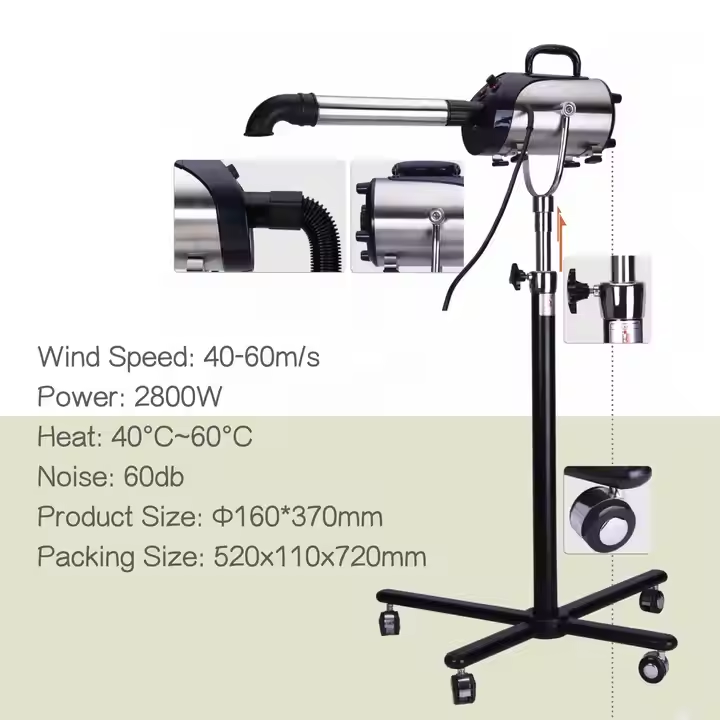
This equipment blasts water from the coat using high air volume and speed rather than high heat. It is an essential tool for deshedding and rapid initial drying on heavy coats. The sheer force of the air separates the hair shafts. This pushes water out and removes dead undercoat simultaneously. A reliable high velocity pet dryer forms the backbone of any professional bathing department.
Compare single-motor versus dual-motor units during your evaluation. Dual-motor units offer superior FPM for thick coats. However, they generate significantly higher decibel levels and require more electrical amperage. Single-motor units are quieter and use less power. They work well for small to medium breeds. Variable speed dials are mandatory for daily implementation. Groomers must transition from large body areas to sensitive zones like the face and ears. A variable speed dial allows this transition without switching equipment.
Stand dryers provide hands-free, directional airflow. They allow groomers to brush and dry simultaneously. This technique is necessary for fluff-drying and finishing work on Poodles and Bichons. Look for brushless motors in stand dryers. Brushless technology ensures longevity and quieter operation. These units use gentle heat and low velocity to straighten curly coats while the groomer uses a slicker brush to pull the hair taut.
When selecting a handheld pet hair dryer, prioritize lightweight ergonomic designs. Heavy handheld units quickly fatigue the shoulder and wrist. Look for models with cool-shot buttons. A blast of cool air sets the coat and closes the hair cuticle. Remember that these are supplementary tools. Relying on them for primary water removal drastically reduces salon profitability. They simply take too long to dry a soaking wet dog.
Passive drying environments allow groomers to work on another dog while one is safely drying. This overlap drastically increases daily throughput. You must distinguish between traditional cage dryers and a professional-grade pet drying box. Traditional cage dryers hook onto standard holding kennels. They blow unmonitored air into a confined space. This outdated method poses significant overheating risks and provides uneven drying.
A modern enclosed system must feature multi-directional airflow and precise thermostat controls. It needs active oxygen circulation and transparent, shatterproof doors. An automatic pet hair dryer system significantly increases salon efficiency. However, it introduces severe liability if not strictly monitored. Avoid units without automatic shut-off sensors. Ensure the equipment has emergency ventilation. The interior materials must withstand hospital-grade disinfectants to prevent cross-contamination between clients.
Design your layout to limit the distance a wet dog must travel. Every step a wet dog takes across the salon creates a slipping hazard. It also spreads loose hair and moisture. Plan for one large all-purpose tub that can accommodate every dog size. Install a ramp or steps to save your back when loading large breeds. Ensure the floor grading slopes toward a trench drain to manage excess water runoff.
Install a primary force dryer directly adjacent to the tub. You want to blow off excess water while the dog is still in the tub. This contains the messy spray of water and hair within the bathing area. Once the bulk of the water is removed, move the dog to the finishing table. This tub-to-table pipeline keeps the rest of the salon clean and dry. Use anti-slip rubber mats along this entire pathway.
Integrate a couple of holding kennels near the drying station. Even in one-on-one grooming setups, you need a safe place to secure dogs. You may need to prep equipment, answer a phone, or sanitize a table. A staging area keeps the dog secure during these brief interruptions. Stainless steel kennels resist rust better than PVC options in high-humidity wet rooms.
Position these holding areas away from direct drafts. Ensure they are easily visible from the main grooming floor. Never leave a dog unmonitored in a staging area. Use these kennels strictly for short-term holding between the bathing and finishing phases.
High-velocity motors generate extreme noise levels. This noise stresses animals and causes hearing damage to staff. Isolate the drying zone from the reception and finishing areas. Use acoustic panels on the walls to absorb sound waves. Look for panels with a high Noise Reduction Coefficient (NRC) rating. Build partial walls to block the direct path of the noise.
Mount dryer motors in separate, ventilated utility closets. Run only the hoses through PVC pipes in the wall to the workstation. This strategy drastically reduces ambient decibels on the grooming floor. Ensure the utility closet has proper ventilation. Motors require fresh air intake to prevent overheating. Install a louvered door on the closet to maintain airflow.
Loose cables and hoses create dangerous tripping hazards. They also wear out faster when dragged across wet floors. Utilize ceiling-mounted booms to keep hoses suspended. Spring-loaded wall brackets also keep hoses off the floor. This extends hose lifespan and keeps the workspace organized. Retractable reels work well for finishing stations.
Ensure all electrical outlets are GFCI protected. Ground-Fault Circuit Interrupters are mandatory near water sources. Position all outlets at least forty-eight inches above the floor to clear the splash zone of the tub. Inspect cords regularly for any signs of fraying or bite marks. Replace damaged cords immediately to prevent electrical fires.
Cheaper, consumer-grade equipment requires frequent carbon brush replacements. These units have shorter motor lifespans under heavy commercial use. Buying cheap equipment often costs more over a three-year period due to constant repairs. Professional-grade equipment requires a higher initial investment but delivers reliable daily performance. You must evaluate the expected motor lifespan in total operating hours.
Calculate the long-term value by factoring in replacement parts and expected downtime. A broken motor stops your workflow completely. Look for equipment with solid commercial warranties. Check the availability of replacement hoses, nozzles, and filters. Equipment from established manufacturers ensures you can find parts easily when needed. Stock spare carbon brushes in your utility closet to prevent unexpected downtime.
Do not outfit an entire salon without testing the equipment first. Request commercial demo units from suppliers. Field-test the equipment on high-maintenance coats like Standard Poodles or Malamutes. You need to verify the real-world FPM and heat output. Paper specifications do not always match real-world performance on a wet, dense coat.
Pay attention to how the equipment feels during a full shift. Check the hose flexibility and nozzle heat. Some nozzles become uncomfortably hot to hold after twenty minutes of continuous use. Testing prevents you from committing to equipment that frustrates your staff. Have your lead groomer sign off on the ergonomics before placing a bulk order.
Evaluate the wattage of each unit before purchasing. High-heat units consume significantly more electricity than high-velocity, low-heat models. Factor your local commercial electricity rates into your operational expenses. Running four high-wattage units simultaneously impacts your monthly utility bills. Calculate the daily energy draw by multiplying the amps by the volts to find total wattage.
Look for energy-efficient motor designs. Brushless motors often provide better energy efficiency and longer lifespans. Balance the need for drying speed with the cost of electricity. Efficient water removal relies on air speed, not just baking the coat with expensive heat.
Establish strict salon policies regarding the use of heated settings. Heat poses a severe risk to brachycephalic breeds like Pugs, Bulldogs, and Shih Tzus. These flat-faced breeds cannot pant efficiently to cool themselves. They are highly prone to rapid overheating and respiratory distress. Never use high heat or enclosed passive systems on these breeds. Watch for excessive panting, bright red gums, or lethargy as early signs of heat stress.
Mandate the use of "Happy Hoodies" or similar hearing protection for all dogs. High-velocity air creates a deafening noise near the dog's ears. Hearing protection reduces anxiety and prevents behavioral meltdowns. Always keep one hand on the dog to monitor their stress levels and skin temperature. If the skin feels hot to your touch, it is too hot for the dog.
Maintaining your primary pet dryer requires daily attention. Clogged filters cause motors to suffocate, overheat, and fail prematurely. Implement a strict daily filter cleaning schedule. Vacuum or wash the foam filters at the end of every shift. Never run a motor without its filter in place. Check the carbon brushes every six months. Unscrew the housing, remove the motor baffle, and inspect the spring-loaded brush for wear.
Schedule routine inspections of all hoses. Look for micro-tears near the nozzle and motor connections. Micro-tears reduce air pressure and drastically lower drying efficiency. Ensure all passive stations and holding kennels are wiped down between uses. Use a veterinary-grade disinfectant with a proper contact time to eliminate ringworm, kennel cough, and parvovirus. Strict sanitation prevents cross-contamination between clients.
Hire a licensed electrician to map your current panel capacity and install dedicated 20-amp GFCI circuits for each planned station.
Measure your wet room footprint to confirm you have a minimum four-by-four foot clearance per drying table to ensure safe groomer mobility.
Order one dual-motor force unit and one passive enclosed system to field-test on your heaviest-coated clients before outfitting the entire salon.
Draft a mandatory safety protocol document detailing heat restrictions for brachycephalic breeds and post it visibly at every workstation.
A: A high velocity unit uses powerful motors to physically blast water and loose undercoat off the dog without relying on high heat. Human hair dryers rely primarily on heat to evaporate moisture. Human dryers can easily burn a dog's thin skin and take significantly longer to dry a thick coat.
A: Most single-motor professional units require a standard 15-amp circuit. Heavy-duty dual-motor units often pull 17 to 20 amps upon startup. It is mandatory to run dual-motor units on dedicated 20-amp circuits to prevent tripped breakers and electrical hazards.
A: A traditional cage dryer is an external motor that hooks onto the door of a standard wire holding kennel, blowing unmonitored air inside. A modern drying box is a self-contained, enclosed smart-unit featuring built-in temperature controls, multi-directional airflow, and safety sensors.
A: No. While modern enclosed systems include safety sensors and temperature controls, they should never be used for brachycephalic breeds like Pugs or Bulldogs. They are also unsafe for senior dogs or dogs with high anxiety due to the risk of heatstroke and respiratory distress.
A: For a busy grooming salon using the equipment multiple hours a day, carbon brushes typically need replacement every six to eight months. Check them regularly. Worn brushes cause motor failure and permanent damage. Always follow the manufacturer guidelines for your specific model.
A: No. Running multiple high-velocity units on a single standard circuit will overload the breaker. Each high-power unit requires its own dedicated circuit to operate safely and efficiently without causing power outages in your salon.


