
Please Choose Your Language
Views: 0 Author: Site Editor Publish Time: 2026-09-14 Origin: Site


While felines are meticulous self-groomers, domestic environments, specific breed genetics, and aging necessitate human intervention to prevent severe matting, pelted coats, and skin disease. Traditional at-home methods often result in high stress for the cat and potential injury for the owner. Frequent professional appointments incur high recurring costs and transit-related anxiety. Establishing a safe, efficient, and professional-grade at-home routine requires evaluating specialized tools, understanding feline behavioral thresholds, and investing in the right hardware to minimize trauma and maximize coat health. Mastering at-home pet grooming shifts the dynamic from a stressful chore to a routine health maintenance practice. You need a structured approach. We will cover the exact equipment specifications, handling techniques, and environmental setups required to maintain your cat's coat safely. This guide provides actionable steps to build a low-stress grooming environment right in your own home.
Feline pet grooming requires fundamentally different tools and handling techniques compared to canine grooming, prioritizing low-noise environments, specialized handling, and strict thermal regulation.
Investing in specialized drying hardware significantly reduces the most stressful phase of the grooming process (post-bath drying) while preventing fungal infections in dense undercoats.
Successful at-home grooming setups balance initial equipment costs against the long-term ROI of reduced professional grooming fees and veterinary interventions for skin issues.
Risk mitigation—specifically avoiding thermal stress, razor burn, and behavioral overstimulation—must dictate all equipment purchasing decisions.
Establish the primary goal of your routine. The objective is preventing matting, reducing hairballs, and maintaining skin health rather than achieving breed-standard show cuts. Cats ingest a massive amount of loose hair during daily self-grooming. This leads to gastrointestinal blockages, frequent vomiting, and poor nutrient absorption. Proactive coat management removes this dead hair before the cat can swallow it. Aesthetic perfection remains secondary to biological necessity.
Acknowledge the foundational role of a healthy, balanced diet in maintaining coat quality from the inside out. High-quality animal proteins and omega-3 fatty acids directly influence sebum production. Proper sebum levels keep the skin supple and the guard hairs weather-resistant. A poor diet exacerbates shedding and increases the friction between hairs, leading to rapid matting. Hydration also plays a massive role; cats on wet food diets generally exhibit less dander than those strictly on dry kibble.
Identify veterinary indicators of poor coat health that require immediate grooming intervention. Severe dandruff, localized alopecia, and a greasy texture signal underlying issues. Greasy coats often indicate a lack of self-grooming due to arthritis, obesity, or dental pain. When you notice these signs, grooming becomes a medical necessity rather than a cosmetic choice. You must step in when the cat physically cannot reach its hindquarters or spine.
Incorporate routine physical examinations during grooming sessions. Proactively check for hidden redness, bumps, parasites, or unexplained hair loss. Follow these specific steps during your hands-on assessment:
Part the hair down to the skin along the spine to check for flea dirt or dry skin flakes.
Examine the base of the tail for excess oil buildup, commonly known as stud tail.
Check behind the ears and under the armpits, as these friction points are the first to develop tight mats.
Inspect the chin for black specks, which indicate feline acne requiring specialized degreasing shampoos.
Evaluate the structural differences between single-coated and double-coated breeds. Single-coated cats, like the Siamese, Burmese, or Oriental Shorthair, possess only guard hairs. They require minimal mechanical force to detangle and rarely develop severe pelts. Double-coated breeds, such as the Persian, Maine Coon, Siberian, or Ragdoll, possess a dense, cottony undercoat beneath coarse guard hairs. This undercoat traps heat and moisture, making it highly susceptible to pelting if neglected for even a few weeks.
Assess coat quality, length, and density to determine the required torque and airflow specifications for grooming hardware. Thick double coats demand high-velocity airflow to penetrate the dense layers and push water away from the skin. Short coats require lower velocity to prevent skin irritation. Match your comb and brush types to the coat architecture. Using a short-toothed comb on a long-haired cat merely glides over the surface, leaving the problematic undercoat completely untouched.
Coat Type | Breed Examples | Primary Grooming Tool | Matting Risk | Bathing Frequency |
|---|---|---|---|---|
Hairless / Peach Fuzz | Sphynx, Peterbald | Soft washcloth, degreasing wipes | None (High oil buildup risk) | Every 1-2 weeks |
Single-Coated Shorthair | Siamese, Bengal | Rubber curry brush, fine comb | Low | Every 3-4 months |
Double-Coated Shorthair | British Shorthair, Exotic | Greyhound comb, slicker brush | Medium | Every 2-3 months |
Double-Coated Longhair | Persian, Maine Coon | Long-toothed greyhound comb, undercoat rake | High | Every 4-6 weeks |
Analyze why cats require different restraint and handling approaches than dogs. Feline skin is highly elastic and significantly thinner than canine skin. This elasticity makes cats incredibly prone to accidental lacerations from clippers or sharp mat-splitters. Furthermore, cats are both predators and prey. Restraint triggers a severe panic response. They also possess hyper-sensitivity to high-frequency motor noise, making standard vacuums and human hair dryers terrifying.
Establish criteria for a low-stress grooming environment. Ensure secure footing by placing heavy-duty rubber mats on grooming tables or in bathtubs. Cats panic immediately when they lose traction on slippery porcelain or stainless steel. Utilize enclosed spaces, like a small bathroom, to limit escape routes and reduce visual overstimulation. Minimize auditory triggers by turning off radios, closing windows, and selecting ultra-quiet grooming tools.
Emphasize the necessity of a calm, positive approach and extreme patience. Acclimating highly sensitive or rescue cats to new routines takes weeks, not hours. Introduce tools while the cat is relaxed. Let them sniff the brushes. Turn on motors in adjacent rooms before bringing them near the animal. Forceful restraint guarantees behavioral regression and physical injury. Use a towel wrap (the "purrito" method) for safe handling during facial cleaning or nail trims rather than scruffing, which causes unnecessary stress in adult cats.
Evaluate the efficacy of stainless steel greyhound combs versus slicker brushes. A high-quality greyhound comb features dual-spaced metal teeth. The wider teeth detangle coarse guard hairs, while the finer teeth pull dead hair from the undercoat. Slicker brushes feature dense wire pins. They excel at fluffing the coat and removing surface debris but often fail to penetrate deep mats in double-coated breeds. Line-brushing is the only effective method for complete detangling. To execute a proper line-brush:
Lay the cat comfortably on its side.
Push the coat up toward the spine with your non-dominant hand, exposing a line of skin.
Use the greyhound comb to pull the hair down away from the skin line, ensuring you comb from the root to the tip.
Move your holding hand up an inch to expose a new line of skin and repeat the process.
Assess the risks of bladed deshedding tools on feline skin. Tools containing hidden razor blades cut the hair rather than pulling dead follicles out. Overuse damages the structural integrity of the guard hairs. This alters the coat texture permanently and leaves the cat vulnerable to temperature fluctuations. Furthermore, sharp tines easily cause micro-abrasions on fragile feline skin, leading to bacterial infections. Stick to blunt-tipped metal combs for safe undercoat removal.
Outline techniques for careful nail trimming every few weeks. Regular trimming prevents ingrown claws, which can curl back and puncture the paw pad, leading to severe infections. Blunt nails mitigate scratching risks during baths and protect your furniture. Use feline-specific scissor clippers rather than guillotine-style dog clippers, which can crush the nail. Press gently on the toe pad to extend the claw. Clip only the sharp, curved tip. Avoid the pink quick, which contains blood vessels and nerves. Keep styptic powder on hand to stop bleeding instantly if you accidentally cut too short.
Establish protocols for gentle ear cleaning. Healthy cat ears require minimal intervention. However, wax buildup or debris requires careful removal. Apply a feline-safe liquid cleaner to a cotton round. Wipe only the visible portions of the inner ear flap. Never insert cotton swabs into the ear canal. This pushes debris deeper, packs wax against the eardrum, and risks permanent hearing damage. If you notice dark, coffee-ground-like debris, consult a vet, as this indicates ear mites rather than standard wax.
Wipe eye discharge using feline-safe, chemical-free wipes. Flat-faced breeds like Persians and Exotics suffer from chronic tear staining due to shallow eye sockets and compressed tear ducts. Daily wiping prevents localized yeast infections and skin scalding from acidic tears. Use a fresh wipe for each eye to prevent cross-contamination. Saline solution applied to a soft gauze pad works perfectly for breaking up dried eye crusts without irritating the cornea.
Outline the technical requirements for feline shampoos. Feline skin has a pH balance of approximately 6.0 to 6.5. Human shampoos are far too acidic and strip the skin of essential oils, causing severe flaking. Select a shampoo formulated specifically for cats. It must be free of harsh chemicals, artificial dyes, and essential oils. Essential oils like tea tree, eucalyptus, peppermint, and citrus are highly toxic to cats because felines lack the liver enzymes necessary to metabolize them. Ingestion or skin absorption leads to neurological damage.
Discuss the logistics of water temperature control and secure bathing tethers. Keep water warm, mirroring the cat's natural body temperature of 100.5°F to 102.5°F. Strictly avoid hot temperatures to prevent thermal shock and overheating. Use a figure-eight harness or a suction-cup bathing tether to secure the cat safely in the tub. This prevents frantic jumping and slipping. Place a folded towel at the bottom of the sink or tub so the cat can sink its claws into something solid, which drastically reduces panic.
Highlight the critical importance of thorough rinsing. Cats groom themselves immediately after a bath. Any residual shampoo left in the coat will be ingested, causing gastrointestinal upset. Shampoo residue also causes severe skin flaking, dull coat texture, and contact dermatitis. Rinse the coat until the water runs completely clear, and then rinse one more time. Pay special attention to the belly and armpits, where suds tend to hide.
This tool is ideal for short-haired breeds or localized drying tasks. It works perfectly for drying paws after a rainy walk, managing tail blowouts, or finishing sanitary trims. When selecting a portable pet hair dryer, look for variable speed dials rather than binary high/low switches. Granular control allows you to start with minimal airflow, letting the cat adjust to the sensation. Ensure the decibel output remains under 60dB to prevent acoustic trauma. Non-heated airflow options are mandatory to prevent accidental skin burns.
These units are highly maneuverable and store easily in small apartments. However, they require one hand to hold the nozzle. This leaves you with only one hand to restrain the cat, manipulate the comb, or provide physical comfort. This limitation makes full-body drying on a squirmy cat challenging. You must constantly move the nozzle to prevent concentrating heat or air pressure on a single patch of skin.
This represents a hands-free drying solution for cats that are tolerant of ambient noise and open environments. Assess the stand stability first. A heavy, weighted base prevents the unit from tipping over if the cat bumps the table. Directional nozzle flexibility allows you to target the airflow precisely at the undercoat while avoiding the cat's face. Strict temperature limiters are non-negotiable. An automatic pet hair dryer must automatically shut off its heating element if internal temperatures spike.
The primary advantage is that it frees up both hands. You can brush and detangle the coat simultaneously as it dries, which yields a fluffier, professional finish and straightens curly undercoats. However, the exposed motor noise and high-velocity wind can still trigger flight responses in highly anxious felines. It requires a dedicated grooming table setup and a cat that has been desensitized to grooming environments from a young age.
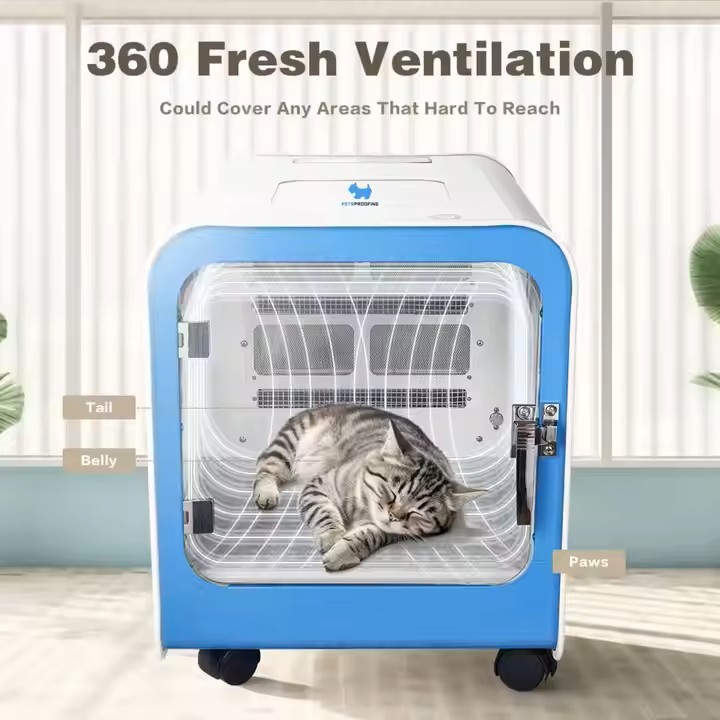
This is the most efficient and low-stress solution for double-coated breeds, elderly felines, and highly reactive cats that panic under direct airflow. A premium pet drying box must feature 360-degree internal airflow. This ensures the belly and armpits dry thoroughly, preventing fungal growth. Precise digital temperature controls must be capped at feline-safe temperatures, never exceeding 104°F. Emergency release mechanisms and robust ventilation are critical safety features to prevent oxygen depletion.
This hardware requires a dedicated physical footprint for storage. However, it offers the highest success rate for stress-free, thorough drying. By enclosing the cat in a controlled, quiet, and warm environment, it eliminates the need for physical restraint. The cat simply sits comfortably while the ambient air circulation dries the coat down to the skin. To acclimate the cat, leave the unit open in your living room for a week with treats inside before ever turning the motor on.
Drying Method | Noise Level | Hands-Free Operation | Best Coat Type | Feline Stress Level |
|---|---|---|---|---|
Portable Pet Hair Dryer | Moderate | No | Short-haired / Spot drying | Moderate to High |
Automatic Pet Hair Dryer | Moderate to High | Yes | Medium to Long-haired | Moderate |
Pet Drying Box | Very Low | Yes | Double-coated / Dense | Very Low |
Calculate the upfront cost of professional-grade tools. Purchasing heavy-duty clippers, advanced drying hardware, stainless steel combs, and specialized shears requires a noticeable initial outlay. However, compare this against the annual cost of four to six professional grooming appointments. Professional feline grooming carries a premium price tag due to the hazard pay associated with handling cats, as feline bites pose severe infection risks to groomers.
Factor in the hidden costs of professional grooming. Transportation time eats into your weekend. Fuel costs add up. More importantly, highly aggressive or fearful cats often require mild sedation at the veterinary clinic prior to grooming. The recurring costs of veterinary consultations, bloodwork for anesthesia clearance, and the sedative medications themselves rapidly exceed the price of high-end home equipment. By grooming at home, you eliminate the transit anxiety and the medical risks associated with repeated sedation.
Assess the lifespan of high-end grooming hardware. Professional-grade motors and stainless steel components last for a decade if maintained properly. Cheap plastic tools break after a few sessions and often pull the cat's hair, creating negative associations. When evaluating equipment, consider how the tools will scale as your cat ages. A kitten may tolerate a towel dry, but a senior cat with arthritis needs the gentle, ambient heat of a drying enclosure to prevent joint stiffness after a bath.
Evaluate warranty terms and replacement part availability. Ensure you can easily purchase replacement carbon brushes for dryer motors, fresh HEPA filters, and interchangeable nozzles. Regular maintenance guarantees the longevity of your investment and ensures consistent performance. Clean the hair out of intake valves after every single use. Oil your clipper blades before and after every session to prevent rust and maintain a sharp, painless cutting edge.
Detail the physiological signs of feline overheating during the drying phase. Cats do not sweat through their skin; they regulate temperature through panting and paw pad perspiration. If a cat begins open-mouth panting, exhibits extreme lethargy, or displays a bright red tongue and gums, they are experiencing thermal stress. Stop the grooming session immediately. Follow these emergency cooling steps:
Turn off all drying equipment and remove the cat from the grooming area.
Place the cat on a cool surface, such as a tile floor.
Apply cool, damp towels to the paw pads and groin area.
Offer fresh, cool water, but do not force the cat to drink.
Contact a veterinarian if the panting does not subside within ten minutes.
Establish strict protocols for temperature settings on any drying apparatus. Never use the highest heat setting on any device. Always keep one hand on the cat's skin directly under the airflow. If the air feels uncomfortably warm against your own skin, it is dangerously hot for the cat. Maintain a minimum distance of six inches between directional nozzles and the feline coat to prevent localized burns.
Define the three-second rule for feline tolerance. When introducing a new tool, touch the cat with it for exactly three seconds. Remove the tool and assess the cat's reaction. If the cat remains calm, proceed for five seconds. This builds trust and prevents sudden panic. Watch closely for signs of overstimulation: rapid tail flicking, skin twitching along the spine, flattened ears, dilated pupils, and low-pitched vocalizations. These are precursors to a bite or scratch. Ignore these warnings, and you will destroy the cat's trust.
Outline mitigation strategies for behavioral limits. Never force a single, hour-long grooming event. Break grooming sessions into manageable micro-sessions. Comb the back and sides on Monday. Trim the front nails on Tuesday. Wash and dry the cat on the weekend. Micro-sessions keep the cat below their stress threshold and turn grooming into a routine interaction rather than a traumatic event. Always end a session on a positive note with a high-value treat before the cat reaches its breaking point.
Assess your cat's specific coat type and current matting severity to determine the exact comb style and drying velocity required.
Consult with your veterinarian regarding any existing skin conditions, localized alopecia, or dietary adjustments needed to improve coat health.
Acquire baseline deshedding tools, cat-specific nail clippers, and chemical-free wipes before investing in advanced bathing and drying hardware.
Evaluate your cat's noise tolerance and anxiety levels to choose between a handheld dryer, an automatic stand dryer, or an enclosed drying box.
Implement the three-second rule and break grooming tasks into 10-minute micro-sessions to build trust and eliminate handling trauma.
A: Short-haired cats require a thorough comb-out once a week to remove dead hair and distribute skin oils. Long-haired or double-coated breeds require daily combing to prevent mats from forming at the skin level. Nail trimming should occur every two to three weeks. Full baths are only necessary every few months or when the coat becomes noticeably greasy or soiled.
A: Feline skin is significantly thinner and more elastic than canine skin, making it highly susceptible to cuts from sharp tools or clippers. Behaviorally, cats are easily overstimulated by restraint and loud noises. They require specialized handling techniques, minimal restraint, and ultra-quiet equipment to prevent panic and injury.
A: Select a shampoo specifically formulated for the feline skin pH of 6.0 to 6.5. It must be entirely free of artificial dyes, harsh detergents, and essential oils. Essential oils, particularly citrus, tea tree, and eucalyptus, are highly toxic to cats because they lack the liver enzymes required to process them safely.
A: Trim your cat's nails every two to three weeks. Regular trimming removes the sharp, curved hook of the claw, preventing it from growing into the paw pad. It also minimizes the risk of accidental scratching during brushing or bathing sessions and protects your household furniture.
A: No. Human hair dryers operate at temperatures that are dangerously high for feline skin, risking severe thermal burns. Additionally, the high-pitched motor whine of a human dryer causes severe acoustic stress for cats. Always use equipment designed specifically for pets with strict temperature limits.
A: Never use scissors to cut out a mat, as the skin often pulls up into the tangle, leading to severe lacerations. Use a metal greyhound comb to gently tease the mat apart from the outside in. If the mat is tight against the skin, use professional pet clippers to safely shave under the mat.


