
Please Choose Your Language
Views: 0 Author: Site Editor Publish Time: 2026-08-03 Origin: Site


Commercial real estate and retail footprints face intense scrutiny for yield-per-square-foot. Property managers and store owners need experiential amenities that generate recurring foot traffic and reliable passive income. Pet stores, multifamily developments, and public parks frequently struggle to monetize underutilized space. They need to provide tangible value that prevents customer churn to online competitors and keeps visitors engaged on-site. You cannot simply install a residential tub in a public space and expect commercial success. Achieving operational efficiency requires moving far beyond DIY builds or residential-grade setups. Facility operators must rigorously assess commercial infrastructure, plumbing demands, and the overall user experience before deployment. This guide breaks down how to successfully integrate these systems into various commercial environments. We will look at utility requirements, site preparation, and hardware selection to ensure they function as durable, high-yield assets rather than maintenance liabilities.
Strategic Foot Traffic & Passive Income: A commercial self-service dog wash station acts as a loss-leader or standalone profit center, directly correlating with increased dwell time, cross-selling opportunities, and reliable passive revenue.
Infrastructure is the Bottleneck: Successful deployment hinges on pre-existing or easily modifiable plumbing (specifically 2-inch minimum drains and commercial hair interceptors) and high-amperage electrical access.
Automation Dictates Margin: Modern units rely on cashless telemetry and automated chemical dispensing to minimize labor costs and daily maintenance overhead.
Risk Mitigation: Unattended public spaces require specific vandal-resistant materials (e.g., 304/316 stainless steel), climate-controlled enclosures, and strategic placement to ensure consistent uptime.
Before selecting equipment, operators must define the primary objective of the installation. You must establish whether the goal is direct revenue generation through a standalone profit center or indirect value creation via amenity-driven tenant retention and retail cross-selling. The location type dictates the operational strategy and the specific hardware required. We see many operators fail because they mismatch the equipment grade with the site's actual foot traffic and utility capacity.
Independent pet retailers and franchise operators utilize a self service pet wash station to drive weekly recurring visits. When customers bring their pets into the store for a bath, they bypass online competitors. Strategic store layouts place the wash station at the rear of the facility. This forces customers to walk past high-margin items like premium treats, specialized grooming tools, and seasonal apparel. The station acts as a powerful catalyst for impulse purchases, significantly increasing the average basket size while differentiating the physical store from e-commerce giants.
To make this work, the retail space needs proper moisture control. You cannot just drop a tub on a laminate floor. The wash zone requires a waterproof membrane beneath the flooring, extending up the walls. We recommend fluid-applied waterproofing over cement board. This prevents water from migrating into adjacent retail aisles and destroying inventory.
Car washes, RV parks, and municipal dog parks offer excellent opportunities to capture high-volume, transient pet owner traffic. Car washes are particularly well-suited for these installations because they already possess the necessary commercial utility infrastructure. They have heavy-duty water lines, high-capacity drainage, commercial interceptors, and high-voltage electrical panels. Adding a wash station allows car wash operators to maximize their existing real estate and capture a new demographic without overhauling their site utilities.
When trenching new lines at a park or RV site, you must bury water lines below the local frost line. A shallow pipe will freeze and burst during the first hard freeze, shutting down the amenity. Always install a dedicated shut-off valve and a Reduced Pressure Zone (RPZ) backflow preventer at the tie-in point to protect the municipal water supply from chemical contamination.
Outdoor stations placed in state parks, campgrounds, or near hiking trails provide immense community utility. While primarily designed for pets, these rugged stations occasionally double as wash areas for muddy boots, camping gear, or bicycles. This multi-use functionality maximizes the footprint's value, keeping heavy mud and debris out of public restrooms or campground shower facilities.
Site preparation for outdoor units requires a poured concrete pad. The pad needs a slight slope—usually one-quarter inch per foot—directing surface runoff away from the machine's base. Standing water around the base accelerates corrosion, even on stainless steel, and creates slip hazards for users.
Luxury apartment complexes and master-planned communities increasingly view pet amenities as competitive differentiators for tenant acquisition. Beyond attracting pet owners, a dedicated wash station protects the building's infrastructure. When tenants wash large dogs in standard apartment bathtubs, the resulting fur and mud rapidly destroy residential plumbing, leading to severe clogs and expensive emergency maintenance calls. Providing a commercial-grade facility on the ground floor isolates this biological debris, protecting the property's primary sewer lines.
Soundproofing is a major consideration in multifamily builds. High-velocity dryers generate significant decibel levels. If the wash room shares a wall with a residential unit or a quiet co-working space, you must upgrade the wall assembly. Use staggered studs, acoustic insulation, and two layers of drywall with sound-damping compound to achieve a high Sound Transmission Class (STC) rating.
Selecting the correct hardware category dictates long-term durability. Equipment that thrives inside a climate-controlled retail store will fail rapidly if exposed to outdoor elements. Understanding the structural differences between indoor, outdoor, and fully enclosed systems prevents costly replacement cycles.
Indoor modular units consist of open-bay stainless steel tubs designed to integrate into existing retail or residential interiors. These units require a dedicated room or alcove with properly finished waterproof walls and slip-resistant flooring. Operators must avoid cheap residential tubs or DIY tiled setups. Residential plastics crack under the weight of large breeds, and tile grout lines harbor bacteria and mold, creating severe sanitation issues.
Commercial-grade indoor units utilize 16-gauge 304 stainless steel. This material resists corrosion from wet environments and harsh cleaning chemicals. A standard single-bay installation requires a minimum footprint of 8x10 feet to accommodate the tub, the user, and the drying area. Furthermore, indoor installations require robust HVAC integration. The combination of warm water and high-velocity dryers generates massive amounts of humidity. If the room lacks proper exhaust ventilation, this moisture will cause structural mold. We typically install dedicated exhaust fans rated for at least 200 CFM, wired to turn on automatically when the room's lights or the wash station activates.
For exterior placements at gas stations or car washes, operators deploy ruggedized, semi-enclosed systems. A coin operated dog wash station designed for outdoor use features heavy-duty weatherproofing. These units include NEMA 4X-rated electrical enclosures to protect sensitive components from rain, humidity, and dust.
If deployed in colder climates, they require strict winterization protocols. This includes heat tape wrapped around exposed plumbing lines, insulated cabinet panels, and internal space heaters. You must also install a blow-out valve. This allows maintenance crews to clear the lines with compressed air if the unit needs to be shut down for an extended period during extreme winter storms.
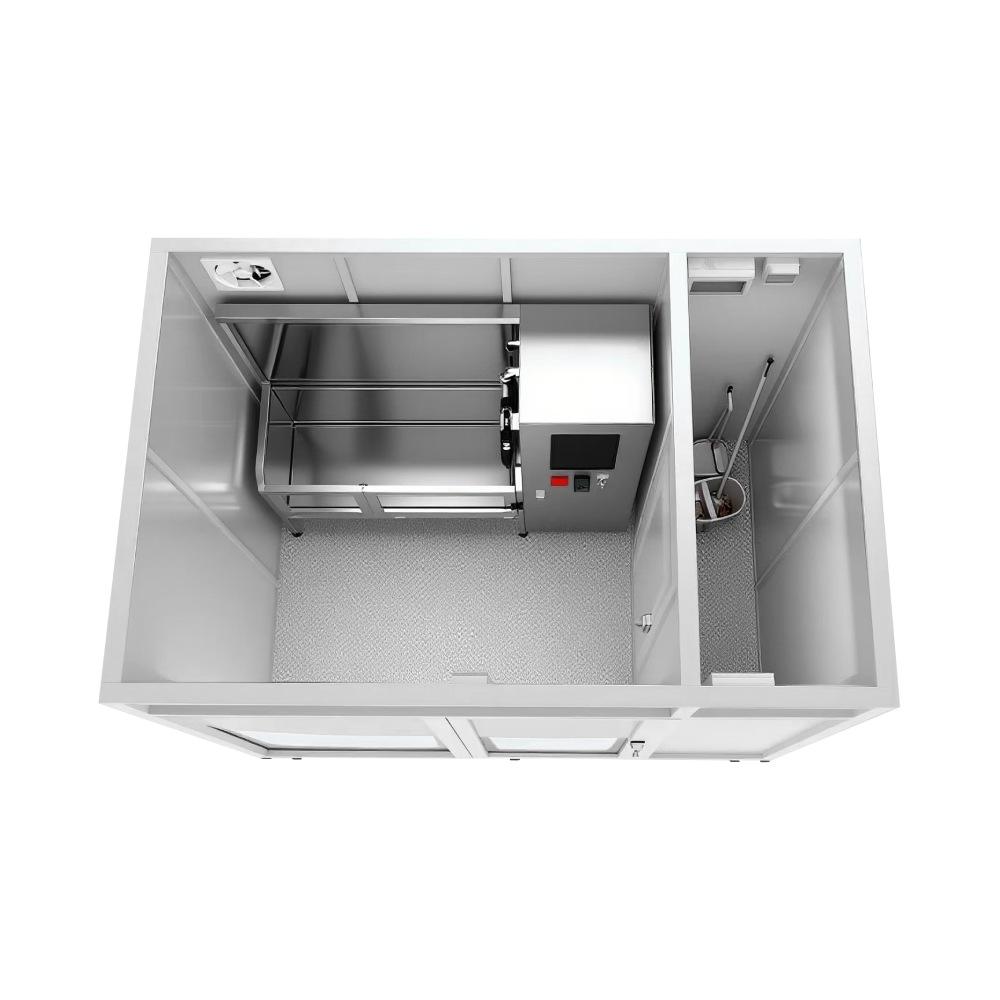
The highest tier of equipment is the turnkey, climate-controlled modular building. An automatic dog wash station operates as a standalone structure requiring only final utility hookups upon delivery. You provide the concrete pad, the water supply, the sewer tap, and the electrical drop. The manufacturer provides the rest.
While these units demand a premium upfront capital expenditure, they offer a 24/7, unattended, weatherproof operating model. The enclosed environment keeps users comfortable year-round, ensuring revenue generation does not drop during winter months or inclement weather. The walls usually feature closed-cell spray foam insulation, providing both thermal resistance and structural rigidity.
The success of any commercial wash installation relies heavily on the unseen technical infrastructure. Failing to specify the correct plumbing, electrical, and telemetry systems guarantees operational downtime and frustrated users.
Commercial pet washing generates an extreme amount of fur and sediment. Standard residential P-traps will clog within days. Installations require a minimum two-inch drain line paired with a commercial-grade hair strainer and interceptor basket. This specialized filtration prevents catastrophic municipal plumbing blockages. The interceptor must be easily accessible for daily cleaning. If maintenance staff need tools to open the trap, they will skip the task, leading to backups. We also recommend discharging the tub into a floor sink with a proper air gap to eliminate any risk of sewage backing up into the wash basin.
Additionally, the facility must supply continuous water pressure between 50 and 60 PSI. If the static pressure exceeds 70 PSI, you must install a pressure-reducing valve (PRV) to protect the machine's internal solenoids. To maintain warm water during back-to-back washes, operators should install dedicated commercial tankless water heaters. Sizing the heater correctly is vital; look for a unit capable of delivering at least 3 to 4 gallons per minute (GPM) at a 40-degree temperature rise.
Design dictates user adoption. The tub must feature non-slip ramps or step-up platforms, allowing large, heavy dogs to enter without requiring the owner to lift them. Secure tethering points inside the tub are mandatory to keep anxious pets restrained safely.
The tub basin should sit at an optimal ergonomic height—typically 32 to 36 inches from the floor. This specific height prevents severe back strain for the user, making the commercial experience significantly easier and safer than traditional at-home bathing. The floor of the tub should have a textured, rubberized mat to prevent the dog's paws from slipping, which reduces anxiety and makes the washing process smoother.
Commercial grooming equipment draws heavy electrical loads. High-velocity commercial dryers and instantaneous water heaters frequently require dedicated 220V/240V circuits. Attempting to run these components on standard 110V/15A retail circuits will result in constant breaker trips. When wiring these units, electricians must balance the load across the main breaker panel to prevent phase overloading.
All electrical outlets and connections in the wash area must be GFCI protected and housed in waterproof enclosures. When running conduit, use liquid-tight flexible metal conduit (LFMC) for any exposed whips connecting to the machine. For indoor units, the HVAC system must feature a dedicated exhaust fan pulling moist air directly outside, preventing condensation from destroying adjacent retail drywall.
Modernizing the payment interface drastically reduces maintenance. While legacy coin mechanisms exist, they require daily manual collection, suffer from frequent jams, and present a high theft risk. A modern Self-service Dog Wash utilizes cashless NFC payment terminals, accepting tap-to-pay, credit cards, and mobile wallets.
These systems connect to cloud-based telemetry dashboards. Facility managers can remotely monitor daily revenue, track automated chemical dispensing levels, and receive instant diagnostic alerts if a component fails. This entirely eliminates the need for constant on-site supervision. The chemical injection systems use peristaltic pumps to draw shampoo and conditioner from bulk jugs, mixing them precisely with the water stream. Because high-viscosity shampoos wear down the internal pump tubing, maintenance schedules must include quarterly tubing replacements to maintain accurate dilution ratios.
Specification Category | Indoor Modular Tub | Fully Enclosed Outdoor Kiosk |
|---|---|---|
Plumbing Requirements | Tie-in to existing building sewer; requires floor drains and commercial interceptors. | Direct trenching to municipal sewer or septic; integrated internal interceptors. |
Electrical Load | Dedicated 20A/30A circuits for dryers; relies on building's primary panel. | Requires dedicated high-voltage drop (often 100A+ panel) for internal HVAC and heaters. |
Climate Control | Relies on host building HVAC; requires heavy exhaust ventilation. | Self-contained mini-split HVAC system; fully insulated walls and ceiling. |
Footprint & Space | Minimum 8x10 feet per bay; consumes leasable interior square footage. | Typically 10x15 feet exterior footprint; utilizes parking lot or dead exterior space. |
Installation Timeline | 1 to 2 weeks for room build-out, waterproofing, and utility rough-ins. | 1 to 3 days for crane placement and final utility connections on a pre-poured pad. |
Understanding the financial mechanics of a wash station requires analyzing upfront capital allocation, ongoing operational expenses, and realistic revenue timelines. You must evaluate the direct costs of site preparation alongside the equipment purchase to build an accurate break-even model.
The initial capital expenditure includes the unit purchase, freight shipping, site preparation, and contractor installation fees. Site preparation often represents a significant portion of the budget, especially if you need to trench new sewer lines through an existing asphalt parking lot.
Customization and branding also factor into the initial outlay. Applying custom vinyl wraps and branded enclosures aligns the machine with your specific business aesthetics. Many operators choose to lease the equipment rather than purchasing it outright. Leasing preserves working capital and often includes maintenance agreements, shifting the burden of mechanical repairs back to the manufacturer or distributor.
Operational expenses scale with usage. You must calculate the per-wash cost of utilities, including water volume and electricity for the dryers and heaters. Proprietary consumables, such as veterinary-grade shampoo, conditioner, and flea treatments, represent the largest variable cost.
Labor costs factor heavily into the operational model. Even highly automated machines require daily sanitization, trash removal, and weekly deep cleaning. Staff must wipe down the stainless steel, clear the hair interceptors, and mop the surrounding floor. Neglecting these tasks leads to foul odors and immediate customer abandonment.
Calculating the break-even point requires estimating daily wash volume based on local demographic density and foot traffic. A station located in a high-density urban area with numerous apartment-dwelling dog owners will reach break-even significantly faster than a rural installation.
You must track the machine's utilization rate during peak hours—typically weekend mornings and afternoons. If the machine operates at maximum capacity during these windows, the revenue generated will quickly offset the monthly utility and consumable costs, turning the station into a reliable passive income stream.
Deploying commercial equipment involves navigating regulatory frameworks and physical facility risks. Proactive mitigation prevents project delays and protects the physical asset from premature degradation.
Installing a dog wash kiosk requires navigating local regulatory hurdles. Indoor installations require standard plumbing and electrical permits. Outdoor kiosks often trigger zoning reviews, structural building permits, and specific wastewater discharge regulations due to the biological load of pet fur and grooming chemicals.
Furthermore, facilities must strictly adhere to Americans with Disabilities Act (ADA) compliance. This includes providing accessible ramp access and maintaining a 60-inch turnaround space for wheelchairs. Payment terminals, spray nozzles, and product selection buttons must sit within accessible reach ranges, typically no higher than 48 inches from the finished floor.
Unattended public spaces attract vandalism. To mitigate this, outdoor kiosks must utilize heavy-gauge stainless steel construction and tamper-proof locks on all mechanical cabinets. Avoid exposed hinges or plastic components that can be easily broken.
Integrating CCTV cameras directly into the kiosk deters malicious behavior and provides liability protection. Transitioning exclusively to cashless-only operations removes the primary incentive for break-ins, as there is no physical currency stored on-site. Bright, motion-activated LED lighting around the perimeter of the kiosk also discourages loitering and tampering after dark.
Water always finds the weakest point in a room. For indoor retail environments, standard drywall and linoleum will fail. Operators must install epoxy flooring that curves up the wall using a cove base to create a waterproof pan.
Walls should be clad in Fiberglass Reinforced Plastic (FRP) panels that resist water and scratching. When installing FRP, use the correct moisture-resistant adhesive and leave appropriate expansion gaps between panels, sealing the joints with silicone. Floor drains are mandatory outside the tub to handle spills and daily washdowns. Proper containment strategies keep dirt, mud, and wet fur isolated from main retail aisles or luxury apartment lobbies, drastically reducing the facility's overall janitorial burden.
Conduct a comprehensive site utility audit to verify your existing drain line diameters, static water pressure, and electrical panel capacity.
Consult with a commercial contractor to verify local ADA compliance paths, zoning restrictions, and wastewater discharge regulations for your specific municipality.
Request detailed technical specification sheets from commercial manufacturers to compare telemetry capabilities, stainless steel gauges, and internal hair filtration systems.
Map the customer journey within your facility to ensure the station's placement drives foot traffic past high-margin retail goods without creating physical bottlenecks.
A: A standard single-bay indoor installation requires a minimum footprint of 8x10 feet. This space accommodates the stainless steel tub, provides adequate room for the user to maneuver safely, and allows for a dedicated drying area. You must also account for ADA compliance, which requires a 60-inch turning radius for wheelchair accessibility.
A: No. Residential tubs fail rapidly in commercial settings. They lack heavy-duty hair interceptors, leading to severe plumbing blockages. They also omit integrated payment telemetry, automated chemical dispensing, and the structural durability required to withstand high-volume, daily use by large dog breeds.
A: Commercial installations require a minimum two-inch drain line to handle heavy water flow and fur. A dedicated commercial hair interceptor is mandatory to prevent municipal sewer clogs. You also need standard hot and cold water supply lines delivering consistent dynamic pressure between 50 and 60 PSI.
A: Yes, purpose-built outdoor units feature extensive winterization. These systems utilize insulated enclosures, internal space heaters, and heat tape wrapped around exposed plumbing lines. This ensures water lines do not freeze and the interior remains operational for users during severe winter months.
A: Daily maintenance involves sanitizing the tub basin, emptying the trash receptacle, and wiping down the surrounding floor. You must also clear the primary hair interceptor basket daily to maintain proper drainage. Cashless systems eliminate the labor associated with manual coin collection and sorting.
A: Yes, they function as excellent foot-traffic drivers. While the direct wash revenue provides passive income, the primary value lies in cross-selling. Customers traversing the store to reach the wash station frequently make impulse purchases on treats, toys, and premium grooming tools, increasing overall basket size.
A: Installation typically requires commercial plumbing and electrical permits. Depending on your municipality, you may also need specific wastewater discharge approvals due to the biological load of pet fur and grooming chemicals. Outdoor kiosks often require additional zoning and structural building permits.


