
Please Choose Your Language
Views: 0 Author: Site Editor Publish Time: 2026-08-09 Origin: Site


Facility sanitation dictates the operational tempo of any commercial boarding or clinical pet care environment. Labor hours spent hauling heavy water buckets, manually scrubbing floors, and drying enclosures consistently rank as the highest variable operational expense. These repetitive, physically demanding tasks cause severe staff fatigue and drive employee turnover. Standard enclosures constructed from porous materials, exposed seams, and degrading coatings inevitably trap organic matter. Urine, feces, and shedding accumulate in microscopic crevices. This leads to persistent facility odors, an elevated risk of zoonotic disease transmission, and rapid material deterioration.
Transitioning to high-grade stainless steel enclosures resolves these fundamental operational flaws. Upgrading facility housing is a calculated structural decision designed to slash daily labor requirements. By eliminating the outdated bucket-and-scrub method, facilities ensure strict compliance with rigorous veterinary hygiene standards while extending the functional lifecycle of their physical assets. A properly integrated Pet Cage system transforms sanitation from a grueling daily hurdle into a streamlined, highly predictable standard operating procedure.
Non-Porous Superiority: Stainless steel prevents the absorption of uric acid, harsh chemicals, and biological pathogens, fundamentally reducing the time required for deep cleaning.
Labor Cost & Ergonomic Improvements: Integrated drainage and seamless designs can cut daily sanitation labor by up to 40% compared to traditional wire or coated enclosures, significantly reducing staff physical strain.
Chemical Resilience: Commercial-grade stainless steel withstands high-concentration veterinary disinfectants without rusting, staining, or degrading over time.
Lower-grade housing units generate severe hidden operational costs that compound daily. Staff members waste countless hours scrubbing complex joints, hinges, and wire intersections where organic debris hardens. When lower-grade metals or powder-coated wires begin to fail, maintenance teams must constantly treat rust spots or sand down flaking paint to prevent animal injury. A dog scratching at a powder-coated door can chip the finish, exposing raw steel to urine. Within 48 hours, rust forms. Staff then spend fifteen minutes per door using wire brushes to remove the rust, rather than the thirty seconds it should take to wipe down a solid surface. These continuous, minor repairs drain facility resources and divert staff attention away from direct animal care.
Materials like engineered plastics, fiberglass, and compromised powder-coated steel develop micro-abrasions over time. Animal claws, aggressive scrubbing pads, and daily wear create microscopic scratches that act as permanent reservoirs for bacteria. Pathogens such as Bordetella and Parvovirus thrive in these hidden crevices, shielded from surface-level disinfectants. Furthermore, these abrasions trap uric acid crystals and natural body oils. Enzyme cleaners often fail to penetrate deep enough to break down these embedded crystals. Even immediately after a thorough cleaning, the facility retains a distinct ammonia smell because the organic matter remains embedded within the enclosure material itself.
Pet owners judge facility quality within seconds of walking through the front door. Lingering odors and visibly worn, stained enclosures instantly degrade client trust. A facility that smells unclean is immediately perceived as unprofessional and potentially unsafe, regardless of the actual medical or boarding care provided. Visual indicators of poor hygiene, such as rusted latches, clouded plastic doors, or peeling paint, prompt clients to seek alternative care providers. Maintaining a pristine, odor-free environment is a primary driver of client retention and positive facility reputation. If a client smells urine in the reception area, they assume the kennels in the back are in much worse condition.
Inefficient enclosure designs force staff into time-consuming deep cleans when a simple spot clean should suffice. A standard pet cage lacking proper drainage or smooth surfaces requires complete animal removal, heavy chemical application, and extensive manual drying for even minor accidents. Without integrated waste management features, liquid spills spread across flat floors and seep into adjacent units. This structural failure artificially inflates the frequency of mandatory deep cleans. Staff must move multiple animals, sanitize a large area, and wait for floors to dry, disrupting facility workflow and stressing the housed animals.
Traditional cleaning methods exact a heavy physical toll on kennel staff. A standard commercial mop bucket holds roughly five gallons of water, weighing over forty pounds. Staff repeatedly lift these buckets, kneel to scrub floor-level corners, and manually wring out mops, leading to chronic back strain and joint pain. This physical exhaustion directly correlates to high employee turnover rates within the commercial pet care sector. Facilities relying on manual sanitation methods struggle to retain trained staff, leading to constant recruitment cycles and inconsistent adherence to hygiene protocols. Reducing the physical burden of cleaning directly improves staff morale and retention.
The hygienic superiority of type 304 and 316 stainless steel stems directly from its metallurgical composition. These alloys contain a high percentage of chromium, which reacts with oxygen to form a microscopic, invisible passive layer of chromium oxide on the surface. This passive layer renders the metal entirely non-porous and highly resistant to corrosion. If the surface is lightly scratched by an animal's claws, the chromium instantly re-oxidizes, effectively self-healing the protective barrier. This continuous chemical reaction prevents moisture and bacteria from penetrating the metal. Type 316 includes molybdenum, offering even higher resistance to harsh chlorides found in some cleaning agents.
Because the material lacks microscopic pores, it actively repels disease-carrying fecal matter, pet urine, and natural body oils. Organic waste cannot bond with the molecular structure of the steel. When staff apply water or cleaning agents, biological matter releases easily from the surface without the need for aggressive mechanical scrubbing. This distinct lack of absorption ensures that uric acid cannot penetrate the enclosure walls, completely eliminating the source of lingering kennel odors. A simple spray and wipe removes 100% of the surface contaminants.
Commercial pet facilities require aggressive chemical protocols to maintain sterility. Commercial-grade stainless steel withstands high-concentration veterinary disinfectants without surface degradation. Staff can safely apply accelerated hydrogen peroxide, quaternary ammonium compounds, and properly diluted bleach solutions to eliminate resilient pathogens. Unlike plastics that cloud or galvanized metals that strip under chemical assault, stainless steel maintains its structural integrity and hygienic properties despite daily exposure to harsh sanitation agents.
Disinfectant Type | Compatibility with Type 304/316 Stainless Steel | Recommended Application Method |
|---|---|---|
Accelerated Hydrogen Peroxide (AHP) | Excellent. Does not degrade the passive layer. | Spray application, allow 5-minute contact time, wipe dry. |
Quaternary Ammonium Compounds (Quats) | Excellent. Safe for daily use. | Foam or spray application, follow manufacturer contact time. |
Sodium Hypochlorite (Bleach) | Moderate. Can cause pitting if left un-diluted or un-rinsed. | Strict 1:32 dilution. Maximum 10-minute contact time. Must rinse thoroughly with water. |
Enzymatic Cleaners | Excellent. Safe for organic breakdown. | Apply to organic matter, allow to sit, wipe clean. |
Polished stainless steel maintains a clean, shiny, and clinical appearance over decades of heavy use. The material does not fade, discolor, or hold permanent stains from biological waste. This aesthetic longevity continuously reassures pet owners of the facility's uncompromising hygiene standards. A row of gleaming steel enclosures visually communicates sterility, professionalism, and premium care, reinforcing the facility's brand value every time a client tours the boarding or clinical area. It provides a visual guarantee that the facility takes sanitation seriously.
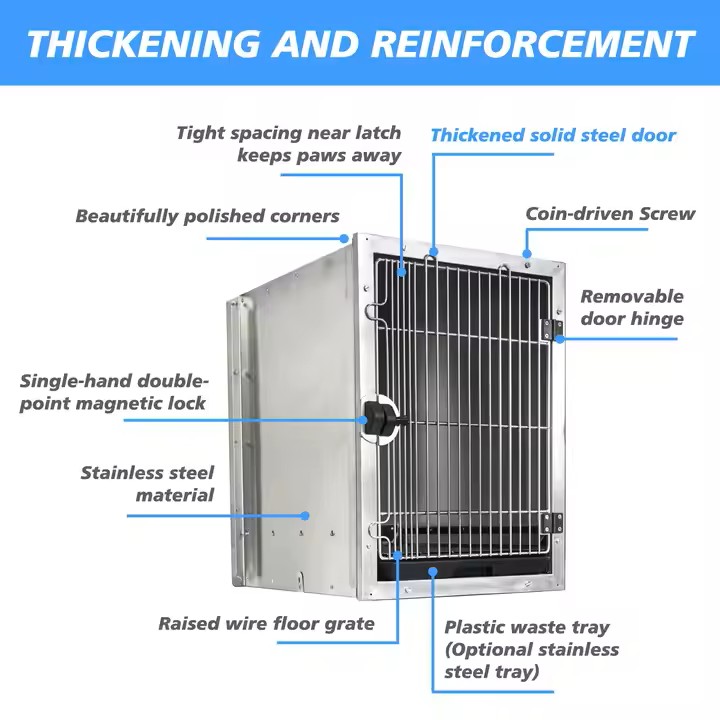
Advanced stainless steel enclosures utilize seamless welding and coved corners to accelerate sanitation. A standard 90-degree corner acts as a trap for dog hair, feces, and mop water. Staff often have to use specialized detail brushes or putty knives to dig waste out of these tight crevices. A coved corner features a smooth, rounded radius. Eliminating sharp internal angles removes the primary areas where organic debris accumulates. A simple wipe-down or hose application easily clears debris from the smooth, sweeping transitions between the walls and the floor, cutting individual unit cleaning time to mere minutes.
Modern kennel systems feature sloped floors and built-in liquid channels that direct wash-down water and urine directly to trench drains or wet vacuums. A standard slope of 1/4 inch per foot ensures rapid fluid evacuation. This structural engineering entirely eliminates manual mopping and bucket hauling. Staff can utilize pressurized wash-down systems to flush the entire enclosure, allowing gravity to carry contaminated water away from the animal housing area instantly. Integrated drainage prevents cross-contamination between adjacent units and drastically reduces the ambient humidity caused by standing water.
Operational efficiency surges when facilities utilize a removable pet cage design. Features like slide-out resting benches, removable floor grates, and independent waste pans allow staff to sanitize heavily soiled components separately from the main housing unit. If an animal has a severe accident overnight, workers can pull the soiled grate and pan, insert clean backups immediately, and transport the dirty components to a central wash station for high-pressure cleaning. This modular approach minimizes the time an animal spends displaced during the daily cleaning cycle and keeps the primary housing unit dry.
In high-visibility adoption centers or retail environments, a display pet cage pairs a stainless steel body with tempered glass or clear-acrylic doors. This configuration allows staff to perform instant visual inspections without opening the enclosure and disturbing the animal. When a mess occurs, the non-porous steel interior allows for rapid spot cleaning, while the glass front can be quickly sanitized with standard squeegees. This hybrid design maximizes public visibility while maintaining the rigorous sanitation benefits of a steel chassis. Staff can monitor multiple units from across the room, identifying which enclosures need immediate spot-cleaning.
Galvanized steel relies on a thin zinc coating applied over standard steel to prevent rust. Under the stress of commercial cleaning protocols, high-pressure hoses, and constant chemical exposure, this zinc layer eventually flakes or degrades. Once the underlying steel is exposed, rust spreads rapidly, compromising the structural integrity of the enclosure. In contrast, a stainless steel dog kennel possesses inherent corrosion resistance throughout its entire material thickness. It requires no protective coating, ensuring decades of rust-free performance despite daily chemical saturation. Facility managers do not have to schedule downtime for sanding and repainting.
While plastics and fiberglass offer a warmer surface and dampen ambient noise, they present severe hygienic trade-offs. Plastics are inherently softer than metal and highly susceptible to scratching from animal claws and cleaning tools. These scratches become permanent bacterial reservoirs. Furthermore, prolonged exposure to harsh veterinary disinfectants causes plastics to cloud, become brittle, and eventually crack. Stainless steel remains entirely impervious to scratching under normal use and never degrades chemically, making it the superior choice for strict disease control.
Material Type | Porosity & Hygiene | Chemical Resistance | Scratch Resistance | Sanitation Speed |
|---|---|---|---|---|
Type 304/316 Stainless Steel | Completely non-porous; repels all organic matter. | Excellent; withstands highly concentrated disinfectants. | High; self-healing passive layer prevents deep gouges. | Rapid; supports high-pressure wash-down systems. |
Galvanized Steel | Non-porous until zinc coating fails. | Moderate; harsh chemicals strip the protective coating. | Low; scratches expose raw steel to immediate rust. | Moderate; requires careful chemical selection. |
Engineered Plastics | Micro-porous over time due to surface wear. | Poor; clouds and becomes brittle with daily chemical use. | Very Low; easily gouged by animal claws. | Slow; requires manual scrubbing of scratched areas. |
Clinical environments demand absolute sterility and specialized medical integration. A dedicated veterinary pet cage must prevent any fluid or airborne cross-contamination between adjacent patients. These units feature solid side panels, elevated fluid-retention lips, and specialized ports for oxygen therapy integration and IV line routing. Cleaning protocols in these units require hospital-grade disinfectants and strict isolation procedures. The seamless steel construction ensures that no biological matter from a highly contagious patient remains after the unit is sanitized and prepped for the next admission. Fluid-retention lips prevent bodily fluids from spilling out of the cage onto the clinic floor.
Commercial boarding facilities prioritize rapid workflow and safe animal handling during daily sanitation. Boarding configurations heavily rely on integrated wash-down solutions and trench drains. Structural additions like guillotine doors allow staff to safely transfer an animal to an adjacent run while the primary enclosure is pressure-washed. Heavy-duty, easily sanitized latches and robust hinges ensure that the physical components withstand thousands of open-and-close cycles without creating difficult-to-clean pinch points. Transfer alleys allow a single staff member to clean a block of twenty kennels without ever handling a dog directly.
Standardizing materials across the entire facility streamlines training and daily operations. Matching stainless steel kennels with stainless steel grooming tables, wash tubs, and prep stations allows management to implement a single, unified cleaning protocol. Staff only need to learn one set of chemical dilution ratios and one specific application method. This uniformity eliminates the risk of applying the wrong chemical to a sensitive material, drastically reducing training time for new hires and minimizing the chance of costly facility damage.
Audit current chemical inventory and discard any highly abrasive scouring powders.
Establish a single dilution station for quaternary ammonium or accelerated hydrogen peroxide.
Train staff on the specific contact times required for the chosen disinfectant.
Implement a color-coded microfiber cloth system to prevent cross-contamination between isolation wards and general boarding.
A common operational misconception is that stainless steel is entirely maintenance-free. While highly durable, improper cleaning tools or incorrect chemical applications cause surface degradation known as "tea staining." Using abrasive pads, steel wool, or wire brushes strips the protective chromium oxide layer and embeds microscopic iron particles into the surface, which subsequently rust. Similarly, applying un-diluted chlorides or allowing bleach solutions to sit longer than the manufacturer's recommended contact time attacks the passive layer. Staff must strictly use soft-bristle brushes, microfiber cloths, and properly diluted chemicals. If tea staining occurs, a non-abrasive oxalic acid cleanser easily removes it and restores the passive layer.
Maintaining a pristine, odor-free environment requires distinct Standard Operating Procedures (SOPs) for daily and periodic tasks. Daily spot-cleaning should focus on immediate waste removal, utilizing mild enzymatic cleaners or accelerated hydrogen peroxide to wipe down soiled areas without displacing the animal for long periods. Periodic deep-cleaning schedules involve complete wash-downs, drain flushing, and the application of specialized stainless steel polishes. These polishes restore the aesthetic shine, remove hard water spots, and help condition the metal's passive layer. Deep cleans should occur weekly or bi-weekly depending on facility occupancy rates.
Stainless steel surfaces reflect sound waves and rapidly transfer heat, leading to legitimate concerns regarding kennel noise and animal thermal comfort. Facilities must actively mitigate these factors during installation. Applying sound-dampening coatings to the exterior panels of the enclosures significantly reduces the reverberation of barking. Utilizing anti-vibration latches prevents metal-on-metal rattling. To address temperature, facilities integrate raised resting platforms or specialized orthopedic kennel mats. This ensures the animal does not sleep directly on the cold steel floor while keeping the underlying metal exposed for easy wash-downs.
Upgrading an existing facility to utilize advanced wash-down kennels requires careful infrastructure planning. Fully utilizing integrated drainage systems and wet-vacuum channeling necessitates specific plumbing and flooring requirements. Facilities may need to slope existing concrete floors using epoxy overlays, install commercial trench drains with heavy-duty hair traps, or upgrade their water pressure delivery systems. Attempting to install sloped-base kennels on uneven legacy flooring without proper leveling leads to pooling water and defeated drainage mechanics. Management must consult with plumbing contractors prior to installation to ensure the building can support the rapid fluid evacuation required by modern stainless systems.
Stainless steel remains the most evidence-backed material for minimizing sanitation labor, maximizing clinical hygiene, and improving overall animal welfare in commercial pet facilities. By fundamentally rejecting organic absorption and withstanding harsh chemical protocols, these enclosures eliminate the root causes of persistent odors and pathogen transmission. While the initial integration requires careful facility planning, the dramatic reduction in daily labor hours and the elimination of continuous maintenance repairs streamline daily operations. Upgrading to a seamless, non-porous system allows staff to focus on animal care rather than battling failing infrastructure.
Conduct a time-motion study of your current daily cleaning protocols to establish an accurate baseline of labor hours spent on sanitation.
Evaluate your facility's existing plumbing infrastructure to determine compatibility with integrated wash-down and trench drain systems.
Verify manufacturer specifications, ensuring the use of type 304 or 316 stainless steel, seamless internal welds, and heavy-duty hardware.
Standardize your facility's chemical inventory to ensure all disinfectants are non-abrasive and explicitly safe for prolonged stainless steel contact.
A: High-quality type 304 or 316 stainless steel does not structurally rust. However, it can develop surface oxidation known as "tea staining" if exposed to un-diluted bleach, harsh chlorides, or if cleaned with abrasive steel wool. Proper chemical dilution and using soft cleaning tools prevent this surface discoloration entirely.
A: Removable grates separate the animal from its waste, keeping the pet clean and drastically reducing spot-cleaning time. Staff can pull the soiled grate and waste pan, replace them with clean backups in under two minutes, and transport the dirty components to a central wash station for rapid hose-down.
A: Accelerated hydrogen peroxide and properly diluted quaternary ammonium compounds are industry standards. They provide broad-spectrum pathogen kill rates without attacking the chromium oxide passive layer of the stainless steel. Always avoid highly concentrated bleach solutions and abrasive scouring powders.
A: Maintain the polish by avoiding abrasive scrubbers and strictly adhering to chemical contact times. After a periodic deep clean and thorough water rinse, apply a commercial stainless steel cleaner or polish. This removes water spots, conditions the metal, and restores the original reflective aesthetic.
A: They require a two-step process but are not inherently harder to clean. The stainless steel interior is sanitized normally, while the tempered glass or acrylic front requires a standard glass cleaner and squeegee to remove nose prints. The superior visibility they offer makes identifying messes for rapid spot-checking much easier.
A: Retrofitting built-in drains into flat-bottomed kennels is highly impractical and often leads to leaking. To utilize direct wet-vacuum integration or trench drains, facilities must purchase kennels pre-engineered with sloped bases and integrated liquid channels designed specifically for rapid fluid evacuation.


