
Please Choose Your Language
Views: 0 Author: Site Editor Publish Time: 2026-03-15 Origin: Site


Food dehydrators have become a crucial tool for pet owners and businesses looking to create nutritious, natural, and long-lasting food for their pets. With the rising popularity of homemade pet food and treats, choosing the right food dehydrator is key to ensuring the production of high-quality, safe, and healthy pet food. This guide will provide a comprehensive breakdown of how to choose the perfect commercial food dehydrator for your pet business or home operation.
As more pet owners move away from processed pet foods and seek healthier alternatives, food dehydrators have gained attention for their ability to preserve natural pet food without compromising on nutrients. A food dehydrator allows you to remove moisture from meats, fruits, vegetables, and even herbs, making it a great way to create healthy pet treats, meal toppers, and even raw diets.
While a standard home dehydrator might be sufficient for small-scale pet treat production, commercial food dehydrators are designed for larger operations. They offer more trays, higher power, and better temperature control, ensuring that you can meet the demands of a busy pet food business or pet care facility. The goal of this article is to help you navigate the selection process and make an informed decision based on your specific needs.
A food dehydrator is an appliance that removes moisture from food to help preserve it for longer storage. The process of dehydration removes water from food, preventing the growth of bacteria and mold that require moisture to thrive. This technique retains more vitamins and minerals than freezing or canning, making it an excellent preservation method for both human and pet foods.
When used for pet food, a food dehydrator helps maintain the nutritional value of meats, vegetables, and fruits while extending the shelf life. This results in healthy and natural pet treats that are free from preservatives or artificial ingredients commonly found in commercial pet food products.
Preservation: Dehydration reduces moisture, which helps prevent spoilage and extends the shelf life of pet food.
Nutrient Retention: Unlike cooking or canning, dehydration helps preserve the vitamins and nutrients found in raw foods.
Natural Ingredients: Homemade pet food with a dehydrator ensures you can control what goes into your pet’s food.
Cost-Effective: Dehydrating pet food at home can reduce the cost of purchasing pre-made treats and food from pet stores.
When selecting a commercial food dehydrator, it is crucial to assess several key features that will determine its performance and suitability for your business or home operation. Below are the most important factors to consider:
The capacity of a food dehydrator is a critical factor when considering its suitability for a commercial environment. A dehydrator with a larger capacity can accommodate larger batches of pet food, which is important for businesses or pet owners looking to produce food on a larger scale.
Tray Size: Larger trays allow for the drying of larger quantities of pet food, reducing the time it takes to complete each batch.
Tray Count: The more trays your food dehydrator has, the more pet food you can process at once. For small businesses or high-volume needs, a dehydrator with 8 to 12 trays will be ideal.
Tray Count | Ideal Use | Batch Size | Output Per Hour |
4-6 | Small businesses, home use | 2-3 kg of meat/fruit | 2-4 hours |
8-10 | Medium-sized businesses | 5-7 kg of meat/fruit | 3-5 hours |
12+ | Large businesses, high-volume operations | 10+ kg of meat/fruit | 5-7 hours |
Temperature control is one of the most important features of a food dehydrator. Different pet food ingredients require different temperatures for optimal dehydration.
Adjustable Temperature: A food dehydrator should allow for adjustable temperature settings so that you can tailor the drying process to the specific needs of different food types (meats, fruits, vegetables).
Precise Control: Commercial dehydrators should have a thermostat that provides accurate temperature control to prevent over-drying or under-drying food.
Since a commercial food dehydrator is designed for frequent use, the material construction plays a key role in its performance and longevity.
Stainless Steel: A food dehydrator made from stainless steel is durable, easy to clean, and resistant to corrosion.
Plastic: While often lighter and more affordable, plastic dehydrators may wear out more quickly under high usage.
Choosing a food dehydrator with a sturdy construction will ensure that your investment lasts longer and withstands the daily wear and tear of a busy environment.
The power of a food dehydrator determines how quickly and efficiently it can dehydrate food. Higher wattage dehydrators work faster, allowing you to process larger quantities of pet food.
Wattage: For commercial use, a dehydrator with 800W or higher is recommended, as it ensures faster dehydration and higher efficiency.
Energy Efficiency: Energy-efficient dehydrators will reduce operational costs, especially when used regularly in a commercial setting.
Cleaning a food dehydrator is crucial to ensure hygiene and maintain food safety. A machine with removable trays and racks will make it easier to clean and sanitize.
Removable Trays: Trays that are dishwasher-safe or easy to clean by hand reduce the maintenance time required.
Non-stick Surfaces: Non-stick surfaces can make cleaning easier and prevent food residue from sticking.
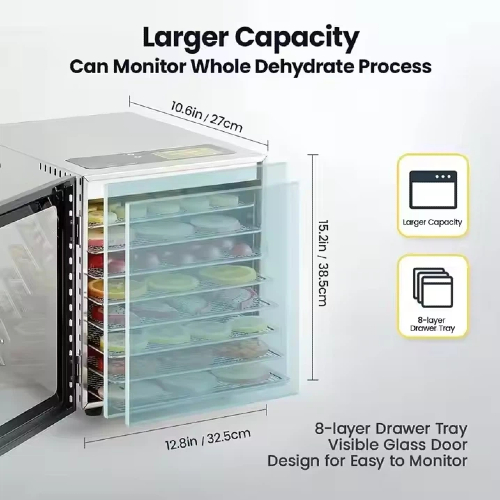
In addition to the key features mentioned above, there are several other features that can improve the functionality of a commercial food dehydrator.
Timer: A built-in timer allows you to set the dehydration time and ensures your pet food is dehydrated to perfection without needing constant monitoring.
Auto Shut-Off: This feature automatically shuts off the dehydrator when the dehydration cycle is complete, preventing over-drying and energy waste.
Commercial dehydrators can be noisy, especially when used in high-volume settings like pet stores or grooming salons. When choosing a food dehydrator, consider the noise level, particularly if the machine will be used in a customer-facing environment.
Noise Reduction Technology: Some models feature noise-reducing designs to ensure a quieter operation.
Selecting the right food dehydrator for your business also depends on your specific operation. Here are some important factors to consider:
If you’re running a small business, you might only need a dehydrator with a few trays and a moderate capacity. Larger businesses, on the other hand, may require multiple large dehydrators or a single high-capacity machine.
Consider what type of food you will be dehydrating. Some dehydrators are better suited for meat, while others excel at drying fruits, vegetables, or herbs. Choose a food dehydrator that is versatile enough for your product line.
If you plan to use the food dehydrator daily, you’ll need a model that is built for frequent, heavy-duty use. For occasional use, a smaller model may suffice.
Choosing the right commercial food dehydrator for your pet food production is a crucial decision that directly affects both the quality of your products and the efficiency of your operation. By carefully considering key factors like tray size, temperature control, material durability, and power, you can ensure that your investment will support your business’s growth while providing the best food for your pets.
At PETSPROOFING, we specialize in providing high-quality, reliable food dehydrators designed specifically for pet food production. Whether you're looking for larger capacity models, precise temperature controls, or durable materials, our products are tailored to meet the unique demands of your business. With our expertise and extensive range of solutions, we are here to guide you in selecting the perfect dehydrator that aligns with your operational scale, the types of pet food you plan to produce, and your production volume.
For more information or to discuss your specific needs, feel free to reach out to us. Our team is ready to help you make an informed decision and support the success of your pet food business.
The best food dehydrator for pet food depends on your specific needs. For small-scale operations, a 6-10 tray unit with adjustable temperature control is usually sufficient. For larger businesses, a model with more trays and higher wattage will be necessary.
The time required to dehydrate pet food depends on the type of food and the dehydrator's settings. Typically, it takes between 4-8 hours to dehydrate meat and up to 12 hours for fruits and vegetables, depending on the quantity and moisture content.
Yes, most food dehydrators can handle both meat and fruits. However, be sure to use separate trays for meats and fruits to prevent cross-contamination.
If you plan to dehydrate small amounts of pet treats at home, a standard home dehydrator may be sufficient. However, for larger-scale operations or higher volume, a commercial dehydrator will save time and improve efficiency.
The cost of a commercial food dehydrator can vary based on its size, features, and brand. On average, you can expect to pay between $300 to $2,000 for a high-quality commercial model.


