
Please Choose Your Language
Views: 0 Author: Site Editor Publish Time: 2026-05-01 Origin: Site


The self-service dog wash is rapidly shifting from a niche novelty to a mainstream consumer expectation. It also functions as a high-yield commercial asset for modern business operators. Home bathing frequently damages residential plumbing systems. Pet hair and heavy soap scum create stubborn, expensive clogs in narrow pipes. Furthermore, the process strains pet owners physically due to awkward bending, kneeling, and lifting. Meanwhile, professional grooming is becoming cost-prohibitive for routine maintenance, forcing families to seek practical alternatives.
Our objective is to unpack the tangible lifestyle benefits these specialized stations offer everyday pet owners. We will explore how ergonomic designs and professional-grade tools transform pet care routines. We will also provide a transparent, decision-stage evaluation for businesses considering installing these lucrative units. You will discover how automated pet washing systems drive localized foot traffic and generate highly reliable revenue.
Consumer Savings & Ergonomics: Eliminates residential plumbing clogs, prevents back strain through ergonomic tub design, and drastically reduces grooming expenses.
Pet Welfare: Allows owners to maintain complete control, utilizing professional-grade equipment in a low-stress environment.
Commercial Viability: Offers businesses an automated, low-overhead revenue stream that drives localized foot traffic and cross-selling opportunities.
Procurement Strategy: Partnering with a reliable self service dog wash manufacturer is critical for ensuring ADA compliance, seamless payment processing, and long-term durability.
Many pet owners initially view the home bathtub as a free, convenient option for pet care. However, the home bathtub functions as an entirely improper tool for canine hygiene. Residential pipes simply cannot handle the volume of pet hair, mud, and heavy soap scum generated during a bath. This debris rapidly accumulates inside household drains. Pet owners frequently face severe plumbing emergencies as a direct result. A single visit from a professional plumber to clear a dog-hair clog often costs hundreds of dollars, completely negating any perceived savings from washing at home.
Beyond hidden plumbing costs, we must examine the ergonomic reality of home bathing. Kneeling over a standard residential tub places immense physical strain on the human body. Pet owners endure lower back pain, knee discomfort, and shoulder fatigue while wrestling a wet animal. Commercial wash stations eliminate this struggle entirely. They feature fixed-height, ergonomically designed tubs. You can stand upright, comfortably managing your pet without twisting or bending awkwardly.
A Self Service Dog Wash also delivers highly predictable cost control. Routine professional grooming poses a compounding expense, particularly for large breeds or double-coated dogs. These animals require frequent maintenance to prevent matting and skin issues. Professional salon visits easily exceed $80 to $120 per session. In stark contrast, self-service stations typically charge a highly affordable flat rate or time-based fee.
Cost Comparison Chart: Home vs. DIY vs. Salon | ||
Care Method | Estimated Per-Wash Cost | Hidden Expenses & Risks |
|---|---|---|
Home Bathtub | $5 - $10 (Shampoo) | Plumbing clogs ($150+), Back strain, Lengthy cleanup |
Self-Service Station | $15 - $25 | None (Supplies and cleanup included) |
Professional Groomer | $80 - $120+ | Wait times, Salon anxiety, Premium service fees |
This financial math clearly favors the DIY commercial approach. Owners save significant capital while maintaining an optimal hygiene schedule for their animals.
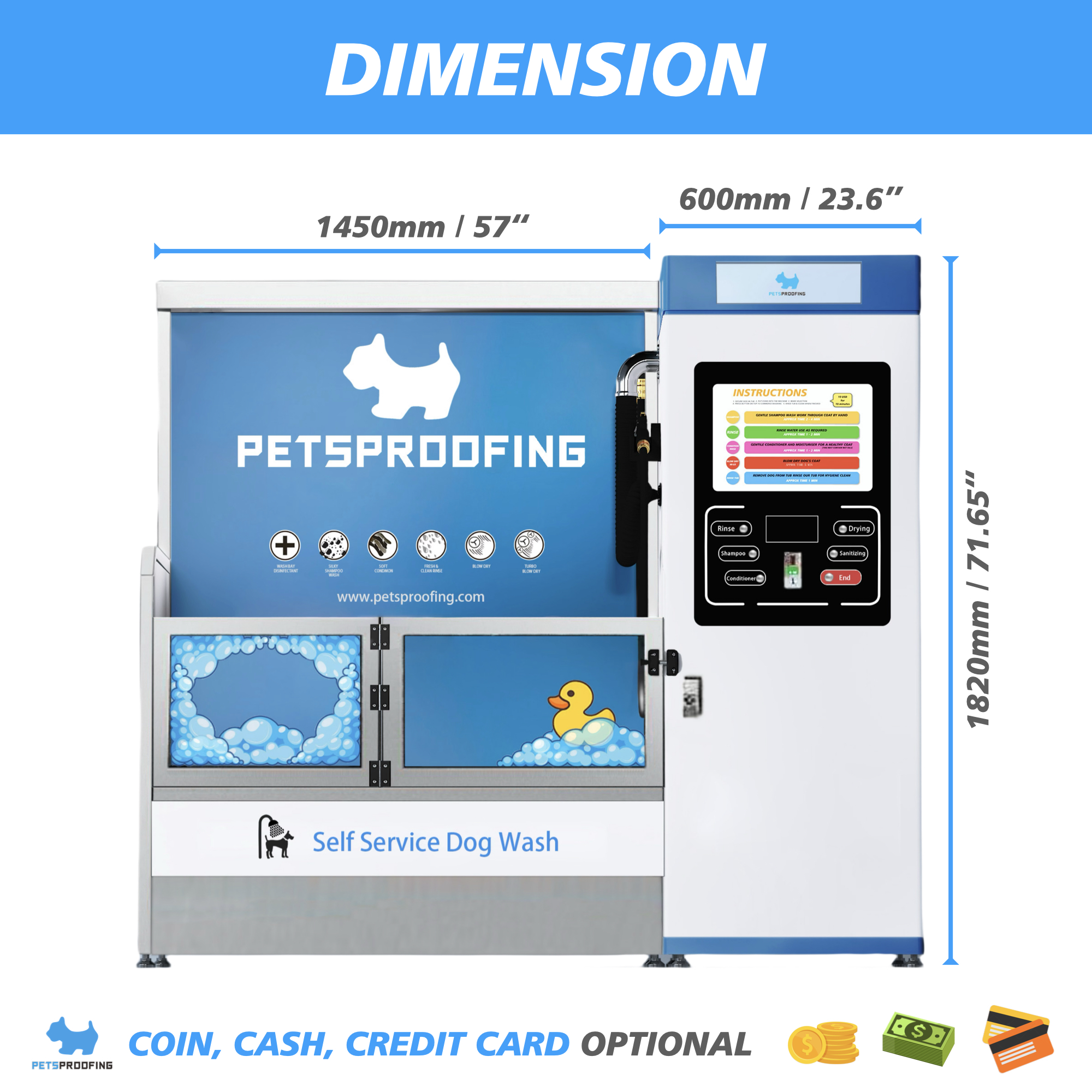
Commercial wash stations actively bridge a critical gap in modern pet care. They democratize access to premium, professional-grade tools without the hefty salon price tag. Pet owners gain immediate access to high-end infrastructure. This ensures a deeper, more effective clean than household methods allow.
Proper drying is arguably the most critical step in canine hygiene. Towel drying or air-drying thick coats leaves moisture trapped against the skin. This trapped dampness promotes bacterial growth, leading to painful hot spots, fungal infections, and lingering wet-dog odors. Commercial units solve this problem instantly. They feature high-velocity, temperature-controlled blow dryers. These powerful tools blast water out of dense undercoats safely and efficiently. You protect your dog's skin health while significantly reducing the overall grooming time.
Additionally, these stations offer profound psychological benefits for animals. Professional grooming salons often induce severe anxiety in pets. Dogs endure noisy back-rooms, unfamiliar handlers, and the presence of numerous strange animals. Bypassing this chaotic environment mitigates anxiety dramatically. Owner-led bathing builds crucial trust. The dog remains near a familiar human in a quiet, dedicated space. You can pace the wash, pause when needed, and gently desensitize your pet to grooming routines.
High sanitation standards further elevate the experience. Reputable stations prioritize hygiene above all else. They utilize commercial-grade drainage systems to prevent standing water.
Automated Tub Sanitization: Many units feature self-cleaning cycles between users.
Veterinary-Approved Products: Dispensers typically offer hypoallergenic, environmentally safe shampoos.
Disease Prevention: Hard stainless-steel surfaces resist bacteria, guaranteeing a sterile environment for every visiting pet.
For business operators, installing a pet wash station presents a highly lucrative commercial opportunity. These automated units capitalize effectively on localized foot traffic. They serve as a powerful magnet for pet owners seeking convenience. Identifying the ideal deployment environment maximizes this potential.
Car Washes: Customers clean their vehicles and their pets in one seamless trip.
RV Parks & Campgrounds: Travelers need accessible ways to manage muddy dogs on the road.
Pet Retail Stores: Drives recurring foot traffic directly into retail spaces.
Apartment Complexes: Serves as a premium amenity for high-density residential living.
The "Dirty Dog" scenario perfectly illustrates this consumer demand. Imagine a family returning from a rigorous hike, a river swim, or a trip to a muddy dog park. Owners desperately want to prevent muddy, smelly animals from ruining car interiors or home furnishings. A strategically placed wash station acts as an irresistible post-adventure amenity. It solves an immediate, messy problem before the customer heads home.
Operational efficiency makes this investment even more attractive. Modern units boast a remarkably simple "plug-and-play" architecture. They require only standard utility connections: fresh water, electricity, and basic commercial drainage. Once installed, they demand minimal daily labor. Staff generally spend less than ten minutes a day performing a brief wipe-down and clearing the hair trap. The machine handles the dispensing, the timing, and the payment collection autonomously.
Furthermore, these installations create a powerful cross-sell multiplier. An average wash cycle takes approximately 20 minutes. This extended customer dwell time presents a prime retail opportunity. Customers wandering adjacent retail aisles or convenience environments are highly likely to purchase ancillary items. They buy pet treats, grooming accessories, or even snacks for themselves while waiting.
Evaluating the financial return on a wash station reveals a compelling business case. Revenue assumptions remain highly transparent and relatively predictable across the industry. Seasonality does play a factor, but overall earnings stay robust year-round.
Historical industry averages show consistent performance. During off-peak or colder months, a single well-placed unit often generates around $800 in passive monthly revenue. However, during peak seasons—such as spring and summer when outdoor activities spike—earnings can easily exceed $3,000 per month. This automated income requires zero active selling from your staff.
Commercial Revenue Projection Table (Per Unit/Month) | |||
Seasonality | Estimated Monthly Washes | Avg. Revenue (at $15/wash) | Estimated Utility Cost |
|---|---|---|---|
Off-Peak (Winter) | 50 - 60 | $750 - $900 | $30 - $45 |
Shoulder (Fall/Spring) | 100 - 130 | $1,500 - $1,950 | $60 - $85 |
Peak (Summer) | 200+ | $3,000+ | $100 - $130 |
Operators must implement proper pricing strategy frameworks based on local demographics. You can utilize a flat-rate model or time-increment billing. Flat-rate billing might charge $15 or $20 for a set 20-minute cycle. This offers simplicity for the user. Conversely, time-increment billing might charge $5 for an initial 6 minutes, prompting users to add more funds as the timer runs down. This model frequently increases the average ticket size as owners realize they need a few extra minutes to finish drying.
Ultimately, this business model boasts an exceptionally low barrier to profitability. The gross margin per wash remains extremely high. The combined cost of consumables—which includes metered water, electricity, and wholesale shampoo—amounts to a tiny fraction of the consumer purchase price. You retain the vast majority of every transaction as gross profit.
Selecting the right hardware dictates your long-term success. You must evaluate potential vendors rigorously to protect your investment. A poorly constructed machine will fail under the stress of high-volume, aggressive usage.
Material and build quality must sit at the top of your checklist. Always advocate for heavy-gauge, aircraft-grade stainless steel construction. Cheaper materials will inevitably rust or dent in a wet, commercial environment. Thick stainless steel withstands heavy dogs, constant moisture, and abrasive cleaning chemicals over decades of service.
Next, evaluate the integrated technology and payment gateways. Modern consumers rarely carry loose change. You need a Self Service Dog Wash manufacturer that provides frictionless, modern payment processing. Look for systems integrating credit card readers, contactless options like Apple Pay and Google Wallet, and even loyalty program software. Outdated coin-only operations frustrate users and directly reduce your earning potential.
Compliance and accessibility represent non-negotiable legal requirements. You must select units meeting ADA (Americans with Disabilities Act) compliance standards. ADA-compliant machines feature proper ramp angles, accessible controls, and appropriate tub heights. This ensures accessibility for all demographic groups and shields your business from costly discrimination liability.
Finally, scrutinize the post-sale support infrastructure. Do not finalize a purchase without reading the warranty terms carefully. You need guaranteed availability for replacement parts, such as spray nozzles or internal pumps. The best manufacturers also provide robust marketing materials and detailed installation support to help you launch successfully.
Self-service wash stations represent a definitive win-win scenario in the modern pet economy. They effectively solve acute friction points for pet owners by eliminating home plumbing disasters and physical back strain. Simultaneously, they offer business owners a highly automated, lucrative footprint requiring minimal daily management. By integrating these systems, you provide a premium community amenity while capturing a steady stream of high-margin revenue.
If you are ready to capitalize on this growing market demand, the next step is simple. Direct your team to request a professional site evaluation. Review detailed ROI calculators specific to your local traffic metrics, or download a commercial equipment spec sheet from our manufacturing and supply division today.
A: A complete wash and dry cycle typically takes between 20 and 30 minutes. This timeframe accommodates thorough lathering, rinsing, and drying. The inclusion of commercial high-velocity blowers significantly speeds up the process compared to standard home bathing, allowing owners to dry dense undercoats efficiently.
A: Yes. Reputable commercial units dispense premium, vet-approved products. These automated systems typically feature hypoallergenic, tearless, and environmentally safe shampoos. Many machines also offer specialized options like oatmeal-based treatments to soothe sensitive skin, ensuring a safe experience for allergy-prone dogs.
A: Installation requires surprisingly basic utilities. You need a standard commercial plumbing connection for fresh water, a dedicated electrical circuit (often 110V or 220V depending on the blower size), proper commercial drainage to handle pet hair, and a direct connection to a reliable water heater.
A: Automated units require minimal daily labor. Staff should perform a brief 10-minute wipe-down of the tub surfaces and clear the hair trap once or twice daily. Beyond daily cleaning, owners only need to conduct quarterly preventative maintenance, such as inspecting hoses and refilling bulk shampoo reservoirs.


