
Please Choose Your Language
Views: 0 Author: Site Editor Publish Time: 2026-09-02 Origin: Site


Drying is the most time-consuming, technically demanding, and potentially hazardous phase of pet grooming. Relying on incorrect equipment specifications risks coat damage, thermal stress, and severe behavioral resistance from the animal. Buyers frequently conflate human hair drying mechanics—which rely on heat-based evaporation—with pet drying mechanics, which require force-based water displacement. This fundamental misunderstanding leads to purchasing units with dangerous heating elements or inadequate motor power.
To make an informed purchasing decision, buyers must evaluate equipment based on objective metrics. Specifically, you need to look at CFM (Cubic Feet per Minute), variable speed capabilities, and strict temperature regulation. Choosing the right pet dryer directly impacts the safety of the animal and the efficiency of your daily workflow. This guide breaks down the exact airflow and temperature specifications required for safe, efficient grooming.
Airflow is the Primary Metric: Effective pet drying relies on high-velocity water displacement, not heat evaporation. Look for units delivering between 130 and 320+ CFM based on coat density.
Variable Speed is Non-Negotiable: Stepless variable speed control is critical for safe desensitization, working around sensitive areas (face, ears), and accommodating different breed sizes.
Heat Requires Strict Regulation: Auxiliary heat is highly situational. Ambient motor heat is often sufficient, and unregulated heating elements pose severe risks, particularly during close-to-the-skin drying or in enclosed environments.
Form Factor Dictates Function: The required specs differ drastically depending on whether you are evaluating a high velocity pet dryer, a handheld unit, or an enclosed drying cabin.
Environment Matters: Your baseline temperature needs will shift depending on whether you are operating in a humid professional salon or a cooler home grooming setup.
The primary goal of any pet drying equipment is straightforward. You must remove water from dense undercoats down to the skin without causing thermal injury or skin irritation. Achieving this requires a clear understanding of how water interacts with animal fur compared to human hair. When you bathe a dog, especially a double-coated breed like a Husky or Golden Retriever, water penetrates past the primary guard hairs. It soaks into the dense, wooly undercoat right against the epidermis. Removing this trapped moisture requires mechanical force, not a heating element.
Human hair dryers fail on dogs because they operate on the principle of evaporation. They use high heat to turn moisture into vapor, lifting it from a relatively thin, single layer of hair. If you apply this same high-heat evaporative method to a dog, the heat hits the top layer of the coat and becomes trapped. The undercoat remains damp, while the skin beneath rapidly overheats. This leads to thermal burns, severe dry skin, and potential heatstroke. Furthermore, leaving the undercoat damp creates a breeding ground for bacteria, leading to acute moist dermatitis, commonly known as hot spots.
Pet dryers operate on the principle of mechanical water displacement. Instead of trying to evaporate the water, these machines use raw physical force to blast the water off the skin, through the hair shafts, and out into the surrounding environment. You are physically pushing the water off the dog. This requires high-pressure air.
Drying Method | Mechanism | Primary Application | Risk Factor on Pets |
|---|---|---|---|
Evaporation (Human Dryers) | Uses high heat to convert liquid water into vapor. | Single-layer human hair. | High. Causes thermal burns, traps moisture in the undercoat, risks heatstroke. |
Displacement (Pet Dryers) | Uses high-velocity airflow to physically push water off the skin. | Dense animal fur, double coats, heavy mats. | Low. Protects the skin, removes loose undercoat, prevents hot spots. |
To evaluate how effectively a machine can displace water, you must look at specific airflow metrics rather than wattage alone. Wattage only tells you how much electricity the machine consumes, not how effectively it moves air.
CFM (Cubic Feet per Minute): This measures the total volume of air the motor moves every minute. CFM is the ultimate indicator of drying speed and overall efficiency. A higher CFM means a larger volume of air is pushing against the wet coat, allowing you to dry larger areas of the dog much faster. Think of CFM as the size of the pipe delivering the air.
FPM (Feet Per Minute) / Velocity: This measures the speed or pressure of the air as it exits the hose. While CFM is about volume, FPM is about penetration. High FPM is necessary for parting thick double coats, reaching the skin level, and blasting out trapped water and loose undercoat. Think of FPM as the pressure of the air coming out of the pipe.
You cannot change the base CFM of a motor, but you can manipulate the FPM using interchangeable nozzle attachments. This is similar to putting your thumb over the end of a garden hose. The volume of water remains the same, but the pressure increases dramatically.
A cone-shaped or round nozzle restricts the airflow into a tighter stream, drastically increasing the FPM. This creates a high-pressure blade of air perfect for penetrating dense mats, blowing out impacted undercoat, or reaching the skin on heavily coated breeds. Conversely, a flat or wide nozzle spreads the CFM over a larger surface area, lowering the FPM. This acts like a squeegee, sweeping water off short-coated breeds like Boxers or Pugs. It is also ideal for fluff-drying long, fine hair without causing wind-whip tangles.
A common misconception is that a dryer without a heating element blows freezing cold air. In reality, high-powered motors generate significant friction. As air passes over the operating motor, it naturally warms up. This ambient motor heat typically raises the air temperature by 10 to 20 degrees Fahrenheit above the room's temperature. For most drying applications, this naturally warmed air is more than sufficient to comfortably dry the dog without the severe risks associated with dedicated heating coils.
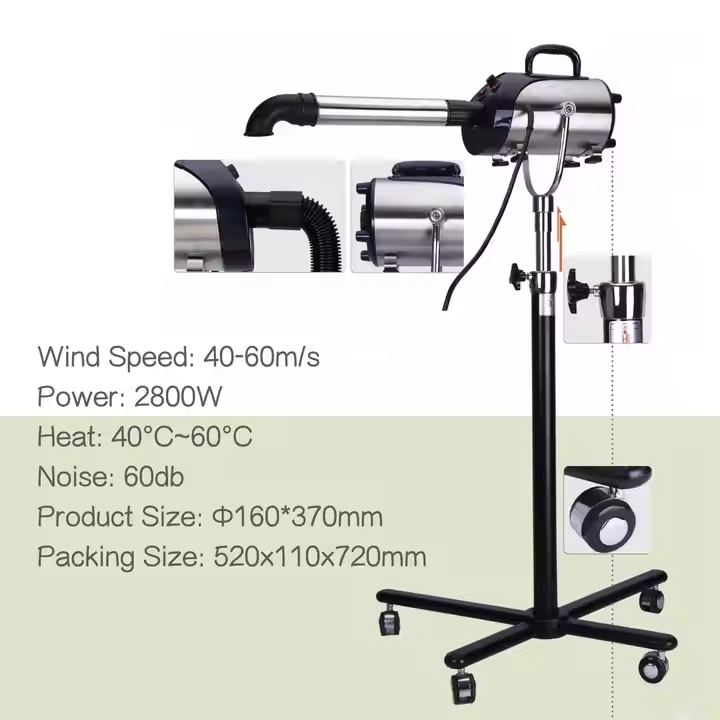
Understanding the physics of airflow is only the first step. You must also evaluate how a machine allows you to control that airflow. The specific controls dictate how safely and efficiently you can groom different animals. A machine running at maximum power constantly is a liability on the grooming table.
Older or entry-level models often feature single-speed or dual-speed toggle switches. These are highly insufficient for multi-pet environments or professional use. A sudden blast of high-velocity air can terrify a dog, leading to thrashing, biting, and extreme grooming anxiety. Managing a panicked 80-pound dog on a grooming table is dangerous for both the groomer and the animal.
Stepless variable speed control—usually operated via a continuous dial—is an absolute necessity. It provides scalability and control. You can turn the dial down to a gentle breeze to introduce a nervous puppy to the noise and sensation. As the dog acclimates, you slowly ramp up the volume. Variable speed allows you to transition safely across the dog's body. You need maximum power for the thick hair on the back and hindquarters, but you must immediately dial down the pressure when moving to sensitive areas like the face, ears, genitals, and sanitary regions to prevent injury to delicate tissues.
Not all dogs require the same volume of air. Matching the CFM to the coat type prevents both under-drying and over-powering. Under-drying leaves the dog damp, while over-powering can cause severe tangles in drop-coated breeds.
CFM Range | Ideal Coat Types & Breeds | Primary Use Case |
|---|---|---|
130 – 150 CFM | Small breeds (Yorkies, Shih Tzus), short single coats (Pugs, Beagles). | Baseline home grooming, localized touch-ups, and mobile grooming with strict power constraints. |
150 – 250 CFM | Medium to large breeds, standard double coats (Golden Retrievers, Labs, Australian Shepherds). | The standard operational range for most professional salons and serious home groomers. |
250 – 320+ CFM | Giant breeds, heavy double coats (Huskies, Malamutes, Newfoundlands, Samoyeds). | High-volume professional environments requiring rapid turnaround times and deep deshedding capabilities. |
While airflow displaces the water, temperature management dictates the safety of the entire operation. Mismanaging heat is the leading cause of grooming-related injuries. You must approach temperature controls with strict operational protocols.
Dogs do not sweat through their skin like humans. They regulate body temperature primarily through panting and releasing heat through their paw pads. Exposing a dog to sustained, heated airflow rapidly elevates their core temperature. The physiological dangers of overheating include heatstroke, which can be fatal in a matter of minutes. Additionally, using high heat during close-to-the-skin water displacement can cause severe localized skin burns and singe the hair shafts, permanently damaging the coat's texture.
In a professional salon environment, the ambient room temperature naturally rises due to multiple running motors, warm bath water, and enclosed spaces. The room quickly becomes warm and humid. Adding artificially heated air to this environment exacerbates the risk of hyperthermia. High-velocity airflow combined with room-temperature air safely fluffs the coat, separates the hair shafts, and removes water without drying out the dog's skin or elevating their internal temperature.
Despite the risks, there are specific, highly situational scenarios where auxiliary heat is beneficial and necessary. You must evaluate your specific working environment to determine if a heating element is required.
Home Grooming Contexts: Home environments, residential garages, or mobile grooming vans operating in winter often lack the ambient warmth of a busy salon. In a 60-degree room, blowing cold air on a wet dog can cause hypothermia. A mild heat setting prevents the dog from shivering and keeps their muscles relaxed.
Specific Use Cases: Very small dogs under 15 pounds, young puppies, and senior dogs often struggle to regulate their body temperature. They lose body heat rapidly when wet. Controlled, mild heat helps stabilize them during the drying process.
Styling Needs: Certain coat types require heat for proper styling. Straightening the curly coats of Poodles or Bichon Frises for a precision scissor cut requires mild, controlled heat to stretch the hair shaft during the fluff-drying process.
If you determine that your operational environment requires a unit with heat, you must evaluate the safety mechanisms of those temperature controls. Never purchase a unit where the heat increases automatically as you turn up the motor speed. This removes your ability to control the environment.
Look for units with independent heat toggles that allow you to run the motor at maximum velocity while keeping the air completely unheated. Prioritize equipment with built-in thermal overload protection. Advanced units utilize PTC (Positive Temperature Coefficient) heating elements. These ceramic elements are self-regulating. As they heat up, their electrical resistance increases, automatically preventing dangerous temperature spikes and eliminating the risk of the air becoming hot enough to burn the skin.
The required specifications for airflow and temperature differ drastically based on the form factor of the equipment. Understanding these solution categories ensures you match the right tool to your specific grooming workflow.
This is the industry standard for both professionals and serious home groomers. A high velocity pet dryer relies entirely on high CFM and FPM to blast water off the coat. Because the air is moving so fast, heat is largely unnecessary and often dangerous if misused.
Ideal Specs: Look for stepless variable speed control, a minimum of 150+ CFM for general use, and an independent heat switch. It must include multiple nozzle attachments to adjust the FPM for different body parts.
Usage Note: The hose must be flexible and durable to withstand the heat generated by the motor friction without cracking over time. Polyurethane hoses offer the best durability against thermal expansion.
Handheld units look similar to human hair dryers but are optimized for animal coats. Due to strict motor size constraints, they inherently produce low CFM. They must be light enough to hold with one hand for extended periods.
Limitations: Because they lack the mechanical force to blast water away, they often rely too heavily on heat to dry the coat, increasing the risk of burns if held in one spot too long.
Ideal Use Case: A handheld pet hair dryer is not designed for drying a soaking wet Golden Retriever. It is strictly for line brushing, finishing work, fluffing small areas like the ears or tail, or drying very small breeds.
Required Specs: It must have a strict cool setting to prevent localized burns during close-up styling work.
Enclosed drying cabins are becoming increasingly popular for hands-free operation, particularly for cats and small, anxious dogs that cannot tolerate the noise of a high-velocity nozzle.
Safety Warning: Enclosed environments pose the absolute highest risk of overheating and asphyxiation. You are placing the animal inside a sealed microclimate.
Required Specs: An automatic pet hair dryer must feature precise, thermostat-regulated temperature controls. You cannot rely on basic high/low switches. A safe pet drying box must include continuous fresh air intake vents, internal temperature monitoring sensors, and automatic shut-off mechanisms if the internal temperature exceeds a safe threshold.
Stand dryers and cage dryers are used for ambient, hands-free drying. They do not use high-velocity hoses. Instead, they push a massive volume of air at a very low speed over a broad area.
Required Specs: These must utilize natural, non-heated room-temperature air. Because the air is blowing continuously on a stationary animal, introducing heat creates a severe risk of hyperthermia. They require broad, diffused airflow to dry and fluff coats quickly and safely without localized overheating.
Beyond CFM and temperature, high-powered grooming equipment introduces operational realities and hidden costs that impact your overall workflow. You must evaluate your physical workspace before purchasing heavy-duty equipment.
High CFM inherently generates high decibel levels. The rush of air through the hose and out the nozzle creates a loud, high-pitched whine that can panic animals and damage human hearing over time. When evaluating power, you must balance it with noise mitigation strategies.
Look for units featuring noise-dampening motor housing. The inclusion of stepless variable speed allows you to lower the noise during the initial desensitization phase. Consider units with extended, flexible hoses measuring 10 feet or more. A longer hose allows you to place the loud motor base further away from the grooming table, significantly reducing the noise stress on the dog.
Powerful motors require substantial electricity. A standard residential wall outlet in the United States handles 15 amps. A high-velocity unit with dual motors and an active heating element can easily draw 15 to 20 amps upon startup. If you plug this into a circuit that is already running clippers, lights, and a radio, you will overload the system.
The primary risk here is continuously tripping circuit breakers, which halts your grooming process and can damage the equipment's internal components. Ensure your home or salon circuitry can handle the load. If you are operating on limited home circuitry, you must prioritize motor power over a heating element. Running a high-CFM motor without heat draws significantly fewer amps than running a medium-CFM motor with the heat toggled on.
High airflow requires robust air intake. A motor pushing 300 CFM out of the hose is simultaneously sucking 300 CFM of air into the back of the unit. In a grooming environment, this intake air is filled with microscopic dander, floating hair, and moisture.
Evaluate the accessibility and cleanability of the air filters. If hair and dander bypass the filter, they wrap around the motor's armature, causing it to overheat and eventually burn out. The unit should feature dual-layer filtration. This typically includes a coarse outer mesh for catching hair and a fine inner foam for trapping dust. These filters must be easily removable, washable, and replaceable without requiring screwdrivers or specialized tools.
Audit your current electrical panel to confirm you have a dedicated 15-amp or 20-amp circuit available before purchasing a dual-motor unit.
Measure the square footage of your grooming space to determine the optimal hose length for keeping the motor noise away from the grooming table.
Inventory the primary breeds you service to establish your baseline CFM requirements, aiming for 150+ CFM for standard double coats.
Inspect the filter housing on prospective models to ensure tool-free removal for mandatory daily cleaning.
Verify that any unit with auxiliary heat features an independent toggle switch and built-in thermal overload protection.
A: A good CFM depends on the dog's size and coat. For small dogs with single coats, 130 to 150 CFM is adequate. For medium to large double-coated breeds like Golden Retrievers, aim for 150 to 250 CFM. Giant breeds and heavy double coats require 250 to 320+ CFM for efficient drying.
A: Human hair dryers use high heat to evaporate moisture, which can easily burn a dog's skin and cause heatstroke. They also lack the high-velocity airflow needed to push water out of dense, multi-layered animal undercoats.
A: Generally, no. Using heat on a dense double coat traps the hot air against the skin, risking thermal burns and hyperthermia. High-velocity, room-temperature air is the safest and most effective way to displace water from a double coat.
A: Use a unit with stepless variable speed to lower the airflow when working near the dog's head. You can also use a longer hose to keep the noisy motor base away from the grooming table, and remove restrictive nozzles to lower the high-pitched whistling sound.
A: Stepless variable speed uses a continuous dial rather than fixed high/low switches. This allows you to smoothly adjust the airflow from a gentle breeze to maximum velocity, which is necessary for desensitizing nervous dogs and safely drying sensitive areas.
A: Yes, if misused. Cage dryers should only blow natural, unheated room-temperature air. Using heated air in a confined cage environment prevents the dog from escaping the heat source, leading to rapid and potentially fatal hyperthermia.


