
Please Choose Your Language
Views: 0 Author: Site Editor Publish Time: 2026-03-26 Origin: Site


The pet food industry has experienced significant growth as more pet owners seek healthy, nutritious, and high-quality food for their pets. As this demand increases, so does the need for efficient, reliable methods of processing and preserving pet food. One of the primary ways to preserve pet treats and food is through dehydration, a method that removes moisture, thereby extending shelf life and preventing spoilage.
The process of dehydration is especially crucial in ensuring the nutritional integrity of pet food, and to achieve this, it is important to use the right equipment. Food dehydrators, which are widely used in both home and commercial food production, have proven to be one of the best tools in pet food processing. However, the material used to construct these dehydrators plays a significant role in their efficiency, durability, and safety.
Stainless steel food dehydrators are known for their superior performance and longevity, particularly when it comes to high-volume pet food processing. Unlike other materials, stainless steel is resistant to rust, corrosion, and wear, making it an ideal material for food processing environments. The hygienic properties of stainless steel further enhance its appeal for use in pet food production, where maintaining food safety standards is of utmost importance.
In this article, we’ll explore why stainless steel food dehydrators are a perfect choice for pet food processing, highlighting their key advantages, features, and how they can help improve the overall quality and efficiency of your production process.
One of the primary reasons why stainless steel food dehydrators are ideal for pet food processing is their exceptional durability. Stainless steel is highly resistant to rust, corrosion, and damage from food acids, which are common in pet food ingredients such as meats and vegetables. This makes stainless steel food dehydrators a long-lasting investment for any business.
Corrosion Resistance: Stainless steel doesn’t corrode easily, even in moist environments like kitchens or processing facilities, where metal parts are often exposed to water, steam, and food residues.
Wear and Tear Resistance: The high-strength material prevents scratches, dents, and other damage, which is crucial in busy production environments where the equipment undergoes heavy use.
A stainless steel food dehydrator can last for years without showing significant signs of wear, making it a valuable tool for long-term use in pet food manufacturing.
In food processing, maintaining hygiene is non-negotiable. Stainless steel is non-porous, meaning it does not absorb food particles or moisture, which can harbor bacteria and lead to contamination. This feature makes stainless steel dehydrators easier to clean and sanitize compared to other materials like plastic.
Easy to Clean: Stainless steel’s smooth surface allows for easy cleaning with minimal effort. A quick wipe-down or rinse is often sufficient to maintain hygienic standards.
Prevents Bacterial Growth: Since stainless steel does not retain moisture or food particles, it helps prevent the growth of harmful bacteria, mold, and other pathogens that could compromise the quality of the pet food.
For pet food processors, this is a significant advantage as it ensures that the equipment is always ready for use without any risk of contamination. Moreover, keeping a food processing environment clean reduces the likelihood of foodborne illnesses.
Heat resistance is another major advantage of stainless steel food dehydrators. Dehydrating pet food typically requires exposure to high temperatures, especially when drying meat and other protein-rich ingredients. Stainless steel can withstand these high temperatures without deforming or losing its structural integrity, making it ideal for food dehydration.
Efficient Heat Distribution: Stainless steel has excellent thermal conductivity, allowing for even heat distribution throughout the dehydrator. This ensures uniform drying of pet treats, which is essential for maintaining consistent quality.
Long-Term Heat Endurance: Unlike plastic materials, which may warp or degrade over time with constant exposure to heat, stainless steel can handle prolonged high temperatures without issue.
This heat resistance ensures that the food dehydrator operates at optimal temperatures throughout the drying process, resulting in high-quality pet food that retains its nutritional value.
In the pet food processing industry, appearance matters. A stainless steel food dehydrator not only performs well but also gives your facility a sleek, modern, and professional look. This is particularly important if you are working with clients or showcasing your facility.
Clean and Professional: Stainless steel’s polished, clean look conveys a sense of professionalism and cleanliness.
Durable Finish: Stainless steel’s finish also resists staining and retains its shine, even after years of use, maintaining a visually appealing environment.
This aesthetic benefit can have an impact on your business, helping to build trust with customers and clients who value quality and professionalism.
Maintaining food safety is a priority in pet food production, as any contamination can lead to serious health risks for pets. Stainless steel food dehydrators are excellent at ensuring food safety because of their hygienic properties. The non-porous surface of stainless steel makes it easy to clean and sanitize, reducing the risk of contamination. Additionally, stainless steel’s durability ensures that there are no cracks or crevices where harmful bacteria could hide.
Pet food producers are increasingly focusing on nutrient-dense treats and meals that retain their natural vitamins and minerals. Stainless steel food dehydrators provide precise temperature control, which is essential for preserving the nutritional content of pet food during the dehydration process.
Gentle Drying Process: Stainless steel dehydrators allow for the use of low, steady heat, which helps preserve the nutrients in ingredients like meats, fruits, and vegetables.
Retention of Natural Flavors: The even heat distribution in stainless steel units helps to retain the natural flavors of pet treats, making them more appealing to pets.
By using a stainless steel food dehydrator, pet food manufacturers can ensure that their products are not only safe but also nutritious, making them more desirable to pet owners looking for healthy options.
For pet food manufacturers with large-scale production needs, stainless steel food dehydrators are the perfect solution. These dehydrators are built to handle higher volumes and can dehydrate large quantities of pet treats in one batch.
Multiple Tray Options: Many stainless steel dehydrators offer multiple trays, allowing businesses to process large quantities of pet food at once.
Consistent Performance: Stainless steel dehydrators are designed for continuous operation, making them ideal for high-volume pet food production facilities.
This makes stainless steel dehydrators an excellent investment for businesses looking to scale up their operations and meet increasing demand.
In a commercial food processing environment, harsh cleaning agents are often used to maintain hygiene and remove food residue. Stainless steel can withstand these chemicals without corroding or deteriorating, unlike some other materials that may degrade with regular exposure to cleaning products.
Durable Under Cleaning: Stainless steel food dehydrators can handle frequent cleanings with chemicals like bleach, sanitizers, and degreasers, ensuring that the equipment remains safe and hygienic over time.
Long-Lasting Performance: The ability to endure harsh chemicals without losing integrity or functionality means that businesses can rely on their stainless steel food dehydrators for consistent, long-term performance.
Feature | Stainless Steel Food Dehydrator | Plastic Food Dehydrator | Aluminum Food Dehydrator |
Durability | High durability, resistant to corrosion and wear | Less durable, prone to cracking and discoloration | Resistant to corrosion but less durable than stainless steel |
Hygiene | Non-porous, easy to clean, prevents bacterial growth | Can harbor food particles and bacteria | Easy to clean, but not as hygienic as stainless steel |
Heat Resistance | Withstands high temperatures without damage | May warp or degrade at high temperatures | Good heat resistance but not as durable as stainless steel |
Aesthetic Appeal | Sleek, modern, and professional look | Often looks cheap, may discolor over time | Less appealing than stainless steel |
Cleaning and Maintenance | Easy to clean, resistant to harsh chemicals | Difficult to clean, may absorb odors and stains | Easy to clean, but less resistant to harsh chemicals |
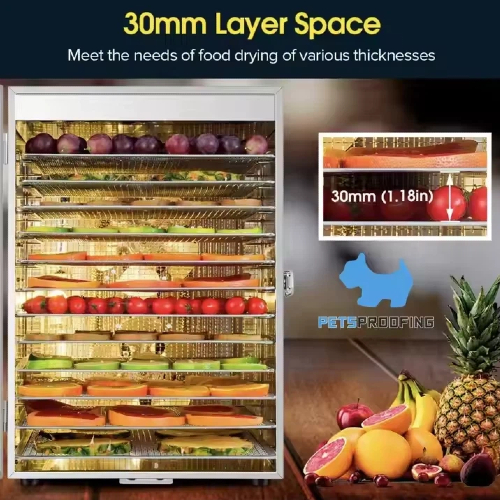
When choosing a stainless steel food dehydrator for pet food processing, consider the following features:
Tray Capacity: The number of trays determines the volume of food that can be processed at once.
Temperature Control: Ensure the dehydrator has precise temperature settings for optimal drying without damaging nutrients.
Ease of Cleaning: Look for models with removable trays and non-stick surfaces for easy maintenance.
Airflow Design: An efficient airflow system ensures even drying, preventing hotspots and uneven drying of pet treats.
Assess your production needs to determine the appropriate size and capacity of the dehydrator. If you’re dealing with high-volume production, opt for a larger model with multiple trays and a high output capacity.
Investing in a stainless steel food dehydrator is a smart decision for businesses looking for reliable, long-term performance. While the initial cost may be higher compared to other materials, the durability, efficiency, and hygiene benefits make it a worthwhile investment over time.
Stainless steel food dehydrators are an ideal choice for pet food processing, offering unmatched durability, heat resistance, and hygienic properties. These machines not only ensure food safety but also preserve the nutritional value of pet treats, all while supporting high-volume production. As a result, stainless steel food dehydrators are a top choice for commercial pet food manufacturers looking for reliable, long-lasting equipment that can handle the demands of a growing business.
For businesses aiming to enhance the quality, safety, and efficiency of their pet food production process, investing in a stainless steel food dehydrator is a smart move. Whether you are just starting out or expanding your operations, these dehydrators provide the performance and reliability your business needs to succeed.
At PETSPROOFING, we specialize in providing top-quality stainless steel food dehydrators designed specifically for pet food production. Our team is ready to guide you in selecting the right equipment to suit your needs. Contact us today to learn more and discover how our solutions can help improve your pet food processing operations.
Stainless steel is more durable, resistant to corrosion, and easier to clean, making it ideal for high-volume and hygienic pet food production.
Yes, stainless steel food dehydrators are versatile and can handle a wide range of pet food ingredients, including meats, vegetables, and fruits.
Stainless steel's non-porous surface prevents the growth of bacteria and makes the dehydrator easier to clean, ensuring food safety.
Yes, stainless steel food dehydrators are typically more expensive upfront but provide a long-lasting, efficient, and hygienic solution, making them a cost-effective choice in the long run.
Routine cleaning with mild detergents, ensuring trays are free of food residues, and checking for any wear or tear in parts.
Stainless steel dehydrators offer precise temperature control to ensure even drying without damaging the nutritional content of pet food.


